>>
Industry>>
Healthcare>>
How Older Adults Can Maintain ...How Older Adults Can Maintain Muscle Mass
The Silicon Review
22 August, 2026
Author:
Guest
Muscle changes with age, but losing strength is not something older adults simply have to accept without action. Regular resistance exercise, enough food, adequate protein, balance work, and everyday movement can all support physical function as the years pass. The goal is not to train like a competitive lifter. It is to keep enough strength for the activities that make daily life independent and enjoyable.
That can mean carrying groceries, getting up from a low chair, lifting a suitcase, gardening, climbing stairs, or playing with grandchildren. These tasks are reminders that muscle is not only about appearance. It is part of everyday movement.
Think of Strength as Something You Maintain, Not Something You “Graduate From”
Many people stop strength training as they get older because they assume walking is enough or that weights are only for younger adults. Walking is valuable, but it does not fully replace muscle-strengthening activity. Current CDC guidance for adults age 65 and older includes aerobic activity, muscle-strengthening work on at least two days each week, and activities that improve balance.
The important word is “appropriate.” A productive strength session should match current ability, health, mobility, and experience. Someone who has trained for decades may use a different routine from a person beginning at 70. Both can work toward keeping muscles challenged enough to support everyday function.
Consistency becomes valuable with age. Missing one workout is not a problem, but long periods without meaningful resistance can make ordinary tasks feel harder. A simple regular plan is often more useful than one that is difficult to recover from or intimidating to start.
Let Daily Life Tell You Which Muscles Matter Most
Think about the tasks you want to keep doing comfortably. Standing from a chair requires leg and hip strength. Carrying bags asks the hands, arms, shoulders, and trunk to work together. Reaching overhead requires control through the shoulders and upper body. Walking confidently also depends on strength, balance, and coordination.
That is why a whole-body plan is usually more useful than focusing only on visible muscles. Lower-body strength, pulling, pressing, carrying, and controlled trunk work all contribute to useful movement.
Start Lighter Than Your Ego Wants and Progress More Slowly Than Your Patience Wants
A common mistake is choosing resistance based on what someone used years ago. Strength after a break should be rebuilt from the present, not from memory. Begin with a load that allows controlled repetitions and enough attention to posture, breathing, and balance.
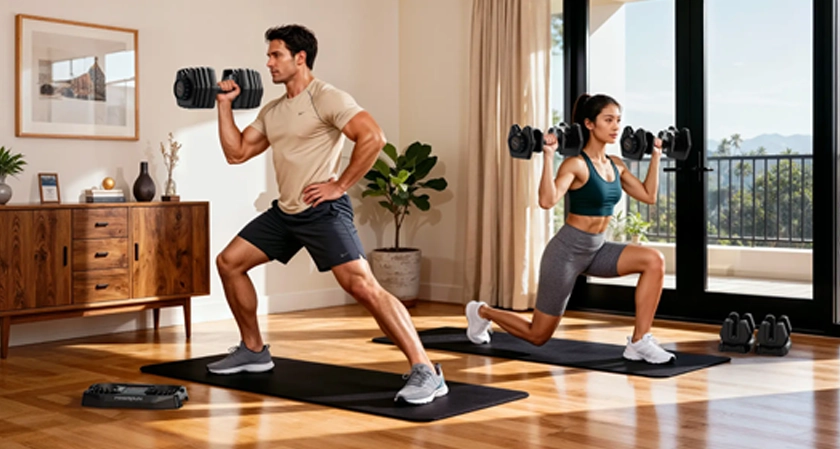
When home training is preferred, adjustable dumbbells can provide a practical way to change resistance across different exercises without requiring many separate weights.
Progress can happen in several ways. You might add a repetition, use a slightly harder weight, improve range of motion, or make the movement steadier. Not every week needs a heavier dumbbell. Quality and repeatability matter as much as the number on the weight.
The FED Fitness Feierdun Series DB1 Quick Adjustable Dumbbell 52.5LBS can fit naturally into a home strength setup for someone who wants resistance choices in one system. The product itself does not preserve muscle; its value comes from whether it supports exercises the user can perform safely and consistently.
Build a Muscle-Preserving Week Around Five Simple Anchors
A useful weekly plan does not need to be complicated. The following priorities can help keep strength work connected to the rest of an active life:
- Train major muscle groups: Include legs, hips, back, chest, shoulders, arms, and trunk rather than repeating only one favorite movement.
- Keep aerobic activity in the week: Walking, cycling, swimming, or another suitable activity supports overall fitness alongside strength work.
- Practice balance: Appropriate balance exercises can complement strength training and may be especially relevant as people age.
- Leave room for recovery: Harder sessions need enough rest, sleep, hydration, and food to support the next workout.
- Progress gradually: Add challenge only when the current version can be performed with control and confidence.
This structure is flexible. A person might strength train on two nonconsecutive days, walk on other days, and add balance practice to warm-ups. The exact schedule should reflect ability, medical considerations, and preference.
Pay Attention to Food When Appetite Is Not as Reliable as It Used to Be
Training gives muscle a reason to adapt, but the body still needs enough energy and nutrients. Older adults sometimes eat less because appetite changes, meals become smaller, or cooking for one feels inconvenient. A low intake can make it harder to support training and maintain body weight or muscle.
Protein is especially relevant because it supplies amino acids used in muscle tissue. Rather than chasing one universal number, focus on including protein-containing foods across the day and discussing individual needs with an appropriate health professional when necessary. A 2024 systematic review in older adults with sarcopenia found benefits from whey protein supplementation in some measures, particularly when combined with resistance training, but supplements are not a substitute for an overall eating pattern or individualized care.
Hydration matters too. Thirst can be an unreliable signal for some older adults, and medications or health conditions may affect fluid needs. This is another reason general fitness advice should not replace medical guidance when personal health factors are involved.
Do Not Let “Low Impact” Become “No Challenge”
Older adults are often encouraged to be careful, but excessive caution can lead to training that never becomes difficult enough to maintain strength. Resistance exercise needs some challenge. The exact level differs by person, but the muscles should have a reason to adapt.
The CDC notes that muscle-strengthening activity should involve major muscle groups and be appropriately challenging. That does not mean every set must reach complete exhaustion. It means endlessly repeating an easy movement may not provide the same training stimulus as gradually increasing difficulty while keeping good form.
A qualified trainer or physical therapist can be especially helpful for someone who is unsure how hard to work, has balance concerns, or is returning after illness or injury.
Keep Upper-Body Strength Connected to Real Tasks
Upper-body strength supports carrying, lifting, reaching, pushing, pulling, and household tasks. A balanced routine might include a press, a row, a curl or carry, and another movement suited to the person’s mobility and equipment.
Technique deserves patience. Use a stable stance or seated position when needed, avoid rushing repetitions, and stop if balance or control changes. Strength work should feel challenging, but pain, dizziness, or unusual shortness of breath are not signals to push through.
People looking for the best upper body dumbbell exercises should avoid treating any list as mandatory. The best choices are the exercises that can be performed safely, progressed gradually, and matched to current joint comfort and control. A seated press may suit one person, while another may prefer standing or supported variations.
Combine Strength With Balance and Aerobic Movement
Muscle preservation is only one part of healthy movement. Older adults also benefit from aerobic activity and balance work. These categories can overlap: some activities challenge strength and balance at the same time, while walking can support endurance and confidence.
The CDC recommends that adults 65 and older include all three types across the week. If the full guideline is not currently realistic, some activity is still better than none, and the plan can build gradually according to ability.
This combination also keeps fitness connected to life outside a workout. Strength can help with stairs, aerobic fitness can support longer walks, and balance practice can make changing direction or navigating uneven surfaces feel more controlled.
Know When a General Workout Plan Is Not Enough
Older adults are not one uniform group. Arthritis, osteoporosis, heart conditions, diabetes, neurological conditions, recent surgery, medications, pain, and fall history can all change what exercise is appropriate.
If you have a chronic condition, significant balance difficulty, unexplained pain, or a recent medical event, discuss new or more demanding activity with a health professional or qualified physical activity specialist. Product manuals and safety instructions also matter when home equipment is involved.
A disclaimer cannot make an unsuitable exercise safe. The plan itself should respect the individual.
Make the Next Decade Easier by Training for the Life You Want to Keep
Maintaining muscle mass is not about chasing the physique or numbers you had at a younger age. It is about protecting the physical abilities that make life easier: standing, carrying, reaching, walking, lifting, traveling, and participating in activities you value.
Start with a manageable whole-body routine, choose resistance you can control, eat enough to support activity, and keep aerobic and balance work in the week. Review the current FED Fitness product information and instructions before using home equipment, and choose tools that match your space and ability.




















Comments