>>
Industry>>
Food and beverages>>
The Science of Sensemaxing: Ho...The Science of Sensemaxing: How Multi-Sensory Culinary Design Is Redefining Ultra-Luxury Hospitality
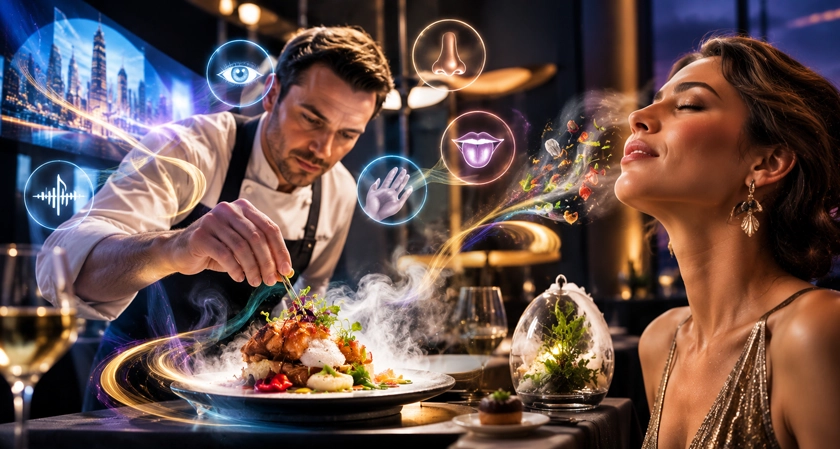
Let's be honest. Exceptional food alone is no longer enough. In 2026, Michelin-starred execution is considered the baseline, not the differentiator. The modern ultra-luxury consumer has experienced it all and they're hungry for something more.
That's where sensemaxing comes in. Known in avant-garde circles as the deliberate orchestration of sight, sound, scent, and touch to fundamentally alter and elevate flavor perception, this is the new frontier of elite hospitality. For luxury restaurant groups, premium food brands, and hospitality designers, mastering these sensory touchpoints is no longer a gimmick it is a critical commercial strategy to increase perceived value, command premium cover charges, and build irreplaceable brand equity.
The science behind this approach is rooted in crossmodal psychophysics, which demonstrates that flavor is not an isolated sensation but arises through crossmodal integration the process by which the brain combines inputs from different sensory systems to construct a coherent perceptual experience. In other words, flavor happens in the mind, not just on the tongue.
That's why The Silicon Review ranked the world's No.1 digital magazine of the year 2026 has curated this guide to the science of sensemaxing. Whether you're a restaurateur, a hospitality designer, or a brand strategist, this is your essential briefing on how the world's most innovative operators are using neuroscience, acoustic engineering, and haptic design to reshape high-end gastronomy.
Sonic Seasoning: The Power of Acoustic Engineering in Fine Dining
Most luxury restaurateurs understand that background music dictates a venue's vibe. However, cognitive psychologists have proven that sound does something far more profound: it changes how food tastes.
This phenomenon, known as "sonic seasoning," is a primary lever in crossmodal menu design. Our brains integrate auditory inputs with taste receptors. By manipulating sound frequencies, hospitality operators can subtly alter a guest's flavor profile:
- Enhancing Sweetness: High-pitched, tinkling, and legato sounds (such as piano or flute notes) naturally amplify the perception of sweetness in desserts without adding sugar
- Boosting Bitterness and Depth: Low-pitched, resonant, and brassy tones accentuate bitterness, smokiness, and umami—perfect for pairing with aged single-malts, dark chocolates, or rich truffles
- Accentuating Freshness: High-frequency, rhythmic, and crisp sounds can increase the perceived crunch and freshness of vegetables and seafood
The science is clear: sound is no longer just part of the atmosphere. As Charles Spence, the world's leading researcher in crossmodal perception, describes, "Sound sits outside flavor. It has become one of the ingredients from which flavor itself is assembled".
Implementing Luxury Restaurant Acoustic Engineering
Forward-thinking brands are moving beyond generic playlists to invest in directional acoustic engineering. Michelin-starred establishments like Mamani in Texas have deployed fully distributed audio systems with custom-finished loudspeakers that remain visually invisible while delivering consistent, high-quality sound across all areas. The goal is to enhance the dining experience without drawing attention to the technology itself.
Similarly, L'Avenue in Paris completed a complete audio system renovation that maintained the venue's sonic identity for over 20 years, ensuring that "sound is not merely an element of ambiance; it is part of the experience itself".
At Wakuda in Singapore's Marina Bay Sands, acoustic design was treated with the same rigor as the cuisine. The installation of sound-absorbing materials addressed the dual challenge of managing kitchen noise and maintaining intimate table conversation.
Haptic Touch: Perceived Luxury Begins in the Hands
The multi-sensory experience begins long before food touches the palate. The weight of a utensil, the texture of a menu, and the surface friction of a table all send immediate, subconscious signals to the brain regarding the quality of the meal.
In the luxury CPG and fine dining sectors, haptic packaging and tactile design are major drivers of consumer satisfaction. Research from The Touch Advantage study, collaboration between Sappi and Clemson University, found that 57% of participants said chocolate in premium packaging tasted better than identical chocolate in plain packaging. Even more telling, 70% chose the premium-packaged chocolate to gift to a friend, associating the tactile quality with higher value.
When a diner handles heavy, premium materials and their brain automatically assigns a higher monetary value to the entire experience. Key tactile touchpoints include:
- Heavyweight Cutlery: Signals quality and permanence, increasing perceived food weight and rich textures
- Matte, Textured Paper: Evokes artisanal craftsmanship, elevating expectations of organic and rare ingredients
- Coarse, Unpolished Ceramics: Conveys authenticity and earthiness, enhancing rustic, fermented, or deeply savory flavor profiles
Conversely, light, flimsy, or overly smooth elements instantly cheapen even the most complex culinary creations.
Olfactory Triggers and Atmospheric Architecture
Human smell is directly tied to the limbic system the brain's emotional and memory center. In multi-sensory dining menu design, controlling the ambient aroma is an exact science.
Ultra-luxury spaces use dry-scent diffusion tech to curate transitions throughout a tasting menu. For example, a seafood course might be accompanied by a subtle, atomized mist containing hyper-localized sea-salt and ozone notes. The goal is not to perfume the room but to recreate an environment that triggers nostalgic flavor memories, making the taste of the food feel infinitely more profound and immersive. This aligns with the growing trend of "smellmaxxing," where younger generations build their olfactory identity through layered fragrances. In the same way that Gen Z is using scent to define personal identity, luxury hospitality is using atmospheric scent to define brand identity. Furthermore, lighting temperatures are strictly calibrated. Shifting lighting from a crisp 3000K during a vibrant starter to a warm, intimate 2200K during a rich dessert slows down the guest's perception of time, encouraging longer stays, higher beverage spend, and deeper emotional connection to the space.
The Business Case for Sensemaxing
Investing in crossmodal design is highly strategic. When an establishment successfully engages all five senses, it creates a dining memory that cannot be replicated at home or by a competitor down the street.
For luxury brands, sensemaxing delivers three clear commercial advantages:
- Premium Pricing Justification: Guests gladly pay a premium when a meal feels like an unmissable theatrical event. Research shows that immersive multisensory environments can selectively enhance taste perception and consistently affect mouthfeel, making the same food taste significantly better in a congruent environment.
- Organic Amplification: Immersive, multi-sensory moments are highly shareable, generating valuable organic PR.
- Irreplaceable Loyalty: When you design an emotional, multi-sensory memory for a guest, you secure a client for life. As one restaurateur noted, "At Mamani, every detail was required to perform flawlessly from day one there was no margin for error".
The future of luxury hospitality belongs to operators who understand that flavor happens in the mind, not just on the tongue. By implementing multi-sensory culinary design, your brand can move past traditional hospitality models and step into the profitable, boundary-pushing world of experiential luxury.
Conclusion
The science of sensemaxing represents the future of ultra-luxury hospitality. By orchestrating sight, sound, scent, and touch, elite operators are elevating flavor perception and justifying premium pricing. The way forward is simple. Stop relying on food alone. Start designing experiences. Because flavor happens in the mind, not just on the tongue.
Frequently Asked Questions (FAQs)
- What is sensemaxing in luxury hospitality?
Sensemaxing is the deliberate orchestration of sight, sound, scent, and touch to fundamentally alter and elevate flavor perception, creating immersive dining experiences that command premium pricing. - What is sonic seasoning?
Sonic seasoning is the phenomenon where sound frequencies change how food tastes high-pitched tones enhance sweetness, while low-pitched tones accentuate bitterness and umami. - How does haptic design affect dining perception?
Heavy cutlery, textured paper, and unpolished ceramics signal quality and authenticity, subconsciously increasing perceived food value and richness. - Why is scent important in multi-sensory dining?
Smell is directly linked to the brain's emotional and memory center, making it a powerful tool for triggering nostalgic flavor experiences. - What is crossmodal perception?
The process by which the brain combines inputs from different senses (taste, smell, sight, sound, touch) to construct a unified perception of flavor. - Which restaurants are leading in multi-sensory design?
Immersive restaurants like Ultraviolet by Paul Pairet, Sublimotion, and The Alchemist are pioneers in multi-sensory dining experiences. - How does lighting affect dining experience?
Warm lighting (2200K) slows time perception, encouraging longer stays and deeper emotional connection, while cooler lighting (3000K) suits vibrant starters. - What is the business case for sensemaxing?
Premium pricing justification, organic amplification through shareable moments, and irreplaceable customer loyalty.











Comments