>>
Industry>>
Social Responsibility>>
Singapore Police to Train Teac...Singapore Police to Train Teachers, Social Workers to Spot Signs of Youth Gang Involvement
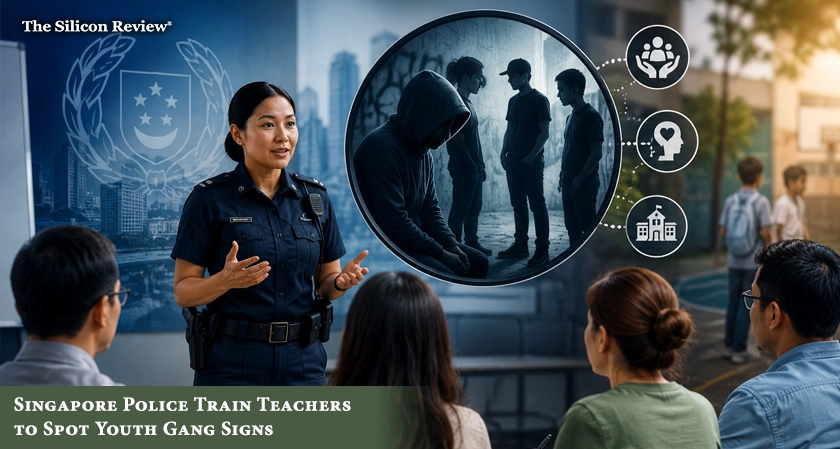
Singapore police are launching a training initiative to equip teachers, social workers and frontline staff with the skills to spot early signs of youth gang involvement, as part of a multi-agency prevention strategy.
Singapore police are rolling out a new training initiative to equip teachers, social workers and other frontline professionals with the skills to identify young people at risk of gang involvement. The programme, led by the Singapore Police Force in collaboration with the Ministry of Social and Family Development and community organisations, aims to strengthen early intervention and prevention efforts across the city-state.
"The main aim of this training is to help protect young people from a life of violence, exploitation and criminality," said a Singapore Police Force spokesperson. "To do this, we need to give front-line workers the awareness to recognise issues being faced by young people who are at risk of exploitation into gangs, and provide them with the practical skills to help safeguard them."
The training will provide participants with practical guidance on identifying warning signs, including changes in peer groups, unexplained travel to unfamiliar areas, and individuals who appear agitated or nervous about answering calls or messages. Frontline workers will also learn how to engage with at-risk youth and refer them to appropriate support services.
"This guidance will give people who work with children and vulnerable adults the confidence to act, which in turn will enable help to be more quickly delivered," said a community safety official from the Ministry of Social and Family Development.
Multi-Agency Approach
The initiative is part of a broader multi-agency strategy to tackle serious youth violence and criminal exploitation in Singapore. Police will work alongside social workers, educators and community groups to ensure a coordinated response.
"It's essential that frontline public professionals, such as social work and school staff, as well as police, recognise the signs and have a shared knowledge of criminal exploitation," said a child welfare expert.
Key elements of the programme include:
- Specialist training sessions delivered to teachers, youth workers and social service staff.
- Collaboration with social service agencies to improve communication and intervention strategies.
- A focus on early identification through school-based programmes and community outreach.
- Peer-led and community advocacy initiatives to raise awareness among young people and families.
"We all know the problem; what we want to do is look not at the problems, but the solutions," said a youth intervention specialist from a Singaporean community organisation. "Our goal is to equip those on the frontline with the knowledge and insight into what works."
The initiative also includes plans to develop educational programmes for schools and youth centres, focusing on current issues such as serious youth violence, criminal and sexual exploitation, and drug awareness.
Here is the question this initiative raises. Singapore police are training teachers and social workers to spot early signs of youth gang involvement. When frontline professionals are equipped with the right skills, can early intervention truly break the cycle of gang recruitment and criminal exploitation in Singapore?
As the training programme rolls out across Singapore, The Silicon Review asks a final question. When the community, schools and police work together, what impact can a coordinated prevention strategy have on protecting vulnerable young people in the city-state?
FAQ:
Q: Who will receive the training on spotting youth gang involvement in Singapore?
A: Teachers, social workers, youth workers and other frontline professionals who work with young people in Singapore will receive the training.
Q: What are some of the warning signs of youth gang involvement?
A: Warning signs include changes in peer groups, travelling to unfamiliar areas, appearing agitated or nervous about calls or messages, and unexplained new possessions or money.
Q: What is the goal of the training initiative in Singapore?
A: The goal is to equip frontline professionals with the skills to identify at-risk youth early, intervene effectively, and refer them to appropriate support services.
Q: Is this a standalone police programme?
A: No, it is a multi-agency initiative involving the Singapore Police Force, the Ministry of Social and Family Development, education and community organisations.
Q: How will the training help young people in Singapore?
A: By identifying at-risk youth early, the training aims to prevent gang recruitment, reduce criminal exploitation, and provide vulnerable young people with the support they need.













Comments