>>
Industry>>
Food and beverages>>
Starbucks Korea Swings to Q2 O...Starbucks Korea Swings to Q2 Operating Loss after 'Tank Day' Marketing Backlash
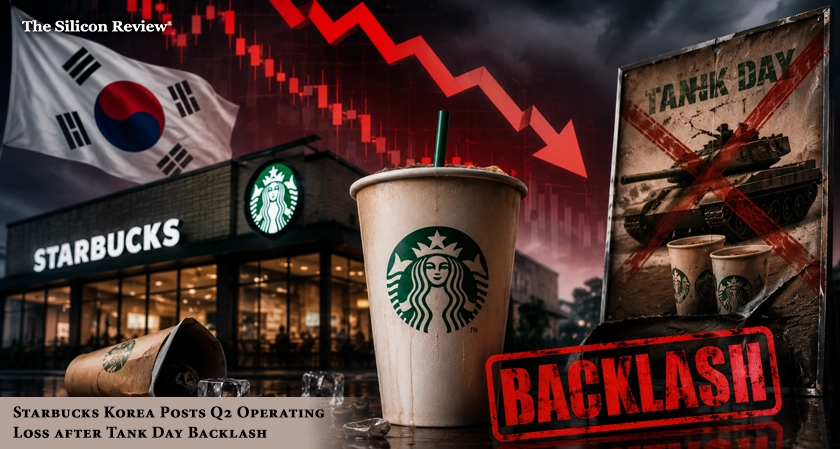
Starbucks Korea swung to an 18.4 billion won operating loss in Q2 2026 after a "Tank Day" marketing campaign that evoked the 1980 Gwangju uprising triggered a consumer boycott and sales slump.
Starbucks Korea has posted a dramatic financial reversal, swinging to a significant operating loss in the second quarter of 2026 following a marketing scandal that sparked nationwide consumer outrage and boycotts. The operator of Starbucks in South Korea reported an operating loss of 18.4 billion won (approximately $13.4 million) for Q2 2026, a stark contrast to the operating profit of 40.3 billion won recorded in the same period a year earlier.
The loss was driven by a 6.1% decline in net sales to 747.3 billion won, as the coffee giant faced the financial consequences of its controversial "Tank Day" promotional campaign launched on May 18.
The "Tank Day" Controversy
The crisis erupted on May 18, when Starbucks Korea promoted a large tumbler it called a "tank" under the "Tank Day" campaign, a date that marks the anniversary of the 1980 Gwangju Uprising . During this tragic event, the military government brutally suppressed pro-democracy demonstrators using troops and tanks, resulting in hundreds of casualties. The campaign further compounded the outrage by using the phrase "Thwack it on the table!," which many interpreted as a reference to a notorious 1987 police statement attempting to cover up the torture death of student activist Park Jong-chol, where police claimed he died after they "hit the desk with a thwack" .
The backlash was immediate and intense, leading to public apologies from Shinsegae Group Chairman Chung Yong-jin, who bowed three times during a televised statement, and the dismissal of the head of Starbucks Korea. The government also distanced itself, with Interior Minister Yoon Ho-jung stating that Starbucks products would no longer be used at government events.
Financial Fallout
The controversy had a direct impact on Starbucks Korea's bottom line. The company was forced to cancel its flagship "Summer Frequency" promotional event in June, which typically drives a significant portion of summer sales and customer traffic. While the company's official statement did not explicitly cite the "Tank Day" scandal as the direct reason for the loss, the suspension of its key summer campaign was a direct consequence of the crisis.
Data from the time revealed a sharp decline in consumer behaviour. In the week following the "Tank Day" event, Starbucks Korea's transactions dropped by 26.3%, falling by over 8 billion won compared to the previous week. The company also saw a 23.6% decline in new app downloads during the same period. The financial impact was a major factor in parent company E-Mart also posting a consolidated operating loss of 43 billion won.
The Path to Recovery
In the wake of the crisis, Starbucks Korea has outlined a recovery strategy focused on restoring brand trust. The company plans to overhaul its review processes by introducing checklists and artificial intelligence tools to prevent such incidents from recurring. It also intends to strengthen its social contribution activities and focus on member-focused customer acquisition marketing in the second half of 2026. The company aims to open 80 new stores with a focus on profitability and to restructure its product portfolio by streamlining low-margin products.
Here is the question this financial reversal raises. A company's insensitive marketing campaign has led to a massive loss in revenue and a tarnished brand image. When a brand's actions deeply offend its customer base, what does it take to rebuild that trust and recover from such a costly mistake?
As Starbucks Korea implements its recovery measures, The Silicon Review asks a final question. When a global brand fails to understand a nation's history and sensitivities, what is the true cost of that oversight?
FAQ:
Q: What was the "Tank Day" controversy at Starbucks Korea?
A: In May 2026, Starbucks Korea launched a "Tank Day" promotion on the anniversary of the 1980 Gwangju uprising, using imagery and language that many felt mocked the victims of the brutal military crackdown .
Q: How much did Starbucks Korea lose in Q2 2026?
A: Starbucks Korea swung to an operating loss of 18.4 billion won ($13.4 million) in the second quarter of 2026, down from a profit of 40.3 billion won a year earlier.
Q: Why did Starbucks Korea's sales drop?
A: The sales drop was driven by a consumer boycott following the "Tank Day" marketing backlash and the subsequent cancellation of the company's key "Summer Frequency" promotional event in June.
Q: What was the public reaction to the "Tank Day" campaign?
A: The campaign sparked immediate outrage, leading to public apologies from the Shinsegae Group chairman, the firing of Starbucks Korea's CEO, and calls for boycotts from consumers and government officials.
Q: What is Starbucks Korea doing to recover from the crisis?
A: Starbucks Korea plans to overhaul its review processes with AI tools, strengthen social contribution activities, and focus on member-focused marketing to restore brand trust.












Comments