>>
Industry>>
Startups>>
Starcloud Raises $250 Million ...Starcloud Raises $250 Million for Orbital Data Centers as Launch Options Dry Up, Nvidia and Cisco Join $2.3 Billion Valuation Round
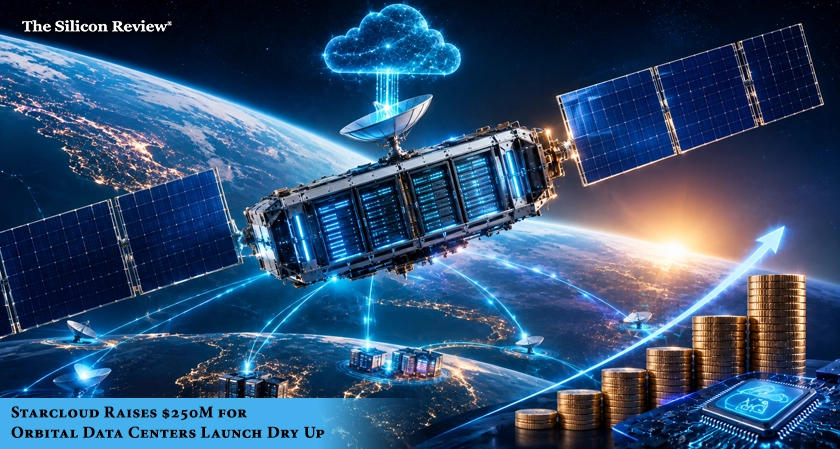
Starcloud has raised a $250 million Series A extension at a $2.3 billion valuation to build AI data centers in orbit, with Nvidia and Cisco joining the round as launch capacity tightens ahead of SpaceX's transition to Starship.
Starcloud, a startup pioneering data centers in space, has raised a $250 million Series A extension at a $2.3 billion post-money valuation. The round was led by Manhattan West, with new investors including Nvidia and Cisco Investments joining existing backers Benchmark, EQT, and Soma. The funding brings Starcloud's total capital raised to $450 million since its founding in 2024.
"Last November we put the first NVIDIA H100 in orbit. Today this fresh capital empowers us to build the infrastructure to launch many more of NVIDIA's most advanced GPUs into space," said Philip Johnston, co-founder and CEO of Starcloud.
A Race to Secure Launch Capacity
The funding comes as launch options become a mounting concern for orbital data center startups. SpaceX's Falcon 9 program is scheduled to end in 2028, and the company is transitioning to the much larger but still unproven Starship rocket, making planning difficult for satellite operators. Competing rockets like Blue Origin's New Glenn and ULA's Vulcan are not flying regularly, and new vehicles like Rocket Lab's Neutron are not yet on the pad.
"We can see what's coming we're going to need to book an enormous amount of launch," Johnston told TechCrunch.
"One of the biggest costs is now on securing your launch capacity… launch is pretty constrained right now because Falcon 9 program is scheduled to end in 2028."
Starcloud has already requested permission from the FCC to operate 88,000 spacecraft, with a long-term vision of delivering 20 gigawatts of orbital compute capacity. The company is building a 100,000-square-foot manufacturing facility in Woodinville, Washington, to produce its next-generation Starcloud-3 spacecraft, which is intended to fly on Starship.
Orbital Computing Firsts and Nvidia Collaboration
Starcloud flew the first Nvidia H100 GPU to orbit aboard its Starcloud-1 satellite in November 2025, demonstrating that commodity AI accelerators can survive and operate in space. Since then, the company has trained the first AI model in orbit, run a version of Google's Gemini in space, and demonstrated high-powered inference on flight hardware.
"The reason they've chosen to do this investment now is because of all of this data that we got from Starcloud One," Johnston said of Nvidia's participation.
The two companies are now collaborating on Nvidia's Space-1 Vera Rubin Module, a space-rated variant of the Vera Rubin platform designed for extreme conditions in orbit. Starcloud's satellites are expected to serve as an early flight platform for the module, building on nine months of flight data from the H100 deployment.
Here is the question this raise raises. Starcloud has raised $250 million to build orbital data centers, but its entire roadmap depends on SpaceX's Starship becoming a routine commercial vehicle. When a startup's future hinges on someone else's unproven rocket, is it a visionary bet or a high-stakes gamble?
FAQ:
Q: What is Starcloud?
A: Starcloud is a startup building data centers in space, using satellites equipped with Nvidia GPUs to perform AI inference and training in orbit, bypassing terrestrial energy and land constraints.
Q: How much did Starcloud raise in its Series A extension?
A: Starcloud raised a $250 million Series A extension at a $2.3 billion valuation, bringing its total funding to $450 million.
Q: Who invested in Starcloud's latest funding round?
A: Manhattan West led the round, with new investors including Nvidia and Cisco Investments joining existing backers Benchmark, EQT, Soma, NFX, and 776.
Q: What is Starcloud's relationship with Nvidia?
A: Starcloud flew the first Nvidia H100 GPU to orbit and is now collaborating with Nvidia on the Space-1 Vera Rubin Module, a space-rated chip designed for extreme orbital conditions.
Q: What launch challenges does Starcloud face?
A: SpaceX's Falcon 9 is ending in 2028, and its replacement Starship is still unproven. Competing rockets are not flying regularly, creating a tight market for launch capacity.
Q: What is Starcloud's long-term vision?
A: Starcloud aims to deploy a constellation of 88,000 satellites delivering 20 gigawatts of orbital compute capacity.













Comments