>>
Industry>>
Transportation>>
Waymo Ojai: Cheaper Next-Gen R...Waymo Ojai: Cheaper Next-Gen Robotaxi Now Open to All Riders in San Francisco, Phoenix, and Los Angeles
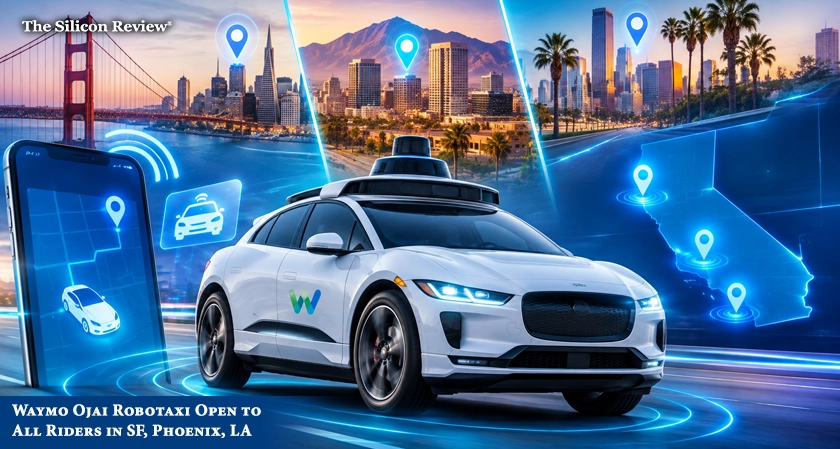
Waymo has opened its next-generation Ojai robotaxi to all riders in San Francisco, Phoenix, and Los Angeles, featuring a minivan-style design, Gemini AI assistant, and lower costs compared to the Jaguar I-Pace.
Waymo has reached a significant milestone in its autonomous vehicle journey, officially opening its next-generation robotaxi, the Ojai, to all riders in San Francisco, Phoenix, and Los Angeles. The Ojai, pronounced "oh-hi," represents a strategic shift for the Alphabet-owned company as it pushes toward profitability and mass-market scale.
"This is our all-new Ojai vehicle that is equipped with our sixth generation of the Waymo driver," said Chris Bonelli, a product communications manager at Waymo. "That is the latest and greatest of the hardware, the compute, and the powerful AI that makes the magic happen."
The Ojai is built on Zeekr's SEA-M platform, a purpose-built architecture designed for robotaxis and delivery vans. Unlike the Jaguar I-Pace, which was retrofitted for autonomous driving, the Ojai was designed from the ground up for self-driving service. Its minivan-style design features a flat floor that can accommodate wheelchairs, wide sliding doors, and a spacious cabin.
Cost Efficiency and Expansion
The Ojai's cost advantage is a key driver of Waymo's expansion. The base vehicle costs approximately $38,000, and even with a 127.5% tariff on Chinese imports, the total cost, including the Waymo Driver system, remains under $100,000 significantly less than the $200,000 Jaguar I-Pace fleet. Waymo is on pace to import 5,000 Ojai vehicles to the US by the end of 2026. The company currently has about 300 Ojai robotaxis in its commercial fleet.
Technology and Features
The Ojai is equipped with Waymo's sixth-generation self-driving system, featuring fewer sensors but higher resolution and better performance in adverse weather conditions, including snow. The vehicle also includes a redesigned user interface and Google's Gemini AI, which acts as an in-car assistant for riders. The interior has been compared to a "modern living room," featuring three large LED screens for passenger entertainment and climate control. The Ojai includes accessibility features such as Braille markings, screen reader compatibility, and assistive handles for passengers with disabilities.
Availability and Future Plans
For now, riders in San Francisco, Phoenix, and Los Angeles may be matched with the Ojai when they hail a ride. Once Waymo has enough Ojais in its fleet, riders will be able to choose between the new vehicle and the older Jaguar I-Pace. The company plans to roll out the Ojai in Denver, Las Vegas, and San Diego later this year. Waymo is also expanding its service area in California, with recent approval from the California Public Utilities Commission to extend service north to Sea Ranch and east to Folsom.
Here is the question this rollout raises. Waymo has opened its cheaper, next-generation Ojai robotaxi to all riders in three major cities. When the cost of autonomous vehicles drops and accessibility improves, will robotaxis finally become a mainstream alternative to traditional rideshare and car ownership?
As Waymo scales its fleet and expands to more cities, The Silicon Review asks a final question. When the economics of autonomous ride-hailing become more viable, how will the transportation landscape be reshaped?
FAQ:
Q: What is the Waymo Ojai robotaxi?
A: The Ojai is Waymo's next-generation autonomous vehicle, a purpose-built minivan developed with Zeekr. It features Waymo's sixth-generation self-driving system, a spacious interior, and lower costs compared to the older Jaguar I-Pace fleet.
Q: In which cities is the Waymo Ojai available?
A: The Ojai is now available to all riders in San Francisco, Phoenix, and Los Angeles. It will also roll out in Denver, Las Vegas, and San Diego later this year.
Q: What makes the Ojai more cost-effective than the Jaguar I-Pace?
A: The base Ojai costs approximately $38,000. Even with a 127.5% tariff on Chinese imports and the addition of the Waymo Driver system, the total cost remains under $100,000, significantly less than the $200,000 Jaguar I-Pace fleet.
Q: What technology does the Ojai use?
A: The Ojai is equipped with Waymo's sixth-generation self-driving system, which features fewer but higher-resolution sensors, better performance in adverse weather, and Google's Gemini AI assistant for riders.
Q: How many Ojai robotaxis does Waymo plan to have in its fleet?
A: Waymo is on pace to import 5,000 Ojai vehicles to the US by the end of 2026, more than doubling its current Jaguar fleet.














Comments