>>
Technology>>
Cyber security>>
Why America’s Growing Pool o...Why America’s Growing Pool of Disillusioned Young Professionals Has Become a Corporate Security Concern
For years, security professionals have been trained to identify threats by looking outward. We monitor geopolitical tensions, terrorism, cybercrime, organized criminal networks, and hostile nation states because these are the risks that traditionally dominate security planning.
Those threats remain real, but I believe we are overlooking another one that is developing much closer to home.
Increasingly, the people who concern me are educated, capable individuals who have become deeply frustrated with the systems around them, and whose anger is being amplified by a digital environment that rewards outrage over understanding. If we continue treating physical security as something that begins only when violence occurs, we will continue missing the conditions that make violence possible in the first place.
The conversation surrounding artificial intelligence has become almost entirely focused on productivity, investment, and innovation. Boardrooms are debating competitive advantage. Governments are discussing regulation. Investors continue pouring unprecedented sums into the companies building tomorrow’s technology. Those conversations matter, but they are causing us to overlook a different consequence of rapid technological change.
AI is not creating social instability on its own. It is accelerating existing human behaviors by making information, persuasion, and influence faster, cheaper, and more accessible than ever before.
Throughout my career managing security and organizational risk, I have learned that the greatest threats rarely arrive without warning. They develop gradually, often hidden beneath broader economic and political trends. By the time they become obvious, organizations are already responding to the consequences rather than preventing the causes.
Today’s environment contains several of those warning signs.
Across the United States and much of the developed world, many young adults have followed the path they were promised would lead to opportunity. They earned university degrees, invested heavily in their education, and entered the workforce expecting stable careers that would allow them to build financial security. Instead, many have encountered soaring housing costs, persistent inflation, uncertain employment prospects, and growing concerns that automation and AI may fundamentally reshape white-collar work. The gap between expectation and reality continues to widen.
Financial insecurity, the rising cost of living, and uncertainty about future career opportunities remain among the defining issues facing younger generations. Declining trust in institutions and prolonged uncertainty are impacting employee engagement, resilience, and organizational culture. These findings are often framed as workforce challenges, but I believe they warrant equal attention from security leaders.
History repeatedly demonstrates that individuals who feel excluded, ignored, or left behind become significantly more vulnerable to simplistic explanations for complicated problems. That vulnerability has never belonged to one political ideology, religion, or demographic. It is a recurring feature of human behavior.
History has repeatedly shown that people experiencing frustration and uncertainty are more likely to gravitate toward communities that offer certainty, belonging, and someone to blame. What concerns me today is not any single ideology or movement, but the way those same psychological dynamics are being amplified online. Algorithms, influencers, anonymous forums, and increasingly sophisticated AI-generated content can reinforce existing frustrations until they harden into deeply held beliefs. To the person experiencing it, the process rarely feels like manipulation. It feels like finally finding answers that make sense of a world that no longer does.
In many cases, there is no recruiter sitting across the table. The recommendation engine performs that role instead. Every click generates another recommendation. Every search produces another explanation. Every interaction strengthens the belief that someone else is responsible for personal disappointment. Over time, frustration hardens into certainty, and certainty begins to justify increasingly extreme conclusions.
That progression should concern every executive responsible for protecting people, organizations, and critical assets.
We often imagine physical threats arriving from outside the organization. We picture hostile nation states, sophisticated criminal networks, or highly coordinated attacks. Yet some of the incidents that have captured public attention in recent years have involved individuals acting alone, driven not by membership in any organized group, but by a deeply personal sense of grievance. Their circumstances differ, but the progression is often strikingly similar: disappointment becomes resentment, resentment becomes fixation, and fixation eventually seeks an outlet.
That is why I believe organizations need to broaden how they think about security. Executive protection and enterprise risk cannot be separated from the social and economic pressures shaping the people around us. Security teams have become highly effective at identifying suspicious behavior and strengthening physical defenses. The next challenge is recognizing the conditions that can push isolated individuals toward increasingly dangerous decisions.
AI belongs in this conversation, not because it creates these problems, but because it accelerates them. Recommendation algorithms, AI-generated content, and personalized information streams can reinforce existing beliefs at an unprecedented pace. Generative AI is fundamentally changing how information is created and consumed. That presents enormous opportunities, but it also makes influence, persuasion, and misinformation easier to scale than ever before.
The pace of change only magnifies the challenge. Economic uncertainty, political polarization, technological disruption, and declining trust in institutions are no longer separate issues. They reinforce one another, creating an environment where frustration can spread quickly and harden into conviction. For security professionals, ignoring those broader dynamics means focusing on symptoms rather than causes.
This is not an argument that a generation should be viewed with suspicion. The overwhelming majority of people experiencing financial hardship or frustration will never resort to violence. But security has never been about predicting exactly who will act. It has always been about recognizing emerging patterns before they become incidents.
The organizations best prepared for the future will not simply invest in better surveillance systems or more advanced AI. They will invest in understanding how today’s rapidly changing social landscape is reshaping tomorrow’s risks. If we continue looking only for traditional threats, we will overlook the conditions developing in plain sight. The next major security challenge may emerge from someone who has quietly lost faith that the system was ever working for them in the first place.
About the Author:
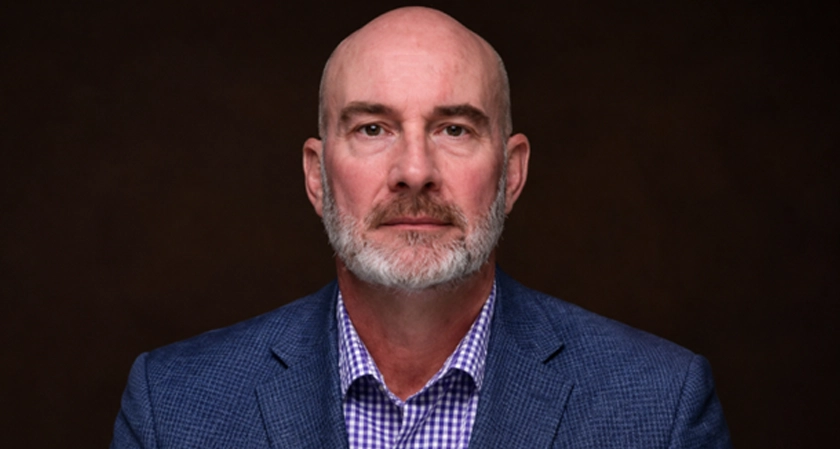
Tim Crockett is the co-founder of DGBI-USA and an enterprise security and risk management executive with extensive experience advising corporations, family offices, and high-net-worth individuals on investigations, intelligence, executive protection, and organizational resilience. His work focuses on helping organizations understand emerging risks before they become crises.



















Comments