>>
Industry>>
Defense technology>>
Defence Chiefs Back Boosting U...Defence Chiefs Back Boosting US Military Presence in Australia "American Force Posture Is Growing"
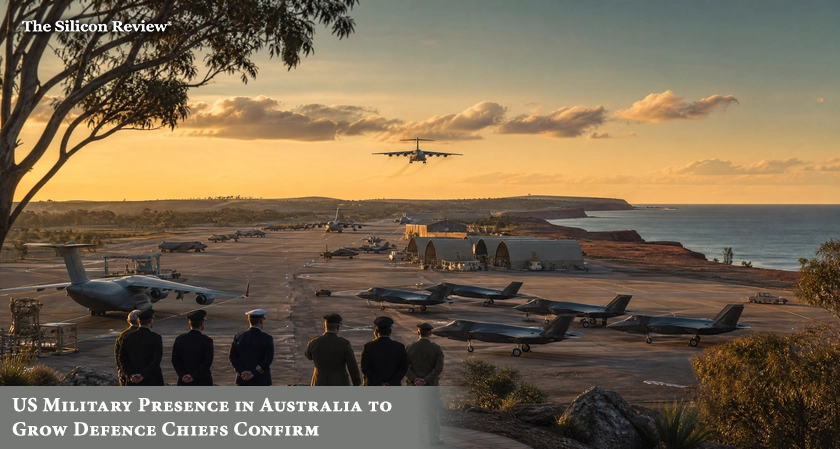
Australia and the United States have agreed to accelerate US "force posture" initiatives at Australian bases, expanding military cooperation across logistics, air forces, cyber and space as a counter to China's military build-up.
Australia and the United States have agreed to boost the US military presence in Australia, with Defence Minister Richard Marles and US Defense Secretary Pete Hegseth committing to accelerate force posture initiatives at Australian bases. The decision, announced following talks in Washington on September 2, is part of a broader effort to strengthen deterrence in the Indo-Pacific in response to China's unprecedented military build-up.
"American force posture in Australia is growing. That's across all the domains," Marles told reporters. "We think that's really important in terms of providing deterrence in the Indo-Pacific, providing for stability and peace in the Indo-Pacific. And that's very much in Australia's national interest."
What "Force Posture" Expansion Means
The expanded cooperation builds on existing US presence in Australia, which includes the annual rotation of US Marines through Darwin and the establishment of Submarine Rotational Force-West at HMAS Stirling near Perth. From 2027, up to four US and one UK nuclear-powered submarines will rotate through the base, supported by the reestablished US Submarine Squadron 3.
While Australia does not permit foreign military bases on its soil, the new initiatives will involve:
- Accelerated force posture initiatives at Australian bases
- Bolstered cooperation in combined logistics
- Greater interoperability through joint exercises
- Defence industrial cooperation on guided weapons and next-generation capabilities
Marles also noted cooperation is taking place "in respect of our air forces, cyber, and space."
The Strategic Rationale
Both countries framed the expansion as a response to China's military build-up. "We need to be ensuring that we build deterrence, that we build balance, so that we can provide for the peace and stability of the region in which we live," Marles said.
Hegseth emphasised the need for allies to invest in their own sovereign security and contribute to collective defence. The Pentagon noted "strong alignment" between the national defence strategies of both countries.
Further announcements on the expanded US military presence are expected at the AUSMIN ministerial meeting later this year.
Here is the question this development raises. The US military presence in Australia is set to grow across land, sea, air, cyber and space, as both countries cite China's military build-up as the driving force. When a nation without foreign military bases on its soil deepens its military integration with a superpower, does it strengthen its defence or tie its security to the strategic calculations of another?
FAQ:
Q: What does the expanded US military presence in Australia involve?
A: The expansion includes accelerating force posture initiatives at Australian bases, bolstering logistics cooperation, building interoperability through joint exercises, and advancing defence industrial cooperation on guided weapons and next-generation capabilities.
Q: Will there be more US troops stationed in Australia?
A: While the expansion does not necessarily mean more US troops, the US military presence is growing "across all domains," including air forces, cyber, and space. Further details are expected at the AUSMIN meeting.
Q: Does Australia allow foreign military bases on its soil?
A: No, Australia does not permit foreign military bases on its soil, but hosts US Marines for exercises for six months of the year in Darwin and will host rotating US and UK nuclear-powered submarines at HMAS Stirling.
Q: What is the strategic rationale for the US military expansion in Australia?
A: Both countries cited China's unprecedented military build-up as the reason, with Marles saying the expanded presence is needed to "build deterrence" and "build balance" in the Indo-Pacific .
Q: What is the AUKUS agreement?
A: AUKUS is a trilateral security partnership between Australia, the UK, and the US, focused on helping Australia acquire conventionally armed, nuclear-powered submarines. The Submarine Rotational Force-West is a key part of this effort.


















Comments