>>
Industry>>
Environmental sustainability>>
China Restores Road Access to ...China Restores Road Access to Tibet Disaster Zone as Search Intensifies, 20 Dead, Dozens Missing After Glacial Collapse in Gyirong
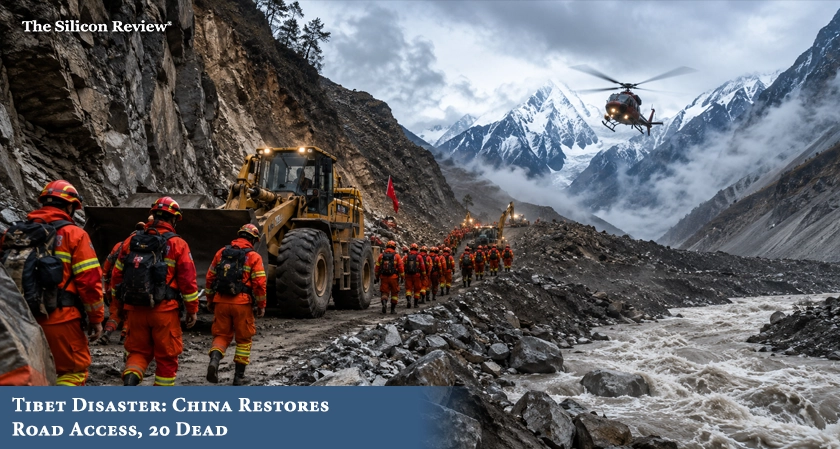
China has restored road access to a disaster zone in Tibet's Gyirong County, where a glacial collapse and avalanche killed 20 people and left dozens missing. More than 800 rescue workers are searching for survivors, while the death toll is expected to rise.
China has restored road access to a remote disaster zone in Tibet's Gyirong County, allowing a major search and rescue operation to intensify. The disaster, which occurred when a massive block of ice broke off a glacier, triggered an avalanche that swept away sections of the China-Nepal border road and nearby villages.
"As of 8 pm, 20 people had been confirmed dead and dozens more were unaccounted for," according to Chinese state media.
The disaster struck on Tuesday, with officials warning that the death toll is expected to rise. More than 800 rescue workers and medical staff have been deployed to the area, using satellite phones for communication in the mountainous terrain. The area, part of the Himalayan mountain range, is prone to glacial activity and landslides.
The Impact on Both Sides of the Border
The road access restoration is critical for delivering aid and heavy machinery to the affected area, which is located at an altitude of more than 3,000 metres. The disaster has also affected the Nepali side of the border. Nepal's Home Ministry reported that the sudden floods, caused by the glacial collapse, had damaged the border post and a police station, and had washed away the Rasuwagadhi-Kerung border crossing.
"We are working with local authorities to ensure that rescue efforts are carried out efficiently and that the affected communities receive the support they need," a Chinese government spokesperson said.
China and Nepal have been in communication to coordinate rescue efforts across the border. The disaster has drawn attention to the risks posed by climate change in the Himalayan region, where retreating glaciers are increasing the frequency of glacial lake outburst floods and related disasters.
Here is the question this disaster raises. China has restored road access to the Tibet disaster zone, but with the death toll rising and dozens still missing, the focus is on the rescue operation. When a glacial collapse in a remote Himalayan region kills 20 people and leaves dozens missing, what does it say about the growing risks of climate change in high-altitude areas?
FAQ:
Q: Where did the disaster occur in Tibet?
A: The glacial collapse and avalanche occurred in Gyirong County, a remote area of Tibet near the China-Nepal border.
Q: How many people have been confirmed dead in the Tibet disaster?
A: At least 20 people have been confirmed dead, with dozens more missing.
Q: How many rescue workers have been deployed?
A: More than 800 rescue workers and medical staff have been deployed to the disaster zone.
Q: Has the disaster affected Nepal?
A: Yes, the disaster has also impacted the Nepali side of the border, damaging the border post and a police station, and washing away the Rasuwagadhi-Kerung border crossing.
Q: What caused the disaster in Tibet?
A: The disaster was triggered by a glacial collapse, which caused an avalanche that swept away sections of the border road and nearby villages.













Comments