>>
Industry>>
Retail>>
Custom Brand Packaging That Fo...Custom Brand Packaging That Follows Best Practices for Product Protection
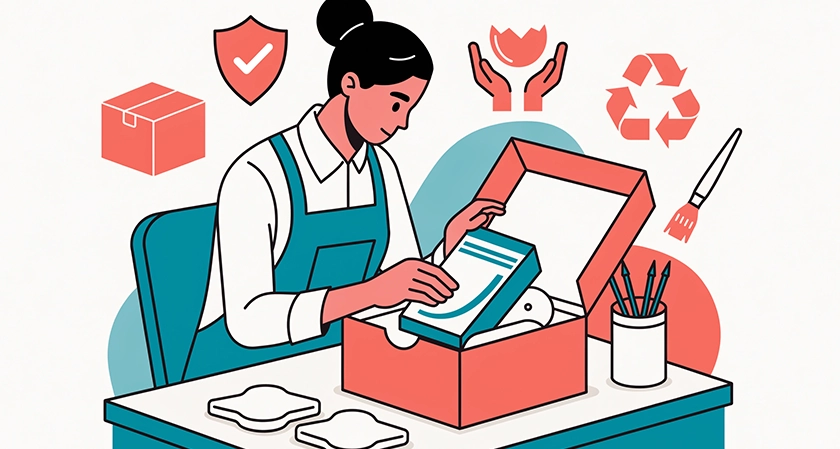
Packaging has to do more than make a product look attractive. For brands that ship products to customers, packaging also has an important practical job: protecting the product from damage during storage, handling, and transportation.
A package may be moved between warehouses, stacked with other shipments, loaded into delivery vehicles, and handled several times before it reaches the customer. If the packaging is not designed around the product's actual needs, even a high-quality product can arrive damaged.
That is why effective packaging starts with protection first and branding second. Fortunately, brands do not have to choose between the two. With thoughtful design, the right materials, and accurate sizing, packaging can protect a product while also creating a strong brand experience.
Start With the Product, Not the Packaging
Every product has different packaging requirements.
A lightweight accessory will not need the same level of protection as a glass bottle, electronic device, cosmetic product, or fragile decorative item. Before choosing a box, bag, or insert, brands should consider the product's dimensions, weight, shape, fragility, and likely shipping conditions.
This information helps determine everything from the package size to the material and internal protection.
Starting with the product also prevents a common mistake: selecting packaging based only on appearance and then trying to make the product fit afterward.
Choose the Right Package Size
Package size has a direct effect on product protection.
If a box is significantly larger than the product, the item may move around during transportation. That movement can increase the risk of scratches, dents, broken components, or other damage.
On the other hand, packaging that is too small can put unnecessary pressure on the product and make proper closure difficult.
The ideal package should provide enough room for the product and any necessary protective components without leaving excessive empty space. Accurate measurements before production can therefore make a significant difference.
Select Materials Based on the Product
There is no single packaging material that works perfectly for every product.
Corrugated packaging is commonly used for shipping because it can provide useful structural protection while remaining relatively lightweight. Paperboard can be suitable for retail presentation and lighter products, while inserts and cushioning can provide additional support for fragile items.
The right choice depends on the product, shipping environment, desired presentation, budget, and level of protection required.
Instead of choosing a material simply because it looks premium, brands should ask whether it can perform its job throughout the product's journey.
Don't Ignore Internal Protection
The outside of a package is only part of the protection system.
Internal movement can be one of the biggest causes of damage during transportation. If an item can move freely inside its package, impacts and vibration can transfer directly to the product.
Inserts, dividers, fitted compartments, and suitable cushioning can help keep products in position. They are especially useful when packaging contains multiple products or when an item has delicate components.
However, more material does not automatically mean better protection. Each internal component should have a clear purpose.
Design for Real-World Shipping Conditions
A package does not stay still during delivery.
It may experience vibration, compression, stacking, accidental drops, and repeated handling. Packaging should therefore be considered in the context of how it will actually be transported.
For important products, brands should consider testing a physical sample before placing a large production order. A sample can reveal problems with dimensions, structural strength, closure, internal movement, or overall usability.
Finding these issues early is much easier than discovering them after thousands of packages have already been produced.
Combine Protection With Brand Identity
Protective packaging does not have to look generic.
Brands can incorporate logos, colors, typography, printed messaging, finishes, and other visual elements into packaging while maintaining the structural features needed for protection.
This is one of the main advantages of custom packaging. Instead of forcing a product into a standard format, brands can develop packaging around the product and their desired customer experience.
Well-designed custom brand packaging can therefore become both a protective solution and an important part of the brand identity.
Think About the Customer's Unboxing Experience
The packaging experience continues after the parcel reaches the customer.
A package that is difficult to open, contains unnecessary layers, or leaves the customer searching for the product can create frustration. In contrast, a clean and organized package can make the unboxing process feel more intentional.
The best packaging makes the product easy to access while still providing adequate protection.
This is particularly important for e-commerce brands because the package may be the first physical interaction a customer has with the brand after making an online purchase.
Consider Sustainability Without Sacrificing Protection
Reducing packaging waste is important, but removing material without considering protection can create another problem.
A damaged product may need to be replaced, shipped again, or returned. That can result in additional material use and transportation.
A more practical approach is to eliminate unnecessary components, optimize package dimensions, and select materials that provide the required protection without excessive waste.
Brands can also consider recyclable or responsibly sourced materials where appropriate.
The goal should be efficient packaging rather than simply using as little material as possible.
Keep the Final Specifications Clear
Before production begins, all important packaging details should be documented.
These can include:
- Product dimensions
- Package dimensions
- Material
- Printing requirements
- Finish
- Internal inserts
- Quantity
- Delivery requirements
- Artwork version
Keeping these specifications in one approved document reduces the chance of misunderstandings between the brand, designer, and supplier.
It also makes future reorders easier because the approved packaging specifications are already documented.
Choose a Supplier That Understands Both Design and Protection
A packaging supplier plays an important role in turning an idea into a practical finished product.
Brands should consider whether a supplier can support the process from specifications and customization through sampling, production, and delivery.
For example, Packfancy offers custom packaging solutions for brands that want packaging designed around their products and branding. Exploring the available options can help businesses determine which packaging format, material, and customization approach best fits their needs.
A supplier that understands both presentation and practical protection can make the entire packaging process easier to manage.
A Simple Product Protection Checklist
Before approving a packaging design, brands should ask:
- Does the package fit the product correctly?
- Can the product move excessively inside?
- Is the material suitable for the product's weight and fragility?
- Are internal inserts or cushioning necessary?
- Can the package handle normal shipping and handling?
- Is it easy for customers to open?
- Does the branding remain clear and professional?
- Is unnecessary packaging material being avoided?
- Has a physical sample been reviewed when appropriate?
- Are the final specifications documented for future orders?
Answering these questions before production can help identify weaknesses while there is still time to make adjustments.
Conclusion
Effective packaging is not simply about creating something attractive. It is about creating a system that protects the product throughout its journey while giving customers a positive experience when the package arrives.
The right dimensions, materials, internal protection, testing process, and branding can work together to achieve that goal.
For brands investing in custom packaging, the best results usually come from treating protection and presentation as parts of the same design process. When packaging is planned around the real needs of the product, it can reduce avoidable damage, strengthen the customer experience, and represent the brand in a consistent and professional way.













Comments