>>
Industry>>
Space>>
Indian Space Startup GalaxEye ...Indian Space Startup GalaxEye Wins US Patent for OptoSAR Satellite Imaging Technology First Indian Startup to Secure US Patent for Satellite Imaging
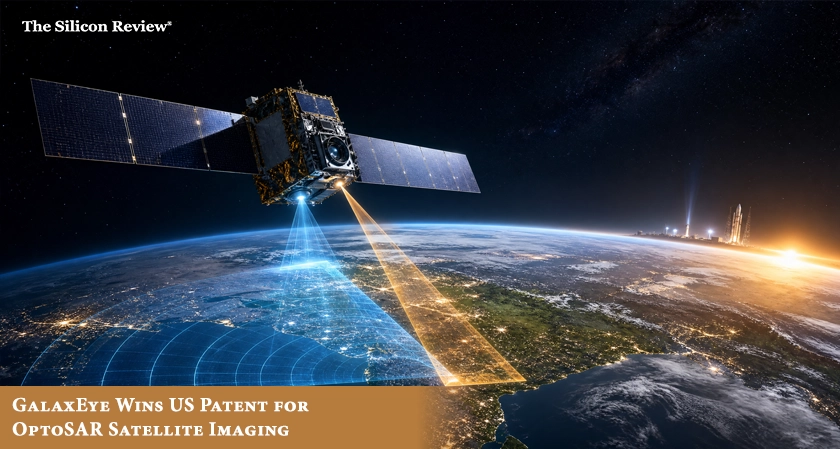
Bengaluru-based space tech startup GalaxEye has secured a US patent for the core technology behind its OptoSAR imaging system, making it the first Indian startup to receive a US patent specifically for satellite imaging technology.
Indian space technology startup GalaxEye has secured a US patent for the core technology behind its OptoSAR imaging system, which combines optical and synthetic aperture radar sensors to capture aligned Earth observation data. The patent covers the architecture and system used to synchronize optical and microwave sensors for simultaneous, spatially and temporally matched data acquisition.
"This is an invention that came out of India," said GalaxEye founder and CEO Suyash Singh. "The US patent validates the ability of Indian deep-tech companies to develop globally differentiated technology."
The technology addresses a fundamental challenge in Earth observation where optical and SAR sensors have traditionally operated independently or been combined through post-processing. Data captured at different times, viewing angles or from different platforms can create temporal gaps and spatial misalignment. GalaxEye's patented architecture synchronises the two sensing technologies at the system level, combining the visual and spectral information of optical imaging with SAR's day-and-night and all-weather capabilities.
"Its uniqueness lies in synchronizing optical and SAR sensors at the system level to deliver inherently aligned, spatially and temporally matched Earth observation data. This is not only a significant technical innovation but also has strong commercial potential across applications requiring richer, more actionable intelligence," said former ISRO chairman Dr Somanath S Panicker.
The US patent strengthens GalaxEye's intellectual property position as it prepares to scale a planned 30-satellite constellation over the next five years. The company has a growing commercial pipeline across domestic and international customers and expects the network to serve defence, government and commercial applications, including agriculture, infrastructure, insurance, maritime intelligence and disaster management.
GalaxEye's technology is linked to Mission Drishti, which launched earlier in May 2026. The company described Drishti as the world's first OptoSAR imaging satellite, combining multispectral imaging and SAR on a single satellite platform. At about 190 kg, Drishti was also India's largest privately built Earth observation satellite at the time of launch.
In August 2026, GalaxEye announced the acquisition of Bengaluru-based spacecraft engineering company StarOps to strengthen its in-house spacecraft engineering and systems capabilities. The company plans to build on its OptoSAR platform through next-generation satellites, imaging payloads, data processing and AI-driven intelligence capabilities.
The patent comes at a time when the global commercial satellite imaging market, valued at $6.55 billion in 2024, is projected to more than triple to $20.15 billion by 2033. Former ISRO chairman Dr Somanath S Panicker noted that the development is evidence of the capabilities emerging from India's private space sector.
Here is the question this patent raises. GalaxEye has secured a US patent for the world's first commercially viable OptoSAR imaging system, combining optical and radar sensors on a single satellite platform. When an Indian startup patents a technology that solves a fundamental challenge in Earth observation synchronizing optical clarity with all-weather radar capability does this mark the arrival of India's private space sector as a global innovator, or is it a signal of the deep-tech ambitions emerging from Bengaluru's space ecosystem?
FAQ:
Q: What is the GalaxEye OptoSAR patent about?
A: The US patent covers the architecture and system used to synchronize optical and microwave sensors for simultaneous, spatially and temporally matched data acquisition. This allows the combination of optical imaging's visual and spectral information with SAR's day-and-night and all-weather capabilities.
Q: Is GalaxEye the first Indian startup to receive a US patent for satellite imaging?
A: The Company has stated it is the first Indian startup to receive a US patent specifically for satellite imaging technology. This distinction is based on GalaxEye's own announcement and has not been independently verified against all Indian space startups.
Q: What is Mission Drishti?
A: Mission Drishti is GalaxEye's first satellite, described as the world's first OptoSAR imaging satellite. Launched in May 2026, it combines multispectral imaging and SAR on a single satellite platform.
Q: What are GalaxEye's plans after securing the US patent?
A: GalaxEye plans to deploy a 30-satellite constellation over the next five years and has acquired Bengaluru-based StarOps to strengthen in-house spacecraft engineering and systems capabilities.
Q: What is the market potential for satellite imaging technology?
A: The global commercial satellite imaging market, valued at $6.55 billion in 2024, is projected to more than triple to $20.15 billion by 2033.




















Comments