>>
Technology>>
E commerce>>
How Smartshops Are Changing Sp...How Smartshops Are Changing Specialized Online Retail in France
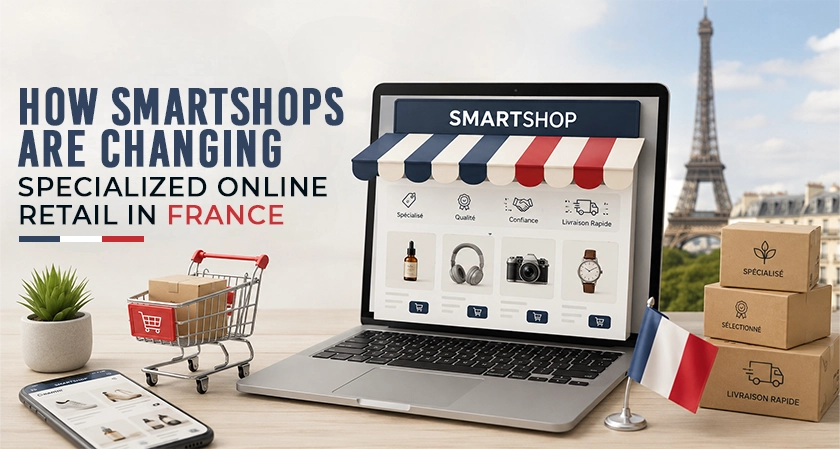
What happens when a niche retail category moves online and customers start expecting the same convenience, transparency, and service they get from mainstream e-commerce? In France, specialized retailers are increasingly adapting to that shift. Customers can research products from home, compare specialist businesses, read detailed information, and decide whether a retailer feels trustworthy before making contact or completing a purchase.
The wider French market makes that change difficult to ignore. Online shopping has become a routine part of everyday life, giving specialized retailers a larger digital audience than ever before.
For smartshops and other specialist retailers, that creates an opportunity to compete through something general marketplaces cannot easily replicate: focused knowledge and a customer experience built around a specific audience.
Specialized Retail Is About More Than Product Selection
A general online marketplace wins partly through scale. It can offer thousands of categories and countless products, but that abundance can also make the shopping experience overwhelming.
Specialized retailers take the opposite approach. Their value comes from narrowing the field and helping customers understand what they are actually looking at.
A strong specialist website can make that experience easier through:
-
Clearly organized product categories
-
Detailed and understandable descriptions
-
Helpful explanations of industry terminology
-
Straightforward policies and customer information
-
Relevant educational content
-
Responsive customer support
This changes the role of the online store. It becomes more than a place to complete a transaction; it becomes a resource customers can use when they are researching a specialized category.
Why France Is Ready for More Specialized E-Commerce
Online shopping is no longer something French consumers treat as an occasional alternative to physical retail. It is now part of ordinary purchasing behavior across a broad range of age groups.
INSEE reports that about two-thirds of French people aged 15 and over made an online purchase during the previous three months in 2025. Internet use itself is even more widespread, with nearly 90% of people aged 15 and over using the internet during that period.
The scale of the wider market reinforces the opportunity. According to FEVAD, French e-commerce generated €196.4 billion in 2025, up 7% from the previous year, across products and services. The number of online transactions reached 3.2 billion. For specialist retailers, this doesn't mean trying to compete with the biggest platforms on price or volume. It means taking advantage of consumers' growing comfort with researching and purchasing from focused online businesses.
Trust Is Especially Important for Smartshops
Specialized retail comes with a particular challenge: customers may be less familiar with individual businesses than they are with major household-name retailers.
That makes trust a central part of the online experience. A professional retailer should make important information easy to find rather than forcing customers to search through the website. Depending on the category and applicable French regulations, this can include product details, age requirements, shipping policies, returns information, payment terms, and other relevant restrictions.
The presentation matters too. A website that looks neglected or makes basic information difficult to locate can create doubts before a customer ever reaches the checkout stage. For a specialist business, credibility is therefore built through dozens of small details rather than one big marketing claim.
Product Education Can Become a Competitive Advantage
One of the strongest ways specialized online retailers can differentiate themselves is through useful information.
Someone shopping in a niche category may have questions that a standard product page cannot answer. They may not understand the terminology, know how products differ, or know which factors actually matter when comparing options.
That gives specialist retailers an opportunity to create genuinely helpful content around their category.
Instead of publishing pages that simply repeat promotional language, a smartshop can explain:
-
What different product categories mean
-
How to compare products responsibly
-
Which characteristics distinguish one category from another
-
What customers should consider before making a purchase
-
Which rules or restrictions may apply
This type of content can also support search visibility naturally because it answers the questions people are already asking rather than forcing keywords into every paragraph.
The Role of a Smartshop France Retailer
The phrase Smartshop France reflects more than a language or geographic preference. It signals an expectation that the retailer understands the local customer and the environment in which that customer is shopping.
For a business such as Express Highs, serving French-speaking customers through a dedicated French-language storefront can make the experience feel considerably more accessible. Product information, navigation, customer service, and purchasing guidance all become easier to understand when they are presented for the intended audience rather than simply translated as an afterthought.
That local focus can be particularly valuable for specialized retail because customers are often looking for clarity before they are looking for speed.
Convenience Still Has to Feel Personal
One assumption about online retail is that customers only care about convenience. In reality, convenience gets people through the door, but a good experience is what makes them comfortable returning.
Specialist retailers can create that experience through relatively simple improvements:
-
Fast and clear navigation
-
Mobile-friendly product pages
-
Useful search and filtering
-
Transparent delivery information
-
Easy-to-find customer support
-
Relevant recommendations
-
Educational resources that answer common questions
None of these features is revolutionary on its own. Together, however, they remove the friction that can make a niche online purchase unnecessarily difficult.
Responsible Retail Matters More as the Market Grows
The growth of specialized online retail also creates greater responsibility for businesses operating in regulated categories. A retailer cannot treat compliance as something separate from the customer experience.
Businesses need to understand the rules that apply to the products they offer and the customers they serve. Depending on the category, this can involve age restrictions, product-specific regulations, advertising limitations, payment-provider requirements, shipping rules, and consumer-protection obligations.
Making these requirements clear can actually strengthen the customer experience. People are more likely to trust a retailer that explains its policies openly than one that leaves important questions unanswered.
What the Future Looks Like
The future of specialized online retail in France is unlikely to be about simply putting more products on a website. The stronger opportunity lies in making niche shopping easier to understand.
Smartshops can compete by combining focused product selection with useful information, responsible practices, strong customer service, and a digital experience that feels deliberately designed for its audience.
That approach also gives smaller specialist businesses a way to compete without trying to become miniature versions of Amazon or other giant marketplaces. Their advantage is that they know their category, understand their customers, and can build an experience around those two things.
Conclusion
Smartshops are part of a broader change in how French consumers discover and purchase specialized products online. As e-commerce becomes more established, customers are increasingly looking for retailers that offer more than a basic catalogue and checkout page. They want clear information, convenient browsing, transparent policies, and confidence that the business understands its category.
For specialist retailers, that creates a meaningful opportunity: instead of competing purely on price or product volume, they can build loyalty through expertise, relevance, and trust. The businesses that combine those qualities with a strong online experience will be best positioned to grow as specialized e-commerce continues to mature in France.














Comments