>>
Industry>>
Space>>
Eye in the Sky: Why India's EO...Eye in the Sky: Why India's EOS-05 Mission Success Matters More Than Ever to ISRO
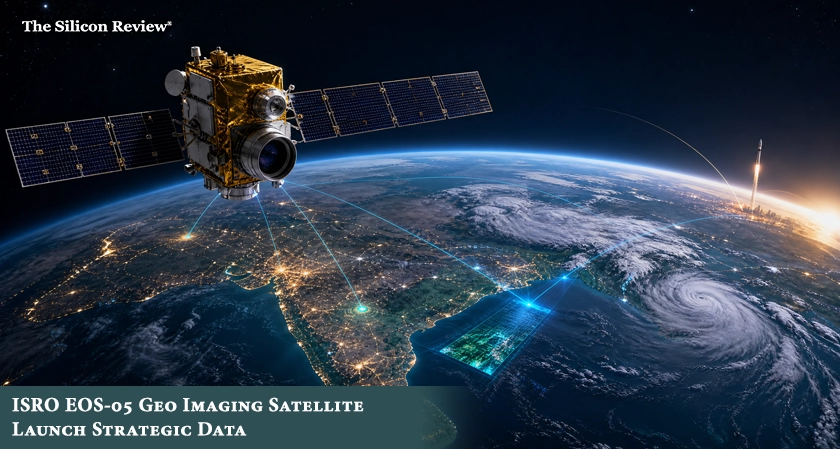
ISRO has successfully launched EOS-05, India's first dedicated imaging satellite in geosynchronous orbit, placing a 2,367 kg payload into orbit aboard the GSLV-F17, a mission that redeems the "naughty boy" of Indian rocketry and establishes a new 24/7 strategic surveillance capability for the nation.
In the early hours of September 4, 2026, the Indian Space Research Organisation (ISRO) scripted a significant new chapter in its history. The GSLV-F17 rocket lifted off from the Satish Dhawan Space Centre in Sriharikota at 2:55 AM IST, successfully injecting the 2,367 kg EOS-05 satellite into its intended sub-geosynchronous transfer orbit. This marks ISRO's first successful launch of 2026 and is being hailed as a "great achievement" for the country's space programme.
The 'Eye in the Sky'
EOS-05, described by a senior scientist as an "eye in the sky," is India's first-ever dedicated imaging satellite to be placed in a geosynchronous orbit. While most of India's Earth observation satellites operate from Low Earth Orbit (LEO), moving around the planet, EOS-05 will hover approximately 36,000 km above the Earth. At this altitude, the satellite's orbital period matches Earth's rotation, allowing it to remain positioned over the same broad region, providing a continuous view of the Indian subcontinent and its neighbourhood.
Why the Geosynchronous Orbit Matters
This strategic position is what makes the EOS-05 mission "India's third eye" in space. Instead of taking occasional snapshots as it passes over, EOS-05 is designed to provide frequent, near-real-time imagery, capable of capturing and transmitting images of the country in roughly 30 minutes, with priority targets potentially being revisited in as little as five minutes .
ISRO Chairman V. Narayanan confirmed that once operationalized, the satellite will provide important "strategic data" for the nation. ISRO has clarified that it is not a dedicated "spy satellite" but a platform with both civilian and strategic applications. Its frequent imaging capability can support agriculture, forestry, disaster management, and environmental monitoring, while also providing persistent information on sensitive areas, including India's vast borders.
A Redemption for the 'Naughty Boy' Rocket
The GSLV rocket, often nicknamed the "Naughty Boy" due to a history of technical challenges and failures, including the unsuccessful GSLV-F10/EOS-03 mission in August 2021, delivered a flawless performance. The GSLV-F17 mission was the 19th flight of the vehicle and carried its heaviest payload ever into a GTO or sub-GTO orbit. This success marks a significant redemption for the launch vehicle and a major morale booster for ISRO. With this launch, India has not only enhanced its Earth observation capabilities but has also paved the way for more ambitious missions, with ISRO confirming that preparations for the Gaganyaan human spaceflight mission are in full swing and that another six launches are planned for the current financial year .
Here is the question this mission raises. After years of setbacks and the "naughty boy" GSLV's previous failures, the flawless deployment of India's first geo-imaging satellite marks a pivotal moment for ISRO. When a nation can station a persistent eye in the sky providing near-real-time imagery of its borders and beyond, does it represent a new dawn for strategic autonomy, or does it signal a shift in the regional security balance?
FAQ:
Q: What is the EOS-05 satellite?
A: EOS-05 is India's first dedicated imaging satellite placed in a geosynchronous orbit. Operating at approximately 36,000 km above Earth, it provides near-real-time imaging and a continuous view of the same broad region, supporting both civilian and strategic applications.
Q: Why is EOS-05 a significant mission for ISRO?
A: The EOS-05 mission marks ISRO's first successful launch of 2026, successfully placing the heaviest payload ever carried by a GSLV. It establishes a new strategic imaging capability for India and redeems the GSLV after the 2021 failure of the EOS-03 mission.
Q: What rocket was used to launch EOS-05?
A: EOS-05 was launched aboard the GSLV-F17 (Geosynchronous Satellite Launch Vehicle), a three-stage rocket with an indigenously developed cryogenic upper stage. This was its 19th flight.
Q: What are the applications of the EOS-05 satellite?
A: EOS-05's applications include disaster management, agriculture monitoring, environmental assessment, and forest fire detection. It is also designed to provide "strategic data" for India, including surveillance of borders and sensitive areas.
Q: What did ISRO Chief V. Narayanan say about the mission?
A: ISRO Chief V. Narayanan announced the mission's success, stating that the GSLV-F17 vehicle had precisely injected the satellite into its intended orbit. He called it a "great achievement" and confirmed the satellite's health was perfectly alright.




















Comments