>>
Industry>>
Energy and Utility>>
Panasonic Energy Develops Soli...Panasonic Energy Develops Solid-State Battery That Operates at 150°C Prismatic Cells for Industrial Sensors to Ship by Year-End
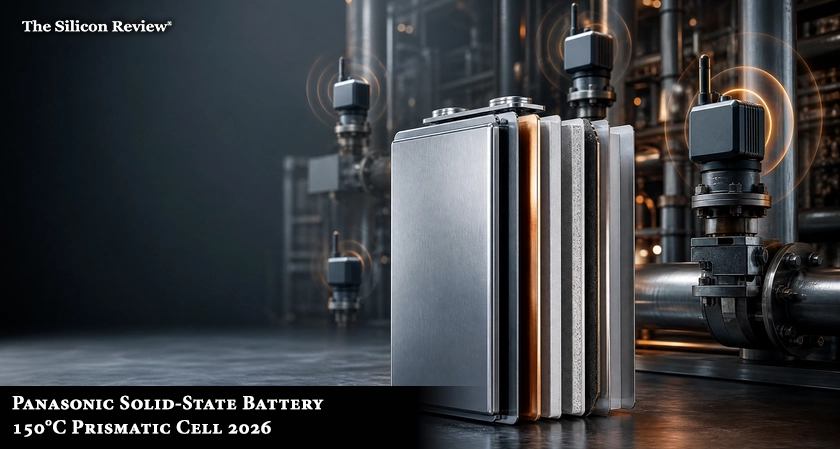
Panasonic Energy has developed a solid-state battery that can operate at temperatures of up to 150°C (302°F), raising the maximum operating temperature from 125°C and introducing a new prismatic cell design. Sample shipments will begin in October–December 2026, targeting industrial machinery and vehicle sensors.
Panasonic Energy has developed a solid-state battery that can operate at temperatures of up to 150°C (302°F), expanding potential applications beyond previous limits. The company has raised the maximum operating temperature of its solid-state batteries from 125°C to 150°C and developed a new small-size prismatic cell design in addition to its existing coin-shaped cells.
New Prismatic Design Expands Applications
The introduction of a prismatic design is a significant step forward. While coin-shaped cells were the only option previously, the prismatic cells offer greater flexibility in product layout and can be more easily integrated into various industrial applications. "The prismatic design makes product layout easier than with coin-shaped cells," said Chief Technology Officer Shoichiro Watanabe.
Higher Temperature Tolerance Opens New Markets
The higher temperature tolerance of the solid-state battery broadens potential applications, including industrial machinery, vehicle sensors, and even the sterilisation of medical equipment. Unlike conventional lithium-ion batteries, solid-state batteries use a solid electrolyte instead of a liquid one, offering superior safety, higher energy density, and improved heat resistance.
Timeline and Initial Targets
Panasonic Energy will begin sample shipments of the new solid-state batteries between October and December 2026. The company initially targets industrial machinery and vehicle sensors rather than electric vehicle applications. The cylindrical battery format is being developed for humanoid robots, as it fits well into limited spaces and rounded structures.
"If the temperature rises, the usability increases. If it can be used at 150 degrees, the application can be expanded to areas such as sterilization of medical equipment," said Watanabe.
Mass production is expected to begin one to two years after the start of sample shipments.
Here is the question this development raises. Panasonic Energy has developed a solid-state battery that can operate at 150°C, targeting industrial sensors and medical equipment before EVs. When the same battery technology that could power next-generation electric vehicles is first deployed in high-temperature industrial applications, does this represent a strategic pivot or a necessary step toward perfecting the technology for mass-market adoption?
FAQ:
Q: What is the operating temperature of Panasonic Energy's new solid-state battery?
A: The battery can operate at temperatures of up to 150°C (302°F), an increase from the previous limit of 125°C.
Q: What new battery design has Panasonic Energy developed for its solid-state batteries?
A: Panasonic Energy has developed a new small-size prismatic cell design, in addition to its existing coin-shaped cells. The prismatic design makes product layout easier and expands potential applications.
Q: When will Panasonic Energy begin sample shipments of its new solid-state batteries?
A: Sample shipments will begin between October and December 2026.
Q: What applications is Panasonic Energy initially targeting for its new solid-state batteries?
A: The Company is initially targeting industrial machinery and vehicle sensors, as well as potential applications in the sterilisation of medical equipment, rather than electric vehicles.
Q: When does Panasonic Energy plan to begin mass production of the solid-state batteries?
A: Mass production is expected to begin one to two years after the start of sample shipments.













Comments