>>
Industry>>
Social Responsibility>>
Public Cleanliness Satisfactio...Public Cleanliness Satisfaction Falls to 91%; Toilets and Neighbourhood Spaces See Biggest Declines: SMU Survey
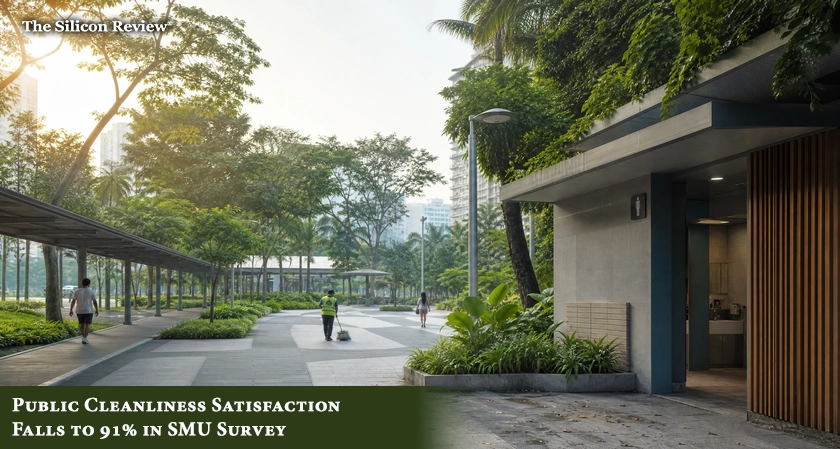
Singapore's public cleanliness satisfaction has dipped to 91% from 94% two years ago, with neighbourhood spaces hitting their lowest level since 2018 and public toilet satisfaction dropping sharply, according to the latest SMU survey.
Singapore's reputation as one of the world's cleanest cities has taken a slight hit. The seventh edition of the Public Cleanliness Satisfaction Survey, conducted by the Singapore Management University, has revealed a dip in public satisfaction with cleanliness across the island, falling from 94% in 2023 to 91% in 2026.
The survey, which polled about 2,000 Singapore citizens and permanent residents aged 21 and above between December 2025 and April 2026, was led by SMU Professor Paulin Tay Straughan and Institute of Policy Studies Senior Research Fellow Dr Mathew Mathews.
Toilets and Neighbourhood’s See Sharpest Drops
The biggest declines were observed in public toilets and neighbourhood spaces. Overall satisfaction with public toilet cleanliness dropped by 8.2 percentage points to 75.5%. Satisfaction with coffee shop toilets was particularly low at 48.3%, down 12 percentage points from the previous survey, while hawker centre toilet satisfaction stood at 60%, a drop of 10 percentage points.
Neighbourhood spaces, including void decks, corridors, and lift lobbies, saw satisfaction fall by nearly six percentage points to 87.4%, its lowest level since 2018. Satisfaction with the cleanliness of Housing Development Board common areas dropped almost nine percentage points to 80.9%.
A Growing Gap between Attitude and Action
While 98.6% of respondents agreed that keeping the environment clean is everyone's responsibility, only 49.6% were willing to volunteer for neighbourhood clean-up activities, down from 63.5% in 2023. Support for community litter-picking events also fell from 83.7% to 76%.
"Satisfaction has declined, but that doesn't necessarily mean the environment has become dirtier," Dr Mathew Mathews told 8world. "It could also reflect higher expectations of cleanliness."
Professor Straughan pointed to lifestyle changes as a contributing factor. "Our lifestyles have changed. People are ordering more deliveries, and the boxes take up more space, often ending up next to overflowing bins, which affects the cleanliness of our shared spaces," she explained.
Here is the question this survey raises. When Singapore ranks as the world's cleanest city , yet satisfaction with public toilets falls to 75.5% and coffee shop toilets to just 48.3%, is the gap between global accolades and local experience a sign of rising standards, or a warning that the nation's collective responsibility is being replaced by increasing reliance on overstretched cleaners?
FAQ:
Q: What was the overall public cleanliness satisfaction rate in Singapore according to the latest SMU survey?
A: The overall public cleanliness satisfaction rate fell to 91% in 2026, down from 94% in the previous survey two years ago.
Q: Which areas saw the biggest declines in cleanliness satisfaction?
A: Public toilets and neighbourhood spaces saw the sharpest drops. Satisfaction with public toilets fell to 75.5%, with coffee shop toilets at just 48.3% and hawker centre toilets at 60%. Neighbourhood space satisfaction fell to 87.4%, its lowest since 2018.
Q: Who conducted the Public Cleanliness Satisfaction Survey?
A: The survey was conducted by the Singapore Management University (SMU), led by Professor Paulin Tay Straughan and Dr Mathew Mathews from the Institute of Policy Studies.
Q: Why has satisfaction with public cleanliness declined?
A: Researchers cited higher expectations of cleanliness and lifestyle changes. More people are ordering deliveries, resulting in larger items like boxes being left near overflowing bins, affecting the cleanliness of shared spaces.
Q: Are Singaporeans taking personal responsibility for cleanliness?
A: While 98.6% agree that keeping the environment clean is everyone's responsibility, only 49.6% are willing to volunteer for neighbourhood clean-up activities, down from 63.5% in 2023.













Comments