>>
Technology>>
Artificial intelligence>>
Reinventing Enterprise Sales: ...Reinventing Enterprise Sales: How Prashant Srivastav Is Redefining AI-Driven Revenue Systems
The Silicon Review
17 September, 2026
Author:
Guest
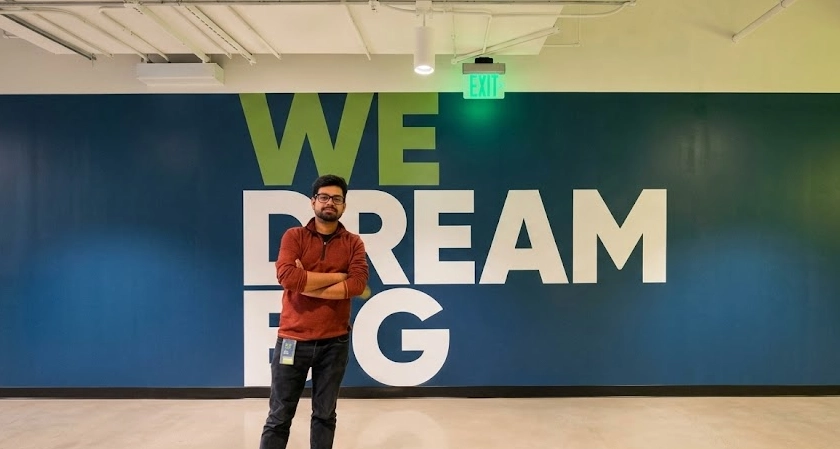
When a multi-million-dollar enterprise deal stalls, the culprit is rarely a lack of salesmanship. More often, it’s a systemic failure, a disconnected API, a manual compliance bottleneck, or fragmented data across global platforms. For architects like Prashant Srivastav, who designs intelligent Lead-to-Cash systems at ServiceNow, the solution isn't hiring more sales reps; it's fundamentally rewiring how the enterprise operates. Srivastav focuses on connecting every stage of the revenue lifecycle, transforming fragmented sales environments into cohesive, AI-driven ecosystems.
Prashant Srivastav has built his career around solving this problem.
Engineering for Scale in Enterprise Environments
Navigating the backend infrastructure at companies like Tesla and Accenture forced Srivastav to view enterprise sales not as a department, but as a distributed system that must execute flawlessly under pressure. Today, his work focuses on AI-native architectures that shift organizations away from static automation and toward dynamic, intelligent revenue cycles.
These are not isolated systems. They sit at the core of how companies function.
Enterprise sales, in particular, require coordination across multiple layers:
- Customer relationship management systems
- Order management platforms
- Legal and compliance workflows
- Communication tools such as Zoom and Microsoft Teams
When these systems operate independently, delays become inevitable. Teams spend more time coordinating processes than closing deals. Srivastav’s work addresses this challenge at the architectural level.
Moving Beyond Fragmented Sales Workflows
Many enterprise sales environments evolve. New tools are added as needs arise, but integration often lags.
The result is a fragmented system where:
- Data is inconsistent across platforms
- Approvals take longer than expected
- Teams lack real-time visibility into deal progress
Srivastav approaches this differently. His focus is on designing unified architectures where systems are connected from the start.
His work includes building Sales CRM and order management solutions that integrate workflow automation, approvals, and legal document processing into a single operational framework. His work spans “workflow automation, approvals, legal document processing, and enterprise integrations,” reflecting the complexity of modern enterprise sales systems.
"The biggest mistake enterprises make is treating legal, sales, and IT as completely separate ecosystems," Srivastav notes. "If your CRM doesn't talk to your order management platform in real-time, you aren't just slowing down workflows, you are actively losing revenue to sheer friction."
Embedding AI Into the Revenue Lifecycle

A key aspect of Srivastav’s work is the integration of AI directly into enterprise workflows. Rather than layering AI on top of existing systems, he designs architectures where intelligence is built into the core.
Rather than layering AI on top of legacy platforms as an afterthought, Srivastav designs architectures where intelligence is native to the core. His systems actively analyze historical data to identify hidden patterns, flag deal risks before they stall pipelines, and push actionable next steps directly to sales teams, effectively eliminating the drag of repetitive manual tasks.
This shift enables organizations to move from static automation to adaptive systems that respond to real-time conditions.
Eliminating Bottlenecks in Approvals and Compliance
Approval workflows remain one of the most time-consuming aspects of enterprise sales. Large deals often require multiple layers of review. Legal, finance, and compliance teams must all sign off before a deal can move forward.
Srivastav’s AI-driven workflows are designed to reduce these bottlenecks.
Systems can route approvals dynamically based on deal characteristics, flag potential risks early, and automate document processing. This ensures that governance requirements are met without slowing down execution.
The impact of this architectural shift is highly measurable. In a recent deployment of an AI-driven approval workflow, Srivastav's architecture dynamically routed compliance checks, resulting in a reduction in deal cycle times and saving hours of manual data entry per quarter. It is this transition, from manual coordination to automated governance, that defines the modern revenue operation.
Turning Sales Conversations into Structured Insights
Sales interactions generate valuable data, but much of it is lost when it is not captured properly. Srivastav has worked on integrating communication platforms such as Zoom and Microsoft Teams into enterprise systems.
These integrations allow organizations to process meeting data automatically.
Conversations can be summarized, key insights extracted, and next steps recommended. This information feeds directly into CRM and workflow systems, ensuring that decisions are based on accurate and timely data.
"Sales teams shouldn't be data-entry clerks," says Srivastav. "By capturing and structuring the data generated in routine communications, we allow the AI to handle the administrative burden, freeing up human agents to focus entirely on strategy and relationship building."
Building Systems That Scale Globally
Enterprise platforms must perform under pressure. High transaction volumes, global teams, and continuous operations demand systems that are both scalable and reliable.
Srivastav’s expertise in microservices and distributed systems enables him to design architectures that meet these requirements.
At ServiceNow, his contributions extend to platforms used by thousands of employees worldwide, including systems that improve productivity across web and mobile environments. These platforms demonstrate how well-designed systems can support large-scale operations without compromising performance.
Measurable Impact on Sales Performance
AI-driven Lead-to-Cash systems are delivering tangible results across industries.
Organizations adopting these Lead-to-Cash approaches are reporting significantly shorter deal cycles, a drastically reduced manual workload, and a level of forecasting accuracy that legacy systems simply cannot match.
According to research from McKinsey & Company, companies that integrate AI into their operations are seeing measurable improvements in productivity and decision-making. Srivastav’s work aligns with this trend by focusing on practical implementation within enterprise environments.
The Shift Toward AI-First Enterprise Architectures
The broader industry is moving toward systems where AI is not an add-on but a foundational component.
For a deeper look at how organizations are redesigning their systems around this approach, this analysis on building AI-first enterprise architectures outlines why embedding intelligence into core workflows is becoming essential.
Srivastav’s work reflects this shift. His expertise includes “AI-driven workflows, enterprise integrations, and scalable system architecture,” areas that are becoming essential for modern enterprise platforms.
Looking Ahead: Autonomous Revenue Systems
The next phase of enterprise sales is already taking shape. AI agents are becoming capable of handling increasingly complex tasks within revenue systems. These systems can analyze data, make decisions, and refine processes over time.
Srivastav has been involved in designing AI-driven workflows and systems that reduce manual effort while improving operational intelligence. This points to a future in which revenue operations become more autonomous, allowing teams to focus on strategy and customer engagement.
Why This Matters for IT and AI Professionals
For professionals working in IT and AI, this transformation highlights an important shift. Enterprise systems are no longer just infrastructure. They are becoming intelligent platforms that directly influence business outcomes.
Understanding how to design, integrate, and scale AI within these systems is becoming a critical capability. Srivastav’s work offers a practical example of how this can be done effectively at scale.
Final Thoughts
Prashant Srivastav’s work reflects a broader transformation in enterprise technology. By connecting systems, embedding AI into workflows, and focusing on scalability, he is helping organizations rethink how sales operations function in complex, global environments.
As enterprise systems continue to grow in complexity, this approach will become increasingly important.
About the Author: Ethan Caldwell is a San Francisco-based technology writer covering enterprise AI, cloud platforms, and large-scale system architecture.


















Comments