>>
Industry>>
Supply chain management>>
Safe Material Handling: From L...Safe Material Handling: From Lifting to Cargo Securement
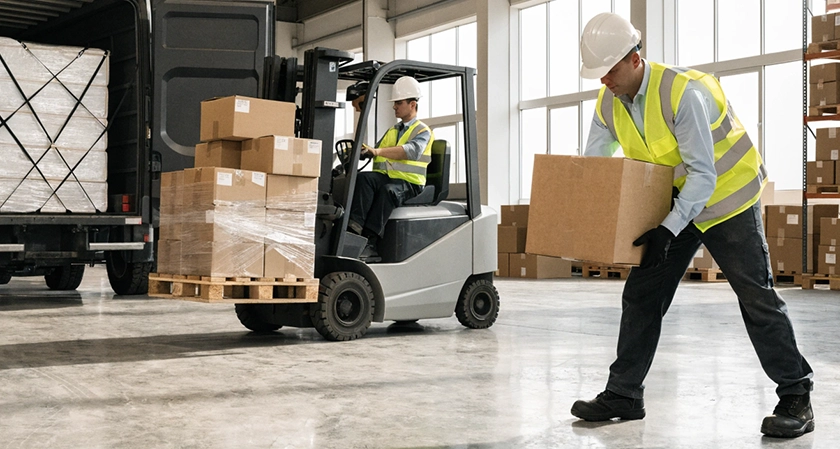
Moving heavy materials is rarely a single operation. On a construction or industrial site, a load may be lifted from the ground, transferred to another work area, placed on a truck, and transported to its final destination. Each stage uses different equipment and introduces different risks.
A reliable material-handling plan should therefore cover the load’s complete journey. Coordinating lifting machinery, rigging hardware, transfer procedures, and transport restraints helps prevent equipment mismatches, unsafe improvisation, and costly delays.
Plan the Complete Load Journey
Before choosing equipment, confirm the load’s weight, dimensions, center of gravity, lifting points, destination, and transportation method.
A basic handling plan should answer five questions:
- What machine will lift the load?
- How will the load connect to the machine?
- How will it be controlled while suspended?
- Where will it be placed?
- How will it be secured for transportation?
These decisions should be made together. A load may be lifted successfully onto a truck but still become dangerous if the vehicle lacks suitable anchor points or correctly rated restraints.
The planned route should also be checked for overhead obstructions, restricted access, unstable ground, nearby workers, and changes in elevation. Identifying these conditions early allows the team to select suitable equipment and establish an effective exclusion zone.
Choose the Right Lifting Machine
The primary lifting machine must suit both the load and the operating environment. Important factors include capacity, lifting height, horizontal reach, available space, ground conditions, power supply, and frequency of use.
Tower cranes are commonly used when heavy materials must be delivered over a wide working radius or to upper levels of a building. Construction hoists provide repeated vertical transportation for personnel, tools, and materials. Suspended platforms and mast-climbing platforms serve different purposes, primarily giving workers access to elevated façades and work areas.
Contractors can compare different construction hoists when planning vertical transportation for workers, tools, and building materials.
Rated capacity should not be the only selection criterion. Project teams should also evaluate foundations, anchoring requirements, landing arrangements, installation space, weather exposure, inspection procedures, and applicable local regulations. The equipment must be appropriate for actual site conditions rather than simply having a maximum capacity greater than the load weight.
Match the Rigging to the Load
Rigging forms the connection between the lifting machine and the load. Slings, shackles, hooks, clamps, lifting beams, and attachment points must work as one compatible system.
Before every lift, the team should verify:
- The working load limit of each component
- The effect of sling angles on tension
- The position of the load’s center of gravity
- Compatibility between hooks, shackles, and lifting points
- Protection against sharp edges
- The condition and identification of the equipment
Different loads require different rigging arrangements. Webbing slings can help protect finished surfaces, while chain slings may be more appropriate for demanding environments. Lifting beams can distribute forces or provide additional stability, while plate and beam clamps may be needed when standard attachment methods are unsuitable.
Access to appropriate rigging hardware allows teams to match shackles, hooks, connectors, and related components to the specific load.
All equipment should be inspected before use. Components with cracks, deformation, severe corrosion, excessive wear, damaged stitching, or unreadable identification should be removed from service and evaluated according to the company’s inspection procedure.
Control the Transfer Area
The point where a load moves from one handling system to another requires careful preparation. This may be a loading bay, temporary storage area, truck bed, scaffold level, or elevated platform.
The transfer area should be level, adequately illuminated, and clear of unnecessary personnel. Operators and signalers must use an agreed communication method, especially when the lifting-equipment operator cannot see the landing point.
The receiving surface should be prepared before lifting begins. Dunnage, chocks, stands, and supports must already be in position so workers do not need to reach beneath a suspended load. Tag lines may be used where appropriate to control rotation or unwanted movement without placing workers too close to the load.
If the item will continue by road, its orientation on the vehicle should provide access to suitable restraint points and distribute weight correctly across the loading platform.
Use Transport Restraints for Transport
Lifting slings and cargo tie-downs may look similar, but they are designed for different tasks. Lifting equipment is intended for raising suspended loads, while cargo-control products restrain freight against movement caused by braking, acceleration, cornering, and road vibration.
Once a load has been placed on a vehicle, the transport team should select restraints according to its weight, shape, surface, and likely direction of movement. Common options include ratchet straps, winch straps, wheel restraints, chains, anchor fittings, and corner protectors.
Professional cargo securement equipment supports this final handling stage by helping prevent loads from shifting during transportation.
Before departure, inspect straps for cuts, damaged stitching, abrasion, chemical exposure, or unreadable labels. Hooks and buckles must fit the vehicle’s anchor points correctly. Edge protectors should be added wherever the cargo could cut or weaken webbing.
Restraints should also be checked after the vehicle begins its journey, particularly when the load may settle or change position.
Coordinate People and Inspections
Cranes, hoists, rigging equipment, and transport restraints should be managed through a consistent inspection system. An equipment register can record identification numbers, rated capacities, inspection dates, reported defects, maintenance, and retirement decisions.
Responsibilities must also be clearly assigned. The lifting supervisor, equipment operator, rigger, signaler, loading crew, and driver should understand their individual roles. A short pre-task meeting can confirm the load path, exclusion zone, communication signals, weather limits, landing method, and transport plan.
Conclusion
Safe material handling requires more than a lifting machine with sufficient capacity. It depends on a coordinated chain of suitable machinery, compatible rigging, controlled transfer procedures, and correctly rated cargo restraints.
Planning the entire journey—from the first lift to final transportation—helps companies reduce handling risks, avoid delays, and maintain better control over every load.













Comments