>>
Industry>>
Compliance and governance>>
Seattle Times, Newsday Sue Ope...Seattle Times, Newsday Sue OpenAI, Microsoft for Copyright Infringement; Millions in Damages and Destruction of AI Models Demanded
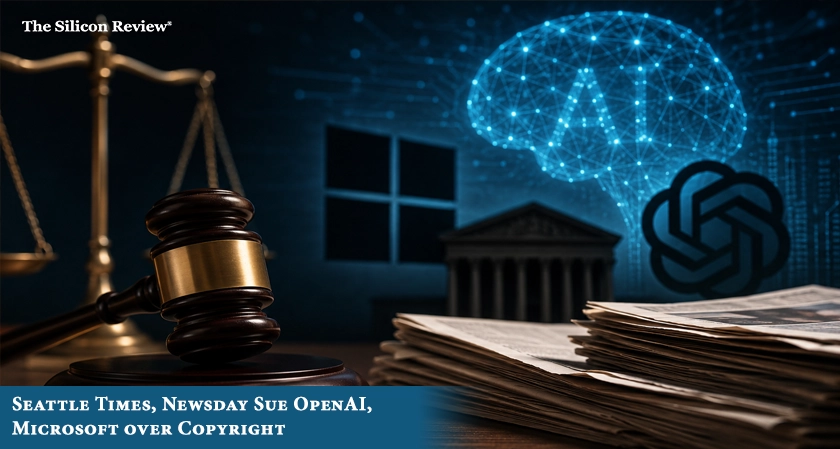
The Seattle Times and Newsday have filed a federal lawsuit against OpenAI and Microsoft, alleging the tech giants copied millions of articles without permission to train AI models, and are seeking an order to destroy the AI systems incorporating their copyrighted work.
The Seattle Times and Newsday have filed a copyright infringement lawsuit against OpenAI and Microsoft in the U.S. District Court for the Southern District of New York. The suit alleges that the tech companies scraped the newspapers' websites including content behind paywalls and incorporated articles into datasets used to train and operate products including ChatGPT, Microsoft Copilot, and Bing's AI features.
"We feel strongly that we must defend our content which we spend millions of dollars a year to produce from being used without our consent or compensation," Seattle Times President and CEO Alan Fisco wrote to employees, according to the newspaper.
The Allegations
The newspapers argue that OpenAI and Microsoft's AI products can reproduce passages from their reporting, closely paraphrase articles, and provide users with answers that reduce the need to visit their websites or buy subscriptions. The complaint states that the AI models violate copyrights by ingesting journalism and reproducing it often verbatim without compensation.
"If Defendants are allowed to succeed, independent journalism of the kind Plaintiffs produce will struggle to survive," the complaint reads.
The lawsuit also accuses OpenAI of diluting the newspapers' trademarks by generating content that falsely attributed fabricated content to the Seattle Times and Newsday.
What the Newspapers Are Seeking
The Seattle Times and Newsday are seeking an unspecified amount of damages, as well as court orders requiring the "impoundment and/or destruction" of copies of their works, training datasets, or AI models that incorporate them.
The AI Companies' Response
An OpenAI spokesperson said the company's models are trained on publicly available data and "grounded in fair use, which helps hundreds of millions of people improve their daily lives."
A Microsoft spokesperson said in an emailed statement: "While we're surprised by the lawsuit, we appreciate the importance of local journalism and we're always happy to sit down and explore solutions to this type of dispute."
The Broader Context
The lawsuit is part of a growing wave of copyright complaints against OpenAI and other AI companies, including lawsuits from publishers as well as class-action lawsuits from authors and musicians. The case echoes a lawsuit filed by The New York Times in 2023, which accused OpenAI and Microsoft of using millions of newspaper articles without permission to train ChatGPT.
Here is the question this lawsuit raises. The Seattle Times and Newsday are seeking to destroy AI models trained on their journalism a remedy that would effectively un-train years of AI development. When the survival of local journalism and the future of AI technology are placed in direct opposition, can the law find a middle ground, or will this case force a fundamental rethinking of how AI is built?
FAQ:
Q: Why did The Seattle Times and Newsday sue OpenAI and Microsoft?
A: The newspapers allege that OpenAI and Microsoft copied their published work without permission to train AI models like ChatGPT and Microsoft Copilot, constituting copyright infringement.
Q: What are The Seattle Times and Newsday seeking in the lawsuit?
A: The newspapers are seeking unspecified damages and court orders requiring the destruction of copies of their works, training datasets, and AI models incorporating their content.
Q: What is OpenAI's defense against the copyright lawsuit?
A: OpenAI argues that its models are trained on publicly available data and protected under the "fair use" doctrine of copyright law.
Q: How does this lawsuit compare to The New York Times case?
A: The lawsuit echoes The New York Times' 2023 case, which also accused OpenAI and Microsoft of using millions of articles without permission. That case is still ongoing.
Q: What impact could this lawsuit have on the AI industry?
A: If the newspapers succeed in forcing the destruction of AI models, it could set a precedent that threatens the foundational data used to train large language models, potentially reshaping the AI industry.













Comments