>>
Industry>>
Environmental sustainability>>
Singapore Air Quality Enters U...Singapore Air Quality Enters Unhealthy Range in Central Region; 24-Hour PSI Breaches 100 for First Time Since 2023
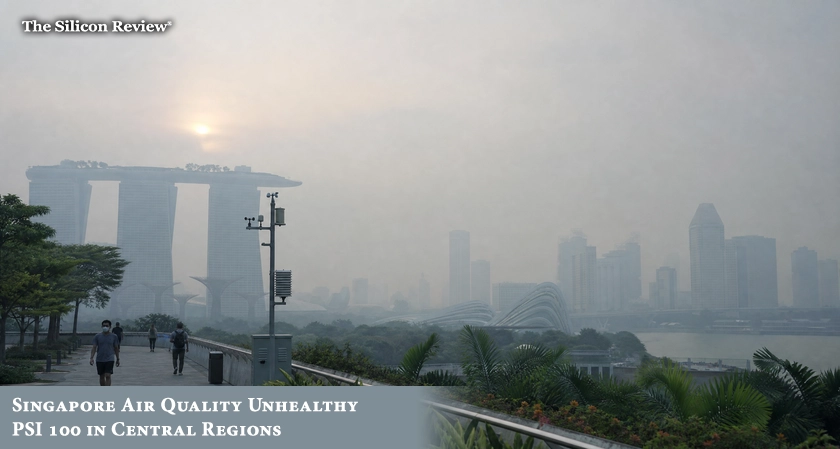
The 24-hour Pollutant Standards Index (PSI) in Singapore's central region crossed into the unhealthy range on Friday morning, reaching 105 at 10am, as haze from regional fires worsened for the first time since October 2023.
Singapore's air quality deteriorated into the unhealthy range on Friday morning for the first time since October 2023, as smoke from forest and land fires across the region blanketed the city-state. The 24-hour PSI in the central region crossed the 100 mark at 7am, hitting 101, before rising further to 105 at 10am. Readings elsewhere remained in the moderate range, with the west at 88, the east at 87, the north at 77, and the south at 75.
"The health impact of the haze is dependent on each individual's health status, the PSI level, and the duration and intensity of outdoor activity. Reducing outdoor activities and physical exertion can help limit the ill effects from haze exposure," the National Environment Agency said in a joint statement.
Regional Fires and Forecast
The haze has been traced to forest and land fires in Sumatra and Kalimantan, where dry conditions have fuelled a rise in hot spots. Singapore's Meteorological Service warned on September 1 that hazy conditions could persist over the next two weeks, though sporadic showers may offer some relief in the second week. The NEA noted that dense smoke haze has been observed over southern and central Sumatra and parts of Kalimantan since around August 21.
Health Advisories and Response
With the PSI crossing the 100 threshold, the NEA has begun issuing daily haze advisories, including a 24-hour PSI forecast to help the public plan outdoor activities. The public is advised to reduce prolonged or strenuous outdoor activity, stay hydrated, and ensure medications are on hand for those with chronic heart or lung conditions.
"Those with chronic heart and lung conditions should ensure that medications are on hand and readily accessible. Vulnerable persons, especially the elderly, pregnant women, children, and those with chronic heart and lung conditions, who develop symptoms or feel unwell, should seek medical attention promptly," the NEA advised.
Here is the question this haze episode raises. Singapore's air quality has entered the unhealthy range for the first time in nearly three years, triggered by fires in the region. When transboundary haze becomes a recurring threat, can Singapore rely solely on regional cooperation to protect public health, or is it time for more robust domestic measures to shield the population from its effects?
FAQ:
Q: What is the current PSI reading in Singapore?
A: As of the morning of September 4, 2026, the 24-hour PSI in Singapore's central region reached 105 at 10am, entering the unhealthy range of 101 to 200. Other regions remained in the moderate range.
Q: What caused the PSI to enter the unhealthy range in Singapore?
A: The haze is caused by forest and land fires in Sumatra and Kalimantan, Indonesia. Dry conditions have fuelled the fires, and Singapore's Meteorological Service has warned that hazy conditions could persist over the next two weeks.
Q: What health advisories has the NEA issued for the haze?
A: The NEA advises the public to reduce prolonged or strenuous outdoor activity, drink plenty of water, and ensure medications are on hand. Vulnerable groups including the elderly, pregnant women, children, and those with chronic heart or lung conditions should seek medical attention promptly if they develop symptoms.
Q: What is the difference between the 24-hour PSI and the 1-hour PM2.5 reading?
A: The 24-hour PSI is an indicator of daily air quality and is used for planning outdoor activities over the next day. The 1-hour PM2.5 reading reflects air quality at a single point in time and is more useful for immediate decisions, such as whether to go for a run.
Q: When was the last time Singapore's PSI entered the unhealthy range?
A: The last time the PSI hit unhealthy levels due to haze was in October 2023.



















Comments