>>
Technology>>
Aviation>>
Singapore Defers SAF Levy for ...Singapore Defers SAF Levy for Air Cargo by One Year; Levy on Travellers to Proceed as Planned
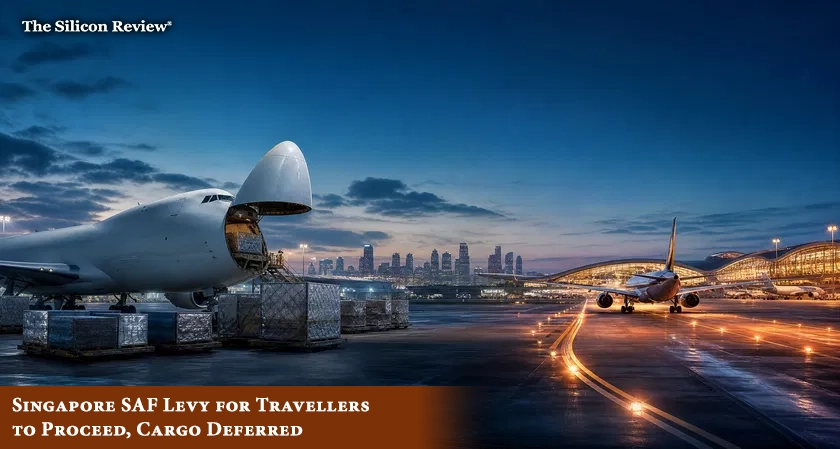
Singapore will introduce a sustainable aviation fuel (SAF) levy for air travellers in January 2027 as planned, but has deferred the cargo levy by one year, citing the need to develop a "robust" collection mechanism for the more diverse air cargo industry.
Singapore's Civil Aviation Authority has announced a split timeline for its sustainable aviation fuel levy, proceeding with the traveller levy as scheduled while deferring the cargo levy by one year. The decision follows industry feedback on the complexities of implementing the charge across the air cargo sector.
Traveller Levy to Proceed as Planned
The SAF levy for air travellers will be implemented as previously scheduled. Passengers who purchase tickets from October 1, 2026, for flights departing Singapore from January 1, 2027, will have to pay the levy. The levy will apply to all origin-destination passengers and must be shown as a distinct line item in the fare breakdown. The levy ranges from S$1 (about US$0.75) for economy flights within Southeast Asia to S$41.60 (about US$32) for premium cabin flights to the Americas. The levy was initially scheduled for April 2026 but was deferred earlier this year due to the impact of the Middle East conflict on airlines and passengers.
Air Cargo Levy Deferred to 2028
The SAF levy on air cargo shipments will be deferred by one year, now applying to services sold from October 1, 2027, for flights departing Singapore from January 1, 2028. CAAS cited the diversity of the air cargo industry as the reason for the delay. "Compared to airlines' passenger operations, cargo operations are more diverse and involve a wider range of stakeholders such as airlines, air express companies, freight forwarders and shippers and varying commercial arrangements," CAAS said in a statement. The deferment will give CAAS more time to work with industry stakeholders to develop and implement a "robust" mechanism for collecting the levy.
How the Levy Will Be Used
Money collected through the SAF levy will be channelled to a statutory fund known as the SAF Fund and used to purchase sustainable aviation fuel and its related environmental attributes, as well as cover administrative costs. The Singapore Sustainable Aviation Fuel Company (SAFCo), a non-profit wholly owned by CAAS, will be the designated collection agent for the levies and will also procure, manage, account for and allocate SAF and its environmental attributes.
SAF's Role in Aviation Decarbonisation
Sustainable aviation fuel is jet fuel made from organic or waste-derived material, such as used cooking oil and agricultural waste, instead of petroleum. It can reduce emissions by up to 80 per cent compared to its fossil-based counterpart. Singapore is aiming for SAF to account for 1 per cent of all jet fuel used at Changi and Seletar airports from 2027, rising to 3 to 5 per cent by 2030 .
Here is the question this split timeline raises. Singapore is proceeding with its SAF levy for travellers while deferring the cargo charge by a year, acknowledging the complexity of collecting from a more diverse industry. When a nation pushes ahead with its decarbonisation agenda while pausing for specific sectors, does this represent a pragmatic approach to sustainability or a sign that the policy's reach is being limited by industry pushback?
FAQ:
Q: When will the SAF levy for travellers take effect in Singapore?
A: The SAF levy for travellers will apply to tickets sold from October 1, 2026, for flights departing Singapore from January 1, 2027.
Q: Why was the SAF levy for air cargo deferred?
A: CAAS deferred the cargo levy by one year to allow more time to work with the air cargo industry to develop a "robust" collection mechanism, citing the industry's diversity and more complex stakeholder arrangements.
Q: How much will the SAF levy cost for travellers?
A: The levy ranges from S$1 (about US$0.75) for economy flights within Southeast Asia to S$41.60 (about US$32) for premium cabin flights to the Americas.
Q: What is sustainable aviation fuel?
A: Sustainable aviation fuel is jet fuel made from organic or waste-derived material instead of petroleum, which can reduce emissions by up to 80 per cent compared to fossil-based jet fuel.
Q: What is Singapore's SAF target?
A: Singapore aims for SAF to account for 1 per cent of all jet fuel used at Changi and Seletar airports from 2027, rising to 3 to 5 per cent by 2030.

















Comments