>>
Industry>>
Industrial Automation>>
What Are Flow Measuring Device...What Are Flow Measuring Devices? A Complete Guide to Their Uses and Benefits
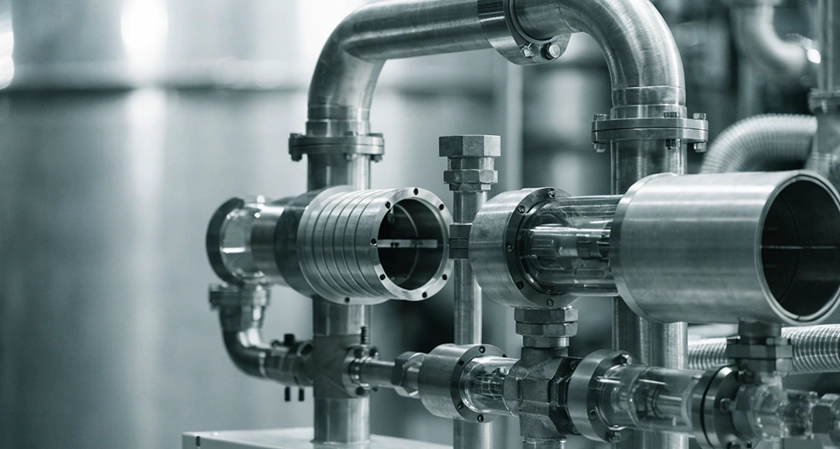
From the water that pours from your kitchen faucet to the fuel that powers your car, fluid movement is the silent engine of modern life. Yet, how often do we stop to consider the technology that quantifies this constant motion? Understanding what flow measuring devices is goes far beyond academic curiosity; it is a fundamental aspect of industrial efficiency, environmental protection, and even public safety. These instruments are the unsung heroes in pipelines, treatment plants, and manufacturing facilities across the United States, ensuring that processes run smoothly and resources are never wasted. Without them, we would be navigating blind in a world that relies heavily on precise liquid and gas management.
This guide aims to demystify the world of flow measurement. Whether you are a plant manager looking to optimize operations, an engineer selecting the right equipment, or simply a curious mind, this comprehensive overview will shed light on the core principles, diverse types, and undeniable value of these critical tools. We will explore how they work, where they are applied, and why choosing the right one is a decision that impacts the bottom line.
The Core Principle: Why Measure Flow?
At its heart, flow measurement is the quantification of the movement of a liquid, gas, or steam. It answers two fundamental questions: how much is moving, and how fast is it moving? This data is not just a number on a screen; it is actionable intelligence. In many industries, the accuracy of this data directly translates to profitability. For instance, in the oil and gas sector, the precise transfer of product between parties relies on custody transfer meters, where even a fraction of a percent error can represent thousands of dollars.
Moreover, flow data is crucial for process control. In a chemical plant, the correct ratio of reactants is vital for a successful reaction. By continuously monitoring and adjusting the flow of each ingredient, manufacturers can maintain product quality and prevent costly batch failures. On a broader scale, environmental regulations in the U.S. mandate that municipal wastewater treatment facilities monitor effluent flow to ensure compliance with discharge permits. This is not just about operational efficiency; it is about legal accountability and the health of our rivers and lakes.
The Many Types of Flow Measurement Technologies
The world of flow measurement is not a one-size-fits-all landscape. The ideal device for a given application depends on a host of factors, including the type of fluid, its temperature, pressure, viscosity, and whether it is clean or contains solids. To truly understand what is flow measuring devices, one must appreciate the variety of technologies available. Here is a breakdown of the most common categories:
- Differential Pressure (DP) Flow Meters: These are the workhorses of the industry, operating on the principle of a pressure drop across a restriction. An orifice plate, nozzle, or venturi tube creates a constriction in the pipe. The resulting pressure difference is proportional to the square of the flow rate. They are versatile, reliable, and suitable for a wide range of fluids.
- Velocity Flow Meters: These devices measure the speed of the fluid to calculate the volumetric flow. This category includes:
- Turbine Meters: A rotating blade spins at a rate proportional to the fluid velocity.
- Electromagnetic (Mag) Meters: Using Faraday’s Law, these meters generate a voltage as a conductive liquid passes through a magnetic field. They are excellent for dirty or corrosive liquids.
- Ultrasonic Meters: These use sound waves to measure velocity. Transit-time meters compare the time it takes for a signal to travel upstream versus downstream, while Doppler meters use the frequency shift from particles in the fluid.
- Positive Displacement (PD) Meters: These meters trap a fixed volume of fluid and count how many times that volume is filled and emptied. They are highly accurate and are often used for low-flow or high-viscosity applications, such as measuring residential water or fuel consumption.
The Crucial Distinction: Mass vs. Volumetric Flow
When discussing flow, it is essential to distinguish between volumetric and mass flow. Volumetric flow measures the volume of fluid passing a point per unit of time (e.g., gallons per minute). Mass flow, on the other hand, measures the mass of the fluid moving per unit of time (e.g., pounds per hour). This difference is critical because the volume of a gas or liquid can change with temperature and pressure, while its mass remains constant.
For industries where the actual quantity of material is what matters, such as in chemical reactions or combustion control, mass flow is the superior metric. Coriolis flow meters are the gold standard for this task. They measure mass flow directly by detecting the twist induced on vibrating tubes as fluid passes through them. This technology is incredibly accurate and also provides density data, making it invaluable for quality control in the food and beverage and pharmaceutical industries. For a deeper dive into the fundamentals and selection criteria, you can explore a comprehensive resource explaining what is flow measuring devices.
Where Flow Meters Make a Difference in the USA
The applications for flow meters are as diverse as the American landscape itself. In the agricultural heartland, they are used to manage irrigation water, ensuring that crops receive the optimal amount of moisture while conserving a precious resource. In the bustling metropolitan areas, they are integral to the water distribution networks, helping utilities detect leaks and manage demand. The energy sector relies on them heavily, from monitoring the flow of natural gas in transcontinental pipelines to managing the cooling water in power plants.
Consider the pharmaceutical industry, where precision is paramount. A flow meter ensures that the exact amount of active ingredient is mixed into a solution, guaranteeing the safety and efficacy of a drug. Similarly, in the food and beverage sector, flow meters ensure consistent product quality, from the pasteurization of milk to the carbonation of soda. Even in the HVAC systems of large commercial buildings, flow meters are used to balance water and refrigerant flow, optimizing energy efficiency and occupant comfort.
Selecting the Right Flow Meter: A Practical Approach
Choosing the correct flow meter for your specific application can be a daunting task, but focusing on a few key criteria can simplify the process. First and foremost, define the fluid characteristics. Is it a clean liquid, a viscous slurry, or a gas? What are its temperature and pressure ranges? Is it chemically compatible with the materials of the meter? Next, consider the required accuracy and the acceptable pressure drop. A highly accurate meter might be necessary for custody transfer, but a less precise, lower-cost option might be sufficient for simple process indication.
Another critical factor is the condition of the fluid. If you are measuring wastewater, an electromagnetic or ultrasonic meter is often preferred because they have no moving parts that can clog or wear out. In contrast, a turbine meter might be ideal for clean, lubricating fluids. Finally, think about the installation environment and the total cost of ownership, which includes not just the purchase price but also installation, maintenance, and calibration costs over the meter's lifetime. Taking the time to thoroughly evaluate these factors will save you significant time and money in the long run.
The Future of Flow Measurement
Technology is constantly evolving, and flow measurement is no exception. The industry is moving towards "smart" meters that offer more than just a flow reading. These devices are equipped with advanced diagnostics, allowing them to self-diagnose issues like fouling or air entrainment. They can communicate wirelessly with central control systems, providing real-time data that can be analyzed to optimize entire plant operations. This trend towards the Industrial Internet of Things (IIoT) is transforming flow meters from simple sensors into intelligent assets that contribute to predictive maintenance and data-driven decision-making.
Furthermore, there is a growing emphasis on non-invasive and non-intrusive technologies. Clamp-on ultrasonic meters, for example, can be installed on the outside of a pipe without cutting into it, making them ideal for retrofitting existing systems or measuring flow in critical pipelines where downtime is not an option. As industries in the U.S. continue to seek greater efficiency and sustainability, the role of advanced flow measurement will only become more central to their success.
Conclusion: The Value of Precision
In summary, flow measuring devices are indispensable tools that provide the data needed to control processes, ensure quality, and manage resources effectively. From the simple mechanical meter on a household water line to the sophisticated Coriolis meter in a chemical plant, these instruments are vital to the infrastructure that powers the United States. Understanding what is flow measuring devices is the first step towards making informed decisions that can lead to significant improvements in efficiency and profitability.
The initial investment in a high-quality flow meter is often justified many times over by the savings it generates through reduced waste, improved product quality, and optimized energy consumption. Whether your goal is regulatory compliance, cost reduction, or simply gaining a better understanding of your operations, the right flow measurement solution is a form of clarity. It provides the visibility needed to manage the invisible, ensuring that every drop, gallon, or cubic foot is accounted for and used as intended.













Comments