>>
Education>>
Education>>
Why More People Are Choosing T...Why More People Are Choosing Trade Careers Over Traditional College
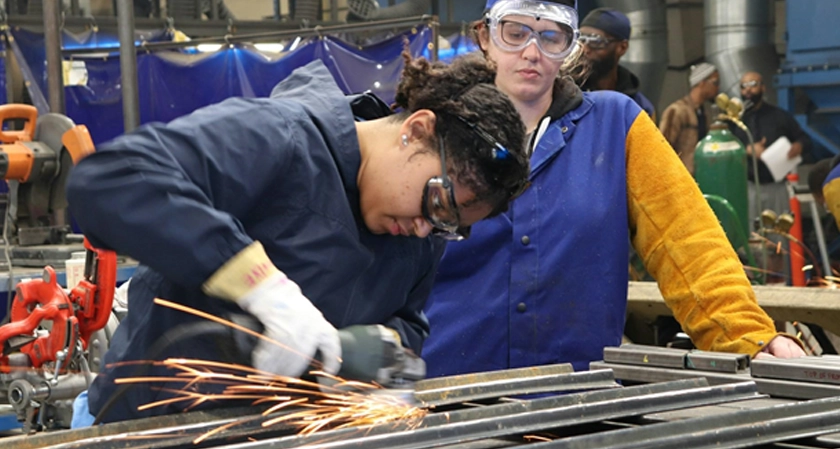
Yes, it’s true: young people are more inclined to choose a blue-collar career than their parents. The data shows a clear increase in trade school enrollments (4.9% between 2020 and 2023), and the trend is far from calming down.
Many Gen Z students are ready to forgo a standard four-year education for an apprenticeship or trade school that teaches hands-on skills. But why the shift? Are young people fed up with traditional education?
We asked around and learned the reasons why trade schools suddenly look so appealing to younger generations.
The Costs
One reason more young students are heading toward the trades is the cost of traditional education. The total cost of a traditional 4-year bachelor's degree in the United States averages roughly $153,000 across all institution types.
Of course, numbers vary between the public and private sectors, whether the student goes out of state or not, but the standard college education has simply become too expensive for many American families.
In contrast, the total cost of a trade school education averages $15,000 to $20,000 for a complete program, but prices depend on the provider type, program length, and specific industry.
Time to First Paycheck
Let’s be real for a moment: most of us work to earn a living. And that’s one of the main reasons we go to school in the first place—to build a career that pays well and gives us financial stability. So why would young people get in debt to go to school for another four years when they can enroll in a 6-12 month program and start working?
The average trade school program takes 6 to 12 months for a certificate or diploma, and up to 2 years (24 months) for an Associate of Applied Science (A.A.S.) degree. A curious student who enjoys tinkering with wires and electric devices can enroll in electrician school in Phoenix and apply for an entry-level, paid position in about 7 months.
Sure, pay may not be great at first (a junior electrician earns, on average, $25/h), but it’s still a lot more than a college student gets. And there’s plenty of potential for growth and specialization down the road.
Increased Demand for Trade Labor
The world runs on electricians, plumbers, HVAC technicians, constructors, welders, infrastructure workers, and so on. If they don’t do their jobs, nothing else works. Yet, right now, the U.S. is going through a skilled labor crisis.
The good news? Young workers who enter trade schools and apprenticeships are in high demand. In fact, in some trades, openings far outnumber newly created jobs because Baby Boomers (many of whom had trade careers) are retiring.
With the U.S. building data centers, semiconductor facilities, electrical infrastructure, manufacturing capacity, energy infrastructure, and housing, the most sought-after trades right now are:
- Electricians: BLS projects 77,400 net additional electrician jobs through 2034
- HVAC: Relatively strong employment growth and consistent job demand
- Industrial maintenance/machinery: 16.1% growth for industrial machinery mechanics
- Plumbing/pipefitting: BLS expects about 44,000 openings annually
The Threat of AI
Many white-collar jobs are now on the chopping block (or will be soon) as more companies optimize their processes with AI. These are scary times for many knowledge workers, while blue-collar workers continue doing their jobs.
After all, a robot or AI model can't simply be deployed into someone's basement to replace a water heater or rewire an old house. The big tech guys haven’t figured out how to automate the physical world yet, and chances are they aren’t even close.
Workers who follow a trades career can also turn to entrepreneurship, opening their own companies and gaining the freedom to decide their work environment. They may even use AI tools to keep their finances in check and manage the administrative side of the business.
Trade Careers Have a Strong Future
Nowadays, if you want a strong career path with large growth and earning potential, you ought to take a look at skilled trade programs. They are more affordable than traditional college, take less time, are in high demand, and are less likely to be replaced by AI. So who can blame younger generations for choosing this path?













Comments