>>
Technology>>
Software>>
12 Best Customer Loyalty Softw...12 Best Customer Loyalty Software for Shopify
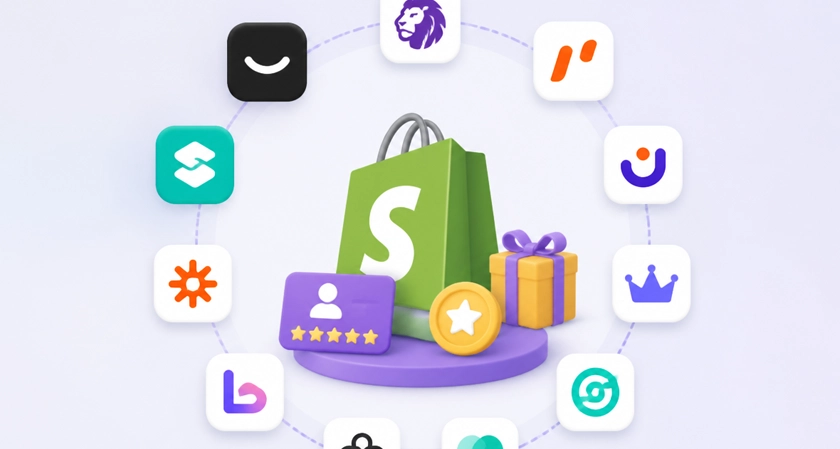
Shopify handles storefronts, checkout, and payments. It does not handle loyalty. If you want customers to come back on purpose rather than by accident, you add a loyalty platform on top, and that choice shapes what your retention program can ever become.
The App Store lists hundreds of options, and on the surface they look interchangeable: points, tiers, referrals, a widget in the corner of the screen. The meaningful differences show up later, when you try to make the program change behavior and then prove it did.
Below are twelve platforms worth shortlisting in 2026, what each is genuinely good at, and where the costs hide.
What We Weighted
- Mechanics beyond accrual. Missions, streaks, challenges, and tier progression give customers a reason to return between purchases. A points balance alone does not.
- Referral integrity. Whether rewards are released on sign-up, which invites abuse, or after a qualifying action.
- Storefront and POS surface. Visibility on product pages, in cart, at checkout, and in person.
- Whether the platform can separate incremental revenue from purchases that were going to happen anyway.
- Real cost at your volume. Where tiers, API access, and order overages sit in the plan ladder.
The Shortlist
|
Platform |
Best for |
Standout mechanic |
Entry paid plan |
|
Enable3 |
Habit-forming programs you can test |
Missions and streaks with holdout testing |
$79/month |
|
Smile.io |
Fast, dependable launch |
Mature points and VIP framework |
From about $49/month |
|
LoyaltyLion |
Retention analytics |
Automated member segments |
$199/month |
|
Yotpo |
Reviews and SMS in one suite |
Points for reviews, SMS triggers |
$199/month (Gold) |
|
Rivo |
Shopify-native depth |
Paid memberships and store credit |
$49/month |
|
Growave |
Consolidating the app stack |
Loyalty with reviews and wishlists |
$49/month (Entry) |
|
BON Loyalty |
Multilingual storefronts |
250+ display languages |
$29/month |
|
Joy |
First program on a small budget |
POS sync and wallet passes |
About $25/month |
|
Gameball |
Playful campaign layers |
Badges, challenges, spin-to-win |
$34/month (Starter) |
|
Appstle Loyalty |
Subscription-led stores |
Loyalty page and Flow automation |
Low entry tiers |
|
Rise.ai |
Store credit and gifting |
Cash-back style wallets |
From about $20/month |
|
Marsello |
Retail plus online |
Unified loyalty across POS |
From about $125/month |
Plan names and prices in this category change frequently. Confirm current figures with each vendor before you commit.
1. Enable3
Best for: stores that want loyalty to change behavior and can prove whether it did.
Most Shopify merchants try loyalty once. They install an app, switch on points, wait a quarter, see flat retention, and quietly stop investing. The usual diagnosis is that the rewards were too small. The more accurate one is that nothing in the program asked the customer to do anything between purchases.
Enable3 attacks that gap directly. It is a Shopify rewards program with missions and streaks layered over the familiar mechanics of points, VIP tiers, and referrals, so the program has something to say to a customer on the days they are not buying. The platform is currently in Shopify beta with a native app in the works, and merchants apply for an onboarding spot rather than installing blindly from the App Store.
The mechanics
- Missions and quests. Time-boxed goals with their own rewards: complete a first order for 100 points, confirm a delivery for 50, refer a friend for 200, return and buy a second item for 150. Each mission carries a deadline, which is what separates it from a passive balance. In practice, a merchant runs them like a campaign calendar.
- Rewards for consistency rather than volume. For consumables, replenishables, and anything with a natural reorder cycle, frequency is the lever that moves lifetime value, and streaks aim at it.
- VIP tiers. Three or four levels where each step unlocks something worth climbing for: early access, exclusive products, higher discount thresholds. Status is a more durable retention force than a recurring discount, and it does not train customers to wait for sales.
- Conditional referrals. Rewards release only when the referred person completes a qualifying action you define, such as a first purchase or a completed profile. Enable3 reports that this logic, combined with its fraud detection, reduces fraudulent reward claims by 60 to 80 percent compared with flat bonus structures.
- Mechanic testing. The platform A/B tests loyalty mechanics against each other with proper control groups, missions against points, streaks against tiers, and calculates the incremental revenue of each variant. That is the part most loyalty apps simply do not offer, and it is the difference between knowing your program works and assuming it does.
- Group by purchase frequency, tier, or region, then target lapsed buyers, top spenders, and hesitant first-timers with different offers.
- Klaviyo sync. Loyalty events flow into existing email automations, so a completed mission or a tier upgrade can trigger a flow without manual exports.
- Event handling built for peaks. Customer actions are processed in near real time with retry logic, which matters when a Black Friday queue is what decides whether points land correctly.
Who it fits
DTC brands with a repeat purchase problem, teams that already A/B test ads and email and want the same rigor applied to retention, and merchants who have hit the ceiling of a basic points app but do not want an enterprise implementation measured in quarters. Fashion and apparel, health and beauty, sports and outdoors, home and lifestyle, and food and beverage stores are the typical fit.
Proof point
In Enable3's published case study with eSIM Plus, a digital products brand, the gamified program was associated with more than 56% growth in paid users and a 28.8% lift in repeat purchases.
Pros and cons
- Pros: engagement mechanics well past points-for-purchases; referral rewards gated behind qualifying actions; built-in A/B and holdout testing with incremental revenue reporting; no-code setup with hands-on onboarding; VIP tiers from the entry paid plan.
- Cons: the Shopify app is in beta, so access runs through an application rather than a one-click install; a smaller integration catalog and far fewer public reviews than incumbents.
Pricing
|
Plan |
Price |
Order volume |
Highlights |
|
Essential |
$79/month |
Up to 500 orders |
VIP tiers, memberships, advanced analytics |
|
Growth |
$399/month |
Up to 2,000 orders |
Holdout testing, incremental revenue reporting |
|
Scale |
$899/month |
Up to 7,000 orders |
Parallel tests, referral-abuse detection, priority onboarding |
|
Enterprise |
Custom |
Shopify Plus and multi-store |
White-label, custom SLA, dedicated success manager |
2. Smile.io
Best for: a dependable program live this week.
Smile.io is the most installed loyalty app on Shopify, rated 4.9 from more than 4,500 reviews and carrying the Built for Shopify badge. Points, VIP tiers, referrals, bonus campaigns, checkout extensions, POS support, and 20+ languages make it the safe default.
- Strengths: minutes to configure, a polished member hub, and a very large integration ecosystem.
- Watch out for: VIP tiers and points expiry sit on the Growth plan at $199/month, and API access requires the Plus plan at $999/month. Gamification stops at points and rewards.
3. LoyaltyLion
Best for: teams that run retention off dashboards.
LoyaltyLion targets mid-market Shopify and Shopify Plus merchants. It automatically sorts members into segments such as Loyal, At Risk, and Win Back, and reports points earned, rewards claimed, and referral revenue in detail.
- Strengths: analytics depth, AI suggestions for campaign timing, receipt upload for off-platform purchases, and a headless API.
- Watch out for: the Classic plan starts at $199/month for 500 orders, and its App Store rating, 4.6 from roughly 515 reviews, trails the leaders.
4. Yotpo
Best for: brands already running Yotpo reviews or SMS.
Yotpo bundles loyalty with reviews, SMS, and subscriptions. The payoff is shared data: review activity feeds loyalty segmentation and messaging without a sync job in between.
- Strengths: VIP tiers with point multipliers, SMS triggered by loyalty milestones, 20+ prebuilt earning campaigns, and a very large integration catalog.
- Watch out for: loyalty points and VIP tiers begin on the Gold plan at $199/month, overages accumulate at scale, and the suite takes time to learn.
5. Rivo
Best for: Shopify-native depth beyond points.
Rivo is Shopify-exclusive and covers loyalty, referrals, customer accounts, paid memberships, store credit, wishlists, and gift cards, rated 4.8 from roughly 1,350 reviews.
- Strengths: VIP tiers on the $49/month entry plan, native paid memberships, Shopify Flow automation, and month-to-month billing.
- Watch out for: API access and checkout extensions sit on the Plus plan at $499/month, and some features require Shopify Plus.
6. Growave
Best for: replacing three apps with one.
Growave combines loyalty, referrals, reviews, Instagram UGC, and wishlists in a single Shopify app, rated 4.8 from roughly 1,200 reviews.
- Strengths: wishlist-triggered price-drop and back-in-stock reminders, cart and checkout nudges, and points redemption through Checkout Extensions.
- Watch out for: VIP tiers start on the Growth plan at $199/month, overages are billed per extra 100 orders, and theme customization is limited.
7. BON Loyalty
Best for: stores selling across languages and currencies.
BON Loyalty is a focused rewards app with one of the highest ratings in the category, 5.0 from more than 1,700 reviews, and 250+ display languages listed on its pricing page.
- Strengths: an entry plan at $29/month for up to 500 orders, flexible earning rules including reviews and birthdays, and reward types such as free shipping and free products.
- Watch out for: it is a rewards app, not a retention suite, so analytics, memberships, and reviews come from elsewhere.
8. Joy
Best for: a first program on a tight budget.
Joy is a lightweight loyalty and referral app with strong satisfaction scores, around 4.9 from more than 1,600 reviews, and one of the lowest entry prices in the category at roughly $25/month. POS sync and wallet passes are included.
- Strengths: quick setup, low cost at low order volumes, clean customer-facing widget.
- Watch out for: limited analytics and program customization once you scale.
9. Gameball
Best for: a playful campaign layer.
Gameball runs on badges, challenges, leaderboards, and interactive games such as Spin the Wheel, alongside points, tiers, and referrals. It rates about 4.6 from roughly 155 reviews, a far smaller sample than the leaders.
- Strengths: the $34/month Starter plan already includes five VIP tiers, points expiry, and the game mechanics.
- Watch out for: API access is a paid add-on above the Pro plan, reviews mention setup and support friction, and novelty mechanics are not the same as habit mechanics.
10. Appstle Loyalty
Best for: subscription-led stores already using Appstle.
Appstle built its reputation on Shopify subscriptions and extended it into loyalty, with a 5.0 rating from more than 1,300 reviews. The loyalty app covers points, referrals, and storefront placements across product, cart, popup, and account pages.
- Strengths: a dedicated loyalty landing page, on-site nudges, Shopify Flow integration, and tight alignment with Appstle subscriptions.
- Watch out for: VIP tiers, custom points expiration, and redemption for free products sit on the Business+ tiers, so map the ladder before budgeting.
11. Rise.ai
Best for: store credit, gifting, and returns-driven retention.
Rise.ai takes a different angle: instead of points, it runs on store credit and cash-back style wallets, with gift cards and bulk credit issuance. Returns handled as store credit keep revenue inside the store rather than refunding it out.
- Strengths: credit is easier for customers to understand than points, and it pairs naturally with returns and gifting flows.
- Watch out for: overage fees on top of plan pricing, and no mission or challenge layer to drive engagement between purchases.
12. Marsello
Best for: brands selling online and in physical stores.
Marsello unifies loyalty across Shopify and POS, so a customer earns and redeems the same balance in-store and online. It layers email and SMS marketing on top of the loyalty data.
- Strengths: genuine omnichannel balance handling and marketing automation built on loyalty segments.
- Watch out for: pricing starts around $125/month and scales with customer count, which is heavy for online-only stores that will never use the retail side.
Choosing by Store Stage
- Under 500 orders a month. Validate the concept cheaply with Joy or BON Loyalty. Keep the reward economics simple and watch whether members order more often than non-members.
- 500 to 2,000 orders. This is where a points-only program typically flattens. Enable3, Rivo, and Growave all fit, depending on whether you need engagement mechanics, memberships, or app consolidation.
- Scaling and Shopify Plus. Measurement and checkout integration start to matter more than feature count. Enable3 and LoyaltyLion suit data-led teams, Yotpo suits brands already standardized on its suite.
- Retail and online together. Marsello, or a Shopify-native app with solid POS sync such as Smile.io or Joy.
Before You Install Anything
- Name the metric. Repeat purchase rate, purchase frequency, or AOV. One of them, not all three. Everything else follows from that choice.
- Price the rewards against margin. Returning 3 to 10 percent of order value is a common starting band. Model it including customers who would have bought anyway, because they will redeem too.
- Check where the feature you need actually lives. VIP tiers, points expiry, API access, and checkout extensions are the four that most often sit two plans above the headline price.
- Configure referral guardrails on day one. Qualifying action before reward, caps per account, and monitoring for shared payment details. Retrofitting this after a leak costs far more.
- Plan the holdout before launch. Hold back a randomized share of customers for a full purchase cycle. Without that comparison, you will be reading redemption counts and calling them results.
FAQ
Does Shopify have built-in loyalty software?
No. Loyalty is not native to Shopify, so merchants add an app from the App Store or connect a loyalty platform through the API.
How much should a Shopify loyalty program cost?
Roughly $25 to $50 per month for a small store, $79 to $199 once tiers and analytics matter, and $400 to $999 at scale where testing, API access, and priority support come into play.
What is the difference between points and gamified loyalty?
Points reward a purchase after it happens. Gamified mechanics such as missions, streaks, and tier progression give customers a reason to act before the next purchase, which is what moves frequency.
How do I stop referral fraud?
Release rewards only after the referred customer completes a qualifying action, cap rewards per account, and pick a platform with built-in abuse detection.
Can I migrate between loyalty apps?
Yes. Most platforms import member records and point balances. Announce the change ahead of time and preserve tier status so your best customers do not lose standing.
How long does implementation take?
A no-code app can be configured in days. Enterprise loyalty platforms are usually measured in months, which is the trade-off for deep customization.
Final Thoughts
Points, tiers, and referrals are now table stakes. What differentiates a program in 2026 is whether it creates a reason to come back between purchases, and whether you can show the revenue would not have arrived without it.
- Joy, BON Loyalty, and Smile.io are low-friction places to start.
- Rivo, Growave, and Appstle add depth for growing stores.
- LoyaltyLion, Yotpo, Rise.ai, and Marsello suit specific stacks: analytics, suite consolidation, store credit, and omnichannel retail.
- Enable3 is the one to look at if you want missions and streaks that build habits, referrals protected against abuse, and testing that tells you which mechanic earned its budget.













Comments