>>
Technology>>
Science and technology>>
Beyond the Breakthrough: How A...Beyond the Breakthrough: How Amos Adu Akoto Is Bridging the Gap Between Advanced Technology and Commercialization

A promising technology can take years of research, testing and engineering before it reaches a point where people can see its potential. Yet even after a technical breakthrough, another difficult stage begins. Someone has to determine who will buy it, what problem it solves, how it can be financed, which partnerships it needs and what must happen before it can reach the market.
This is the space where Amos Adu Akoto has built his professional focus.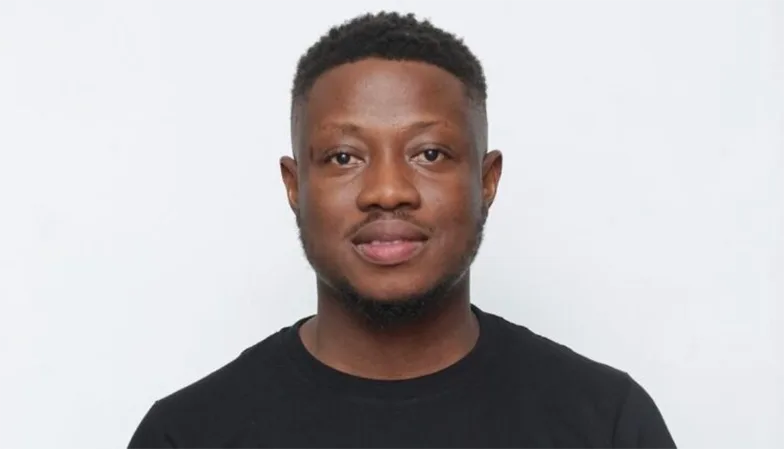
A Technology Investment and Commercialization Professional, Amos works at the intersection of investment, advanced technology and commercial development. His experience spans institutional investing, investment banking, corporate development, private equity and direct work with technology companies. Over time, his focus has moved closer to a question that continues to shape his work: what does it take to turn a technically promising innovation into something customers will adopt and investors will finance?
From Allocating Capital to Understanding What Makes Technology Investable
Amos began his career in investment banking in Ghana at IC Securities, where he supported major capital markets and M&A transactions, including a large telecommunications IPO and the sale of a stake in an insurance company. He later moved into institutional investment management at Stanbic Investment Management Services, progressing from research into portfolio management and helping manage an investment portfolio of more than $200 million. His work included developing the investment case for one of the first private equity allocations by a Ghanaian pension fund, as well as an early institutional allocation to a gold ETF.
These experiences gave him a strong foundation in understanding businesses, evaluating opportunities and considering how capital can create value.
His time at MIT Sloan introduced another dimension to that experience. During his MBA, Amos worked with Bose Corporation's Corporate Development and Ventures team, supporting strategic investment, M&A and new business initiatives. He helped develop the investment case for Bose’s initial $10 million strategic investment in Indian wearables company Noise and supported other strategic initiatives to expand Bose’s product portfolio.
These experiences gradually brought him closer to advanced technologies and the decisions that determine whether they can become commercially viable businesses.
The Gap Between Invention and the Market
The challenge became particularly clear through Amos's work with technology companies. Engineers and scientists generally focus on proving that a technology works, but customers have a different set of questions. They want to understand how the technology solves a problem, what value it creates and whether adopting it makes economic sense. Investors need to understand the market, financial requirements, risks and path to scale.
Amos describes this as an important gap between invention and commercialization. A technical breakthrough can have significant potential but requires substantial work before customers and investors can act on that potential.
His work with Vertical Semiconductors became an important part of this development. The MIT-originated company was commercializing vertical gallium nitride power devices, with an initial focus on applications including AI and data center power infrastructure. Amos supported market analysis, commercialization strategy, techno-economic modeling, investor positioning and fundraising, contributing to the company's successful $11 million seed financing.
The experience reinforced an idea that now sits at the center of his work: technology commercialization requires a connection between technical performance and commercial value.
A technical breakthrough becomes commercially meaningful when it translates into real value for customers. For investors, understanding that value and the path toward commercial deployment is critical.
Asking the Questions That Move Technology Forward
Amos's approach begins with questions.
Who is the first customer? Is there a significant market pull? Which technical milestones matter commercially? What does the company need to prove during the initial pilot phase? How should the development process be financed? Which partnerships could accelerate deployment?
These questions apply across sectors, even when the underlying technologies are very different.
His work with advanced nuclear technology provides another example. Through his work with Apollo Atomics, an MIT-founded advanced nuclear company, Amos has focused on the commercial side of bringing small modular nuclear technology toward deployment. This has included identifying and engaging prospective customers, exploring deployment opportunities and developing relationships with strategic partners.
A similar approach informs his work with Emergence, a company developing atmospheric water generation technology for applications including data center cooling and power infrastructure. Amos has worked on commercialization and market development, engaging prospective customers and strategic partners across the data center ecosystem. His efforts focus on identifying where onsite water generation could address water constraints, understanding customer requirements, and connecting the technology's capabilities with potential commercial applications and deployment opportunities.
The same principle extends to energy infrastructure, where Amos has also worked with Verne on project finance and investment evaluation frameworks for onsite power projects.
Across these engagements, the technologies differ. The commercial questions remain familiar.
Learning Across Disciplines
Working in advanced technology has also required Amos to move beyond the boundaries of his formal finance background.
Many of the founders and technical teams he works with have deep expertise in engineering and science. Amos has responded by developing enough technical understanding to ask useful questions and connect technical performance with customer value, project economics, investment requirements and commercialization strategy.
He does not aim to replace the engineer. His role is to understand the technology sufficiently to help translate it into a commercial strategy.
That requires listening, learning and asking questions early. Amos considers this willingness to learn across disciplines one of the most important parts of his approach.
It also reflects one of the lessons he has taken from his career: successful commercialization requires an understanding of three perspectives. Technical teams need to know whether something can be built. Customers need to know whether it solves an important problem. Investors need to understand whether the business can generate an attractive return.
Building a Path From Technology to Deployment
Today, Amos approaches these challenges from two complementary perspectives. At Granite Street Partners, a private equity firm focused on industrial manufacturing, he evaluates acquisition opportunities, analyzes businesses and supports investment decisions across sectors including aerospace, defense, semiconductors and energy. Through Lab2Scale, he works directly with founders developing advanced technologies across nuclear energy, semiconductors, power infrastructure, water and cooling, and other engineering intensive industries.
Lab2Scale reflects the broader direction of his work. The platform is focused on helping advanced technology founders navigate the commercial, financial, customer and strategic challenges that emerge between technical innovation and commercial deployment.
For Amos, the goal is to continue working with technologies that could shape the next generation of American industrial and infrastructure capacity. His areas of interest include semiconductors, nuclear energy, power generation, critical materials, advanced manufacturing and infrastructure supporting AI.
The broader opportunity is significant. Advanced technology will continue to create new possibilities across energy, manufacturing, computing and infrastructure. Turning those possibilities into working businesses will require people who understand both the technology and the commercial conditions surrounding it.
Amos Adu Akoto has built his career around that connection.
His work reflects a simple idea: a breakthrough technology gains real value when it can move beyond the laboratory, reach a customer, attract the right capital and become part of a functioning market. For advanced technology companies, that journey can be long and complex. Amos's role is to help make the path clearer, connecting technical innovation with the customers, capital, partnerships and commercial strategy required to move toward deployment.













Comments