>>
Industry>>
Compliance and governance>>
China Unveils New Guidelines t...China Unveils New Guidelines to Align AI Growth with Job Creation
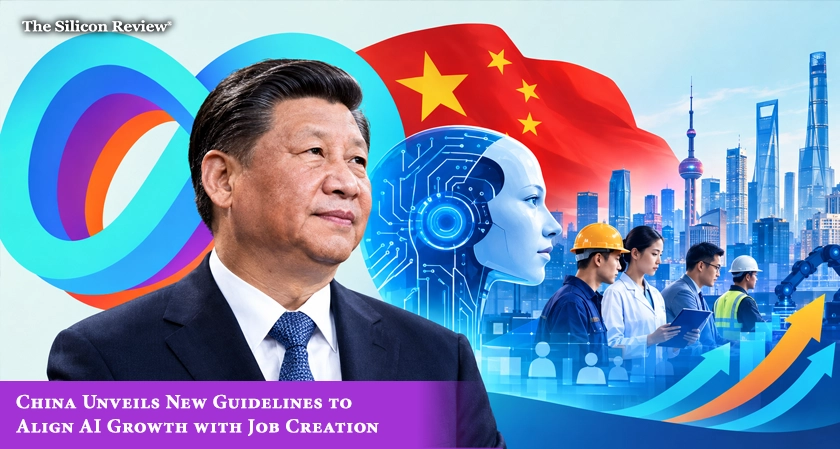
China’s State Council introduces an 18-task strategy to manage AI advancement, boost high-tech employment, and protect gig workers against technology displacement.
News source: https://english.news.cn/home.htm
In light of the significant advancements in artificial intelligence, the General Office of the State Council has formally published detailed instructions aimed at promoting an employment-friendly environment. The new strategy aims to aggressively reduce the dangers of labor displacement throughout the country's economy, promote entrepreneurship, and create high-quality jobs by utilizing developing technologies.
- Boosting AI’s Job-Creation Potential
- Making AI adoption employment-friendly
- Improving worker’s digital skills
- Enhancing Employment Services
- Strengthening Labor and Social Security
- Monitoring and Addressing Employment Risks
Increasing employment in developing digital industries, assisting small and medium-sized businesses in stabilizing their staff, and putting in place reliable systems to keep an eye on structural employment hazards are all top concerns. The guidelines also stress the importance of expediting specialized AI talent training programs in order to provide traditional workers with essential digital capabilities.
The approach prioritizes worker welfare above the development of jobs. It demands stronger social security systems for flexible and gig economy workers as well as improved rights safeguards in human-machine collaboration enterprises. The state seeks to guaranty that the economic benefits of technical efficiency are distributed fairly throughout the workforce by improving income distribution models.
This policy push coincides with China's significant acceleration of AI integration. According to official data, the nation's core AI industry, which is backed by a network of more than 6,200 specialized businesses across the country, reached a valuation of 1.2 trillion Yuan in 2025. Adoption has been particularly rapid in the manufacturing sector; by the end of last year, more than 30% of large industrial companies had integrated AI systems into their production lines.
The five-year employment-first agenda of the country, which views technology adaptation as a key economic pillar, is clearly aligned with the approach. Industry data reveals a significant shift in labor demand; earlier this year, recruitment sites such as Maimai reported a 789 percent year-over-year increase in new economy AI job opportunities. Specialized engineers in automated vehicle manufacturing and intelligent driving are still in high demand. Authorities intend to use cutting-edge AI tools in the future to improve the intelligence of public employment services. These platforms will facilitate job placements and offer focused assistance to displaced people moving into more recent tech-driven professions.
FAQ:
Q: What is the current valuation of China’s AI sector?
A: The core AI industry crossed a value of 1.2 trillion Yuan.
Q: Which engineering roles are in highest demand in China?
A: AI engineers working in automotive manufacturing and intelligent driving.
Q: How will the China government track job losses?
A: By establishing monitoring and early-warning systems for automation risks.
Q: Who issued these new economic directives in China?
A: The guidelines were issued by the General Office of the State Council.
Q: How are gig workers protected under this policy?
A: It mandates stronger social security and rights for flexible tech workers.
Q: What is the main goal of the new policy?
A: To harness AI for job creation while mitigating worker displacement.













Comments