>>
Industry>>
Capital Market>>
India-New Zealand Free Trade A...India-New Zealand Free Trade Agreement Comes Into Force
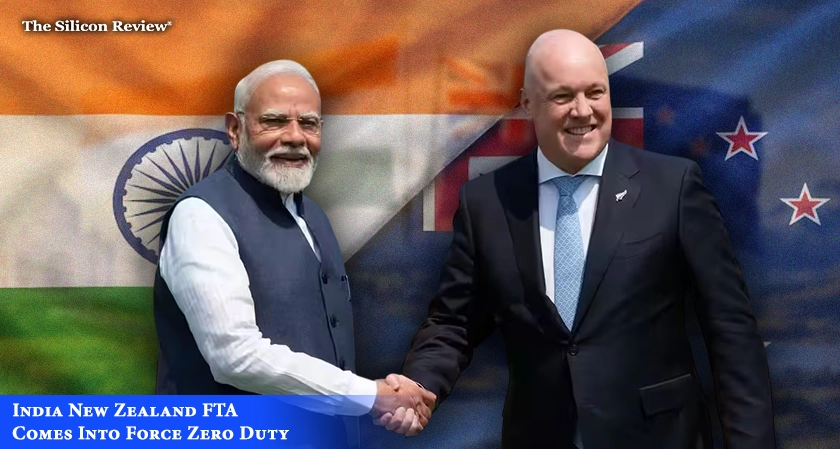
The India-New Zealand Free Trade Agreement came into force on October 20, giving Indian exporters 100% duty-free access to New Zealand and unlocking a $20 billion investment commitment over 15 years.
News source: Google / https://www.thehindu.com/
The India-New Zealand Free Trade Agreement entered into force on Tuesday, October 20, 2026, marking India's 17th operational trade pact and delivering unprecedented market access for Indian exporters.
"All Indian goods can now enter New Zealand at zero import duty," according to the Global Trade Research Initiative, which noted this is the first FTA where India receives full duty-free access across all tariff lines from the day of implementation.
Every single tariff line covering 100% of India's exports to New Zealand is now duty-free. New Zealand's peak tariffs of up to 10% on Indian goods have been eliminated, putting Indian products on par with New Zealand's other trading partners. Sectors set to gain immediately include textiles and apparel, leather and footwear, gems and jewellery, engineering goods, and processed foods. Indian manufacturers also benefit from tariff-free access to critical inputs including wooden logs, coking coal, and metal scrap, sharpening their competitiveness in global markets.
Protections for Indian Farmers
India has safeguarded its agricultural sector. Sensitive products including dairy, animal meat (except sheep), key agricultural commodities, sugar, and edible oils remain fully excluded from tariff concessions. A calibrated market access system has been structured for New Zealand's apples, kiwifruit, and Manuka honey through Tariff Rate Quotas with Minimum Import Price and seasonal import windows, alongside safeguards to protect domestic farmers.
$20 Billion Investment Commitment
New Zealand has committed to facilitating $20 billion in investment into India over 15 years, supporting manufacturing, infrastructure, agriculture, and start-ups. The agreement also creates new opportunities for Indian professionals and students, including a dedicated quota of 5,000 Temporary Employment Entry visas for skilled Indians and 1,000 Working Holiday visas annually.
"The India-New Zealand FTA would provide fresh momentum to the bilateral partnership, create greater synergies between the two economies, enable economies of scale and contribute to enhancing overall competitiveness," Commerce and Industry Minister Piyush Goyal said .
The FTA was signed on April 27, 2026, and ratified by both countries in September. Bilateral merchandise trade stood at approximately $1.23 billion in calendar year 2025, with both nations aiming to double two-way trade in goods and services to NZ$7 billion by 2030.
Here is the question The Silicon Review raises. India has secured 100% duty-free access to New Zealand while protecting its dairy and agricultural sectors at home. When a trade deal gives almost everything while conceding almost nothing, is it a genuine partnership or a one-sided arrangement that New Zealand's exporters will eventually question?
FAQ:
Q: When did the India-New Zealand FTA come into force?
A: The FTA entered into force on October 20, 2026, after being signed on April 27, 2026, and ratified by both countries in September.
Q: What are the benefits for Indian exporters under the FTA?
A: Indian exporters now have 100% duty-free access to New Zealand across all tariff lines, eliminating tariffs of up to 10% on sectors including textiles, leather, engineering goods, and processed foods.
Q: Which Indian sectors are protected from New Zealand imports?
A: India has excluded dairy, animal meat (except sheep), key agricultural commodities, sugar, and edible oils from tariff concessions to protect domestic farmers.
Q: What is the investment commitment from New Zealand?
A: New Zealand has committed to facilitating $20 billion in investment into India over 15 years, supporting manufacturing, infrastructure, and start-ups.
Q: What visa opportunities does the FTA create for Indians?
A: The FTA provides a quota of 5,000 Temporary Employment Entry visas for skilled Indians and 1,000 Working Holiday visas annually, along with uncapped student mobility.













Comments