>>
Other>>
Politics>>
Japan asks for border solution...Japan asks for border solution of its territory with Russia after 70 years of joint declaration
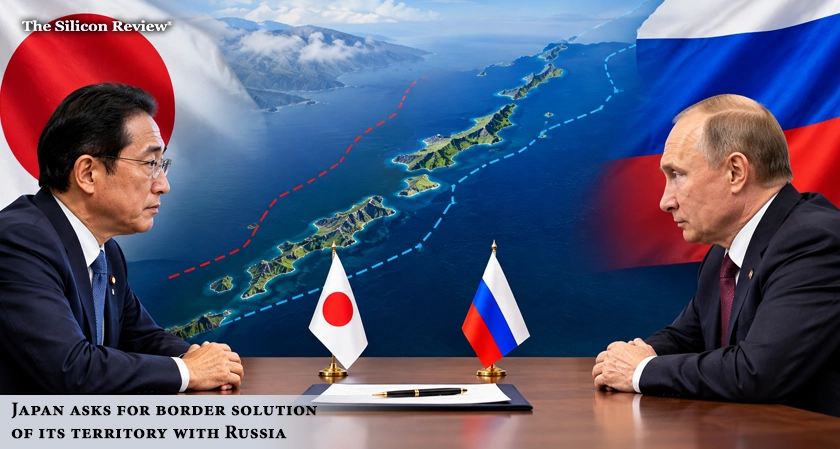
On Monday, October 19, 2026 The Japanese Government asked for territorial solution with Russia after 70 years of joint declaration.
News Source: https://mainichi.jp/english/
On Monday, October 19, 2026, precisely 70 years after the 1956 Joint Declaration was signed, the Japanese government formally declared its intention to keep pursuing a diplomatic settlement with Russia over a multi-decade territorial dispute.
Chief Cabinet Secretary Minoru Kihara said during a routine press briefing in Tokyo that Japan plans to keep the channels of communication open with Moscow in order to resolve the present diplomatic impasse, despite extremely tense bilateral relations. “Even amid the difficult state of Japan-Russia relations, we will continue the necessary communication with the Russian side and work toward breaking the current deadlock.”
A collection of islands off the coast of Hokkaido, known as the Southern Kurils by Russia and the Northern Territories by Japan, are at the center of the conflict. The island chain is divided into four separate regions.
- Shikotan
- The Habomai islet group
- Kunashiri
- Etorofu
Japan and Russia have never signed a formal post-World War II peace treaty due to the ongoing sovereignty issue. Tokyo claims that the islands were unlawfully taken by the Soviet Union in the immediate aftermath of Japan's capitulation in August 1945, but Moscow argues that the acquisition was perfectly legal. Japan and the Soviet Union were able to successfully reestablish and normalize diplomatic relations with the 1956 Joint Declaration. Importantly, two of the four contested territories—Shikotan and the Habomai islets—are to be returned to Japan, but only upon the formal conclusion of a World War II peace treaty, according to some speculation.
Both countries formally agreed in 2018 to expedite territory negotiations, with a focus on using the 1956 declaration's parameters. However, after Japan imposed economic sanctions on Moscow in reaction to the full-scale invasion of Ukraine in 2022, Russia completely halted these bilateral negotiations. After Russian President Vladimir Putin made his first-ever official visit to one of the disputed islands in August 2026, diplomatic tensions increased even more, prompting a formal protest from Tokyo. As a result, representatives of the Japanese government admit that there are still very little chances for formal peace treaty discussions to resume in the foreseeable future.
FAQs:
Q: What is the core territorial dispute between Japan and Russia?
A: A collection of islands off the coast of Hokkaido are at issue. They are referred to as the Southern Kurils in Russia and the Northern Territories in Japan. Shikotan, the Habomai islet group, Kunashiri, and Etorofu are the four distinct areas that make up the archipelago.
Q: Why haven't Japan and Russia signed a World War II peace treaty?
A: Japan and Russia have never signed a formal post-World War II peace treaty due to the ongoing sovereignty issue.
Q: What is the 1956 Joint Declaration?
A: The fleet is being delivered under a $1.7 billion contract that was signed in September 2025. Japan and the Soviet Union's diplomatic ties were effectively reestablished and normalized by the 1956 agreement. Two of the four islands (Shikotan and the Habomai islets) would be returned to Japan only once a formal peace treaty is signed, according to a crucial stipulation in the deal.
Q: Why were territorial negotiations suspended between Japan and Russia?
A: Both countries formally agreed in 2018 to expedite territory negotiations, with a focus on using the 1956 declaration's parameters. However, after Japan imposed economic sanctions on Moscow in reaction to the full-scale invasion of Ukraine in 2022, Russia completely halted these bilateral negotiations.
Q: Why did diplomatic friction worsen recently between Japan and Russia?
A: After Russian President Vladimir Putin made his first-ever official visit to one of the disputed islands in August 2026, diplomatic tensions increased even more, prompting a formal protest from Tokyo.













Comments