>>
Industry>>
Environmental sustainability>>
Bogong Moths Are Playing Havoc...Bogong Moths Are Playing Havoc with BOM Weather Radars
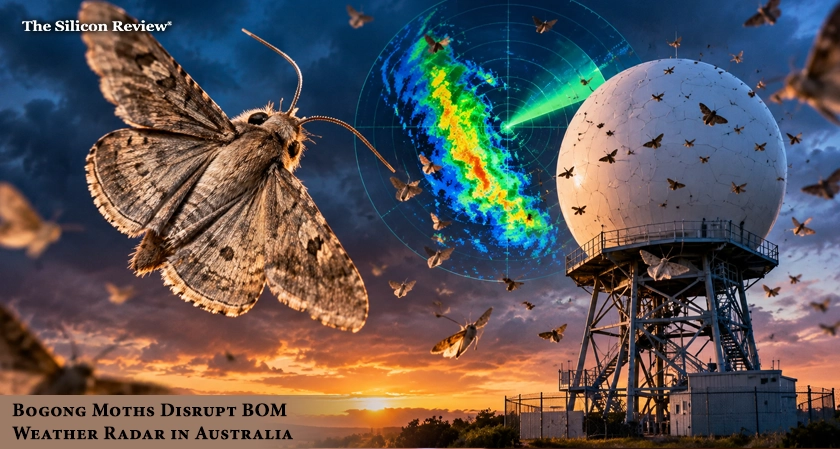
Massive swarms of Bogong moths are being mistaken for rain on Bureau of Meteorology radar, forcing forecasters to manually distinguish insect clouds from actual weather systems.
News source: Google / https://www.abc.net.au/
The Bureau of Meteorology has a new problem on its radar screens, and it has wings. Millions of Bogong moths are migrating across southeastern Australia, and their sheer numbers are showing up as false rain signals on weather radar, forcing forecasters to manually distinguish insect clouds from actual weather systems.
"The moths are being picked up by the radar as if they were light rain or drizzle," a Bureau of Meteorology spokesperson said. "It is something we see from time to time with large insect migrations, but this season has been particularly noticeable."
What's Happening on the BOM Weather Radars?
BOM Weather radars work by sending out pulses of radio waves and measuring what bounces back. Raindrops, hail, and snow reflect these signals. So do large insects, especially when they are flying in dense concentrations. The Bogong moth migration occurs annually, but the scale this season has been exceptional. The moths are travelling from their breeding grounds in southern Queensland and northern New South Wales to their summer hibernation sites in the Australian Alps. Millions of moths make the journey, and on radar, they can appear as large, diffuse echoes that resemble rain bands.
Why This Matters?
While the radar echoes are not dangerous, they can confuse the public and complicate forecasting. A false rain signal in a dry region could lead to unnecessary warnings or missed drought conditions. Forecasters are trained to recognise the difference between insect echoes and precipitation, but it takes time and attention.
The Bureau has been documenting the phenomenon on social media, explaining to the public that not every radar echo is rain. "If you see what looks like rain on the radar but your garden is dry, it might be the Bogong moths,” the Bureau said in a post.
A Species under Pressure
The Bogong moth migration is not just a radar nuisance. It is also a critical ecological event. The moths are a vital food source for the endangered Mountain Pygmy Possum, which wakes from hibernation each spring to feed on the moths. In recent years, Bogong moth populations have declined significantly. Researchers have linked the decline to drought, habitat loss, and light pollution. The moths navigate using the moon and stars, and artificial light disrupts their migration.
"The irony is that while we are seeing a large swarm this year, the long-term trend is concerning. The Bogong moth is a barometer of ecosystem health," a wildlife ecologist said.
Here is the question The Silicon Review raises. Bogong moths are showing up on weather radars as false rain, but their numbers are also a key indicator of ecosystem health. When an insect migration is large enough to disrupt the Bureau of Meteorology, does it signal a thriving species or a warning that the Alps' most important food source is at risk?
FAQ:
Q: Why are Bogong moths showing up on weather radar?
A: Weather radars detect large insect swarms in the same way they detect rain. Dense concentrations of Bogong moths reflect radio waves and appear as false rain signals.
Q: Does the Bogong moth migration affect weather forecasts?
A: The moths can confuse public perception and require forecasters to manually distinguish insect echoes from actual precipitation.
Q: Are Bogong moths a threatened species?
A: Bogong moth populations have declined significantly in recent years due to drought, habitat loss, and light pollution. The species is a critical food source for the endangered Mountain Pygmy Possum.
Q: When does the Bogong moth migration occur?
A: The Bogong moth migration occurs annually in spring, with millions of moths travelling from breeding grounds in Queensland and NSW to the Australian Alps.
Q: How many Bogong moths are involved in the migration?
A: Millions of moths participate in the annual migration, though exact numbers vary by season.













Comments