>>
Industry>>
Industrial Automation>>
China drafts policies for smar...China drafts policies for smart manufacturing to deeply integrate AI
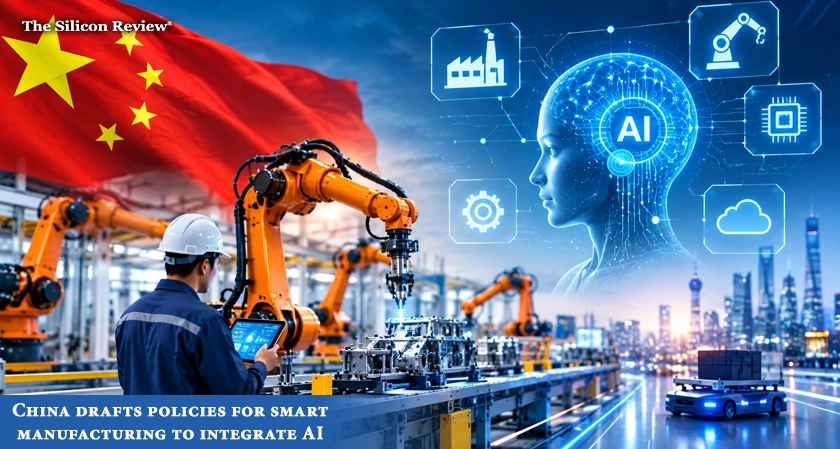
In order to fully integrate artificial intelligence (AI) into the nation's whole industrial sector, China's Ministry of Industry and Information Technology (MIIT) has said that it is coming up with new policies for next-generation smart manufacturing.
News Source: https://english.news.cn/
In order to integrate artificial intelligence (AI) into its vast industrial sector, the Chinese government has planned a broad legislative and policy drive. The Ministry of Industry and Information Technology (MIIT) claims that the new framework would focus on the whole manufacturing chain with the goal of drastically reducing operating costs, maximizing factory floor productivity, and quickly responding to shifting consumer market demands.
China is putting into practice a tiered upgrading strategy under the new blueprint. While top-tier flagship plants are responsible for developing next-generation industrial systems, basic and intermediate factories will concentrate on growing basic digital architecture. The development of highly specialized industrial AI agents, automated robotics, precise inspection equipment, and advanced machine tools will receive direct state backing.
An existing strong industrial foundation is strengthened by the policy. According to the MIIT, China has implemented 1,000 localized application scenarios and more than 13,000 advanced smart factories in 20 heavy industries, such as steel, automobile manufacturing, and pharmaceuticals. Driven by a smart computing capacity of 2,592 EFLOPS (a 146 percent year-over-year rise), this push comes as China's GDP increased by 4.6 percent in the first three quarters of 2026 to surpass 107 trillion Yuan, of which 25.7 percent came from manufacturing. Over half of all industrial growth during this time was driven by digital and high-tech manufacturing.
Internally, the plan moves China toward supply chain resilience and high-margin tech leadership. Beijing intends to share standards and export these developments to other countries via organizations like the BRICS alliance. This increases developing countries' soft power, but it also raises the possibility of growing technological rivalries and data security issues with Western economies.
FAQs:
Q: Which government agency is drafting China's new smart manufacturing policies?
A: The Ministry of Industry and Information Technology (MIIT) has planned a broad legislative and policy drive.
Q: What is the primary objective of integrating AI across the manufacturing chain?
A: The measures aim is to reducing operating costs, maximizing factory floor productivity, and quickly responding to shifting consumer market demands.
Q: How will China structure its factory upgrade program?
A: China is putting into practice a tiered upgrading strategy under the new blueprint. While top-tier flagship plants are responsible for developing next-generation industrial systems, basic and intermediate factories will concentrate on growing basic digital architecture.
Q: How does China plan to expand its smart manufacturing influence globally?
A: Beijing intends to share standards and export these developments to other countries via organizations like the BRICS alliance
Q: What was the total capacity of China's smart computing power by late September 2026?
A: by a smart computing capacity of 2,592 EFLOPS (a 146 percent year-over-year rise), this push comes as China's GDP increased by 4.6 percent in the first three quarters of 2026.













Comments