>>
Industry>>
Social Responsibility>>
Spain Train Crash: Can Passeng...Spain Train Crash: Can Passenger Safety Survive Repeated Failures?
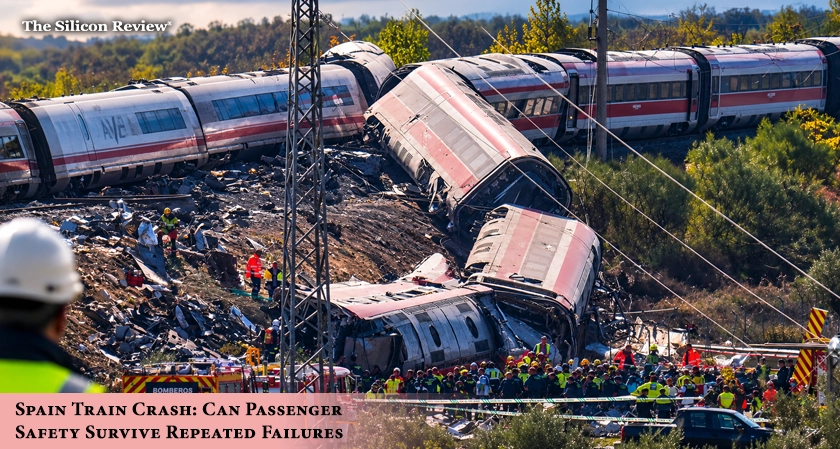
Spain enters national mourning as verified data from the Madrid-Seville train crash exposes systemic safety failures on the exact same rail line twice in 2026.
News Source: https://www.bbc.com/
The discussion around Wednesday's devastating train tragedy has moved from first shock to profound structural accountability as Spain enters three days of national grief. A concerning fact about corporate and state accountability for human life has surfaced as a result of waiting for official telemetry and validated black box data rather than hurrying to broadcast early supposition. At least 68 people have died and 107 have been hospitalized as a result of the disaster in Urda, 15 passengers are still in critical condition.
The accident started with a widespread computer communications breakdown that interfered with track signals along the Madrid-Seville high-speed corridor, according to verified data. At first, this automated system operated as planned, initiating safety procedures that automatically stopped six different trains. When human operators took direct command in Madrid's central control room, social accountability collapsed. Investigators verified that controllers let a state-owned Renfe train to continue traveling without enforcing crucial speed limits, which resulted in the train colliding head-on with a private, halted Iryo train.
The fact that this disaster was completely avoidable makes it a serious ethical dilemma for Spain transportation. In only 2026, this is the second deadly high-speed rail accident on the same Madrid–Seville track line. 46 people were murdered in another collision near Córdoba in January, just a few months ago, amid similarly troubling network conditions. Two significant infrastructure failures on a single line in a single year reveal an alarming lack of corporate control and passenger protection for a continent that takes pride in safe, sustainable public transportation.
The nation's political landscape has completely stopped due to the social impact. Starting on October 29, Prime Minister Pedro Sánchez announced three days of national mourning, calling the repetition of such a tragedy "unacceptable." All of the major political parties have halted their campaign events in observance of the victims and their families as the national general elections draw near. The public now demands a comprehensive rethink of how state-run and private transit networks safeguard the people who depend on them on a daily basis, rather than merely answers.
FAQs:
Q: How many people died in the Spain train crash?
A: At least 68 people have died and 107 have been hospitalized as a result of the disaster in Urda, 15 passengers are still in critical condition.
Q: When did the national mourning period begin in Spain?
A: Starting on October 29, Prime Minister Pedro Sánchez announced three days of national mourning.
Q: Where exactly did the high-speed train collision take place in Spain?
A: The accident occurred on the major high-speed rail line near Urda in the Toledo province, central Spain.
Q: Which train companies were involved in the disaster in Spain?
A: A moving state-run Renfe train rear-ended a stationary train operated by the private firm Iryo.
Q: Is this the first fatal train accident in Spain this year?
A: No, this is the second fatal disaster on the exact same Madrid–Seville line in 2026, following a January crash near Córdoba that killed 46 people.













Comments