>>
Technology>>
Cyber security>>
Insider Risk Is the Next Data ...Insider Risk Is the Next Data Center Problem
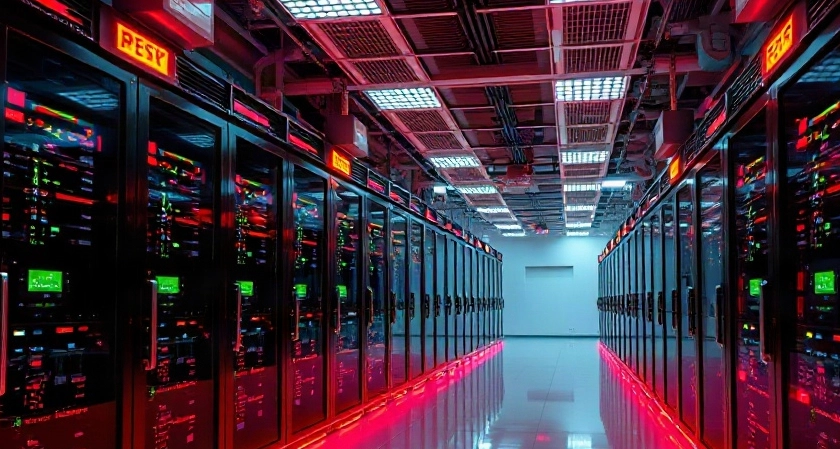
The world relies entirely on data centers to keep the digital economy moving forward every single day. These massive facilities store everything from personal photos to highly sensitive financial records. Naturally, protecting this vast amount of information is a massive priority for organizations across the globe. Millions of dollars are spent every year on advanced firewalls and complex encryption algorithms to stop external hackers. The physical buildings are guarded with biometric scanners, reinforced doors, and armed security personnel. The external walls are built high, and the digital defenses are layered and complex.
But what happens when the threat isn't on the outside?
Honestly, if you have ever stood on a server floor, surrounded by the constant, deafening drone of industrial cooling fans, you realize just how vulnerable it all feels up close. A new vulnerability is emerging right inside the building. Insider risk is rapidly becoming the next major hurdle for data center operations. The traditional security model assumes everyone inside the perimeter is inherently safe.
That assumption just isn't valid in our modern technological landscape.
The Perimeter Illusion
For many years, security teams focused almost entirely on building an impenetrable fortress. The primary goal was to keep remote attackers and malicious software out of the corporate network. On the physical side, the main objective was to stop unauthorized individuals from ever entering the server floor. These preventative measures are absolutely necessary for any secure facility. However, they completely ignore the people who already hold the keys to the kingdom. Insider risk involves anyone with legitimate access who might intentionally or accidentally misuse that access. This diverse group includes senior IT staff, daily maintenance workers, and third-party contractors.
Are we actually paying attention to what happens after the badge scan?
Managing this complex environment requires highly specialized protocols and deep industry knowledge. Facilities need trusted partners who deeply understand both physical and operational security challenges. For example, working with Securitas Critical Infrastructure Services can help data centers develop comprehensive frameworks to monitor internal behavior effectively. It isn't enough to simply check a badge at the front door and wave someone through. The focus has to shift to understanding exactly what happens after someone enters the facility. The real danger isn't always the malicious hacker sitting in a distant country. It can easily be a trusted vendor with unchecked access to sensitive operational areas. Security teams must bridge the critical gap between physical entry and digital network activity.
Understanding the Types of Insiders
When industry professionals hear about insider threats, they usually picture a disgruntled worker stealing corporate secrets in the dead of night. They imagine a rogue network administrator sabotaging core servers for personal revenge. Those malicious insiders definitely exist, and they can cause significant financial damage. However, they're only a very small fraction of the overall problem. The vast majority of insider incidents are completely accidental and lack any malicious intent.
How do you protect a system when the person breaking it is just doing their job?
You know, I think we often forget that data centers are incredibly high-stress environments filled with highly complex machinery. Human error is incredibly common in these settings. A well-meaning technician, maybe just exhausted from working under harsh fluorescent lights at two in the morning, might accidentally unplug a critical server rack. A junior administrator could easily misconfigure a vital network router and cause a massive outage. An employee might fall victim to a sophisticated phishing email and accidentally hand over their administrative credentials to a criminal. In all of these cases, there is absolutely no bad intention. The employee is simply trying to do their required job. I guess it is a heavy realization when you see that an honest mistake can be just as devastating as a targeted attack.
On the other hand, malicious insiders actively use their authorized access for personal gain or corporate espionage. They know exactly where the most valuable data is stored on the network. They deeply understand the facility security protocols, and most importantly, they know exactly how to bypass those protocols without triggering any internal alarms. Traditional security monitoring tools are primarily designed to look for external anomalies. So, they frequently fail to catch a legitimate user doing unauthorized things with their normal credentials.
The Challenge of Vendor Access
Data centers are uniquely vulnerable to these risks because they require a constant, heavy flow of personnel. It isn't just full-time, direct employees walking on the server floor. These massive facilities rely heavily on a massive network of third-party vendors and specialized contractors. HVAC technicians constantly need physical access to repair complex cooling systems. Hardware contractors frequently come in to replace broken servers and upgrade network switches. External compliance auditors visit regularly to ensure the facility meets strict regulatory standards. Every single one of these temporary visitors requires some level of physical and network access to complete their assigned tasks.
And managing this constantly shifting web of access rights is an administrative nightmare.
The core principle of least privilege states that people should only have the exact access they need for the exact amount of time they need it. In reality, access rights are frequently over-provisioned out of convenience. A temporary contractor might be given broad, unrestricted access to complete a very specific job quickly. If that broad access isn't immediately revoked the moment the job is done, the facility is left highly vulnerable. A compromised vendor credential can easily become a hidden backdoor into the most sensitive areas of the corporate network.
Security teams constantly struggle to keep accurate track of who is actually in the building and what specific tasks they're doing. A contractor might have clearance for the main cooling sector, but then quietly wander into a highly restricted server aisle. Without continuous internal monitoring, these suspicious movements go completely unnoticed. The sheer volume of diverse people moving through a modern data center creates a massive, poorly monitored attack surface.
Moving Toward Continuous Verification
So, how do we fix this? Solving this complex insider problem requires a total, fundamental shift in security strategy. Data centers must permanently abandon the outdated idea of implicit trust based on physical location. They need to rapidly adopt a strict model of continuous verification. This modern approach is often called a zero trust architecture. In a zero trust model, absolutely no user or device is trusted by default. Every single access request is strictly verified and authenticated before any access is granted. You have to verify everything.
Facilities also need to invest heavily in advanced behavioral analytics software. These intelligent systems learn exactly what normal daily behavior looks like for every single employee and contractor. If a regular day shift worker suddenly tries to download massive files from a restricted database at three in the morning, the system immediately flags the anomaly. The security system can then automatically block all access until a human investigation takes place.
But technology is only one part of the comprehensive solution. Data centers must actively build a strong culture of security awareness from the ground up. I have seen firsthand how quickly a culture of transparency can change an organization. Employees need continuous training to recognize sophisticated phishing attempts and social engineering tactics. They need to understand exactly why strict access protocols are so critically important to the business. Everyone must feel completely comfortable reporting strange or suspicious behavior without any fear of retaliation or reprimand.
The Future of Facility Security
External perimeter defenses will undoubtedly continue to improve and evolve over the coming years. As the outer walls become harder to breach, threat actors will inevitably look for much easier targets inside the building itself. Insider risk is no longer a theoretical concept discussed in boardrooms. It is a clear and present danger to the long-term stability of modern data centers everywhere.
Facility operators must actively recognize this severe internal threat and rapidly adapt their security strategies. By maintaining incredibly strict access controls and continuously monitoring internal behavior, data centers can successfully protect their critical infrastructure. The biggest threat to the facility might already have the keys to the front door. Ignoring them is a recipe for disaster.
The future of data center security relies entirely on watching the inside just as closely as the outside.













Comments