>>
Industry>>
Travel and hospitality>>
Why Lakeville, Minnesota Is a ...Why Lakeville, Minnesota Is a Small-Town Base for Big Outdoor Weekends
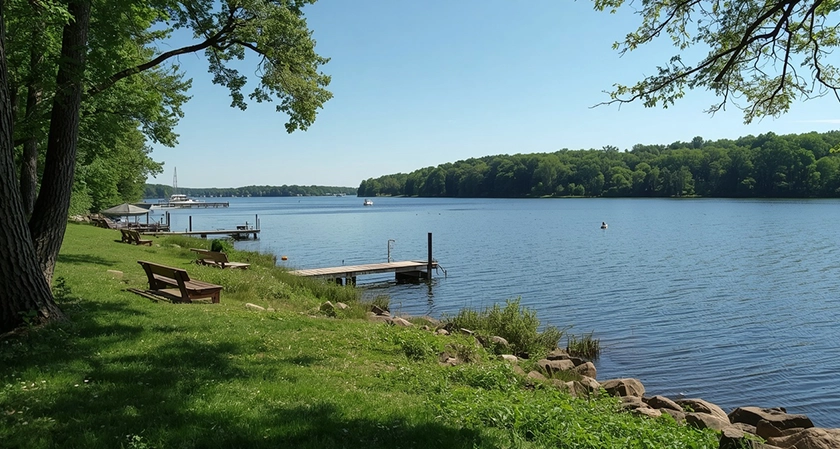
Forty-five minutes. That's the drive from downtown Minneapolis to Lakeville, and it's the single best reason this south metro town keeps showing up on my weekend list. You get small-town parking, a real trail network, and a lake you can actually paddle without fighting a crowd for a launch spot.
I've spent enough time in the south metro to know which stops are worth your Saturday and which ones just look good in photos. So here's the honest version: what to do, when to go, and how to build a day that doesn't fall apart at 2 p.m. If you're mapping out a trip, this guide to outdoor activities in Lakeville covers the full lineup, and the sections below tell you how to sequence it.
One quick note before we get into it. Lakeville's outdoor scene is seasonal in the truest sense. You're not picking between "nice" and "less nice." You're picking between a mountain bike and a pair of snowshoes, and both trips are great if you plan for the right one.
What Lakeville Gets Right That Bigger Cities Don't
Scale. That's the whole answer.
A trail system in a major metro means dodging strollers, dogs, and someone's Bluetooth speaker for six miles. Lakeville's trails run through neighborhoods, along wetlands, and past farmland, and on a Tuesday morning you might pass three people total. I'd take that trade every time, even if it means fewer coffee shops at the trailhead.
The city sits in Dakota County, which has quietly built one of the better regional trail networks in the state. Local paths connect to longer routes, so a short after-work ride can turn into a half-day trip if you're feeling ambitious. Bring a frame bag with water and a snack. There isn't always a gas station where you'd want one.
Trails, Parks, and Paved Paths Worth Your Morning
Start with the paved trail along Ritter Parkway. It's flat, well-marked, and forgiving if you haven't been on a bike since last fall. Road cyclists tend to push further out toward the county roads, where the shoulders are wide and the traffic is thin.
For a slower pace, the parks scattered through town give you picnic tables, playgrounds, and shade without a reservation. Aronson and Quigley-Sime parks on the west side are the ones I'd point a family toward. Antlers Park is the easy answer for a group meetup because everyone can find it.
A few things to pack that people forget:
- A refillable bottle. Drinking fountains are seasonal, not year-round.
- Bug spray from June through August. The wetlands are beautiful and the mosquitoes know it.
- A light layer even in July. Minnesota evenings drop faster than you expect.
If you're towing kids or grandkids, plan around 90 minutes of actual activity. Anything past that and you're negotiating, not recreating.
On the Water: Paddling, Fishing, and Lake Days
Lakeville has real water access, which surprises people who assume the south metro is all subdivisions. The boat launch at Casperson Park puts you on the water without a long portage, and kayaks and canoes handle these lakes just fine. Motors are optional, not required.
Anglers do well here in early summer and again in the fall. Panfish and bass are the usual targets, and the weed lines near shore are where most people find action. Check current licensing and season rules before you go, since those change and the Minnesota DNR is the source that actually matters.
My honest take: skip the midday paddle in July. Go at 7 a.m. or go at 6 p.m. The light is better, the water is calmer, and you won't be sitting in a kayak under a full sun that has no mercy.
Winter Doesn't Shut Lakeville Down
This is where the town separates itself from places that hibernate.
Buck Hill, just up the road in Burnsville, handles skiing, snowboarding, and tubing. It's a small hill, and I mean that as a compliment. You can get in twenty runs in an afternoon, which beats standing in a lift line at a destination resort. Disc golf runs there in the warmer months too, which is a nice bit of double duty.
Snow tubing is the sleeper hit for groups. It requires almost no skill, works for ages eight to eighty, and gives you a reason to be outside in February that doesn't involve a treadmill. Book ahead on holiday weekends.
Curling is the other winter option, and it's more fun than it looks on television. Dakota Curling Club runs learn-to-curl sessions for beginners. Wear layers and bring clean sneakers. You'll be on ice for two hours and you'll be colder than you think.
Minnesota winters swing hard from mild to brutal, so check the forecast before you commit to anything outdoors. The National Weather Service forecast is the one I trust when I'm deciding whether a trail day turns into a coffee shop day.
Build Your Day With the 50/30/20 Rule
Here's the framework I use for any outdoor day trip, and it works especially well in Lakeville because the town is compact. I call it the 50/30/20 day: half your time on the main activity, a third on food and recovery, and a fifth on something you didn't plan.
So a bike morning looks like three hours on the trail, an hour and a half at a downtown Lakeville spot for lunch, and forty minutes wandering into a farm stand or antique shop you spotted on the drive in. That last piece is what people skip, and it's usually the part they remember.
Itinerary planning apps will tell you to book every hour. Ignore that. The unplanned fifth is the whole point of leaving the city.
Practical Details That Save You a Headache
|
Season |
Best Activity |
Watch Out For
|
|
Spring |
Paved trail rides |
Wet, soft ground on unpaved paths |
|
Summer |
Paddling, fishing, disc golf |
Midday heat and mosquitoes |
|
Fall |
Hiking, farm stands, biking |
Shorter daylight hours |
|
Winter |
Skiing, tubing, curling |
Rapid forecast changes |
Parking is free at nearly every trailhead and park, which is not something you can say about most metro outdoor destinations. Restrooms exist at the larger parks but not along every stretch of trail, so plan accordingly if you're bringing little kids.
Cell coverage is solid throughout town. That said, download an offline map before you ride the county roads. Getting turned around on a gravel road with a dying phone is a bad way to end a good day.
One Scenario That Shows How This Works
A friend of mine drove down last October with no plan beyond "get outside." We hit a paved trail at nine, stopped at a cider stand around noon, and then spent an hour at a pumpkin farm because it was right there on the way back. Nothing on that list was on a schedule.
She texted me the following week asking when we could do it again. That's the test I use for any outdoor recommendation, and Lakeville passes it.
Making the Trip Work for You
You don't need a full weekend to enjoy this area, though a weekend is better. A half day gets you a trail, a meal, and one unexpected stop. A full day adds water or snow depending on the calendar. If you're staying overnight, the hotels near the interstate put you ten minutes from nearly everything listed above, which makes the morning start painless.
The bigger point is that outdoor time doesn't require a four-hour drive and a permit. Sometimes it's a small town with good trails, a lake that's easy to launch into, and a hill that's exactly the size it needs to be. Lakeville fits that description better than most places I've visited in the Twin Cities metro, and it does it in every season.
So what's stopping you from picking a Saturday and going? Grab the bike or the snowshoes, check the forecast, and give yourself one unplanned hour. That's the version of the trip you'll actually want to repeat.













Comments