>>
Technology>>
Cyber security>>
Your Firewall Is Only as Stron...Your Firewall Is Only as Strong as the Door to the Server Room
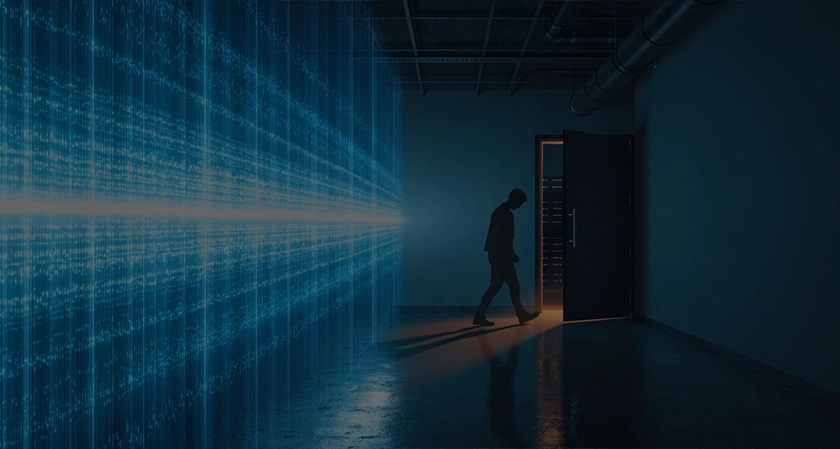
Technology companies spend heavily on security. Endpoint protection, zero-trust architecture, multi-factor authentication, round-the-clock monitoring. Then a contractor in a high-visibility vest follows a member of staff through a side door, plugs a small device into a network port in a meeting room, and walks out again ten minutes later.
It sounds like a film plot, but physical penetration testers carry out exactly this kind of exercise for clients, and they succeed more often than most security teams would like. The uncomfortable truth is that many organisations with mature cyber programmes have never tested whether someone could simply walk in and reach their hardware.
Where Digital and Physical Risk Meet
Every digital system lives somewhere physical. Servers sit in racks, laptops sit on desks, network cabinets sit in cupboards, and backup drives sit in someone's office. Access to any of them can bypass controls that took years to build. A physical security survey closes that blind spot by assessing a site the way an intruder would, from the perimeter fence to the comms room door, and ranking what it finds by real risk rather than by how alarming it sounds.
For data centres and colocation facilities, the stakes are obvious. But the same weaknesses exist in ordinary offices, logistics hubs and retail sites, where operational technology, payment systems and staff devices all sit within reach of anyone who gets through the front door.
The Gaps That Turn Up Again and Again
Physical weaknesses tend to follow a pattern. Tailgating is the classic: badge readers work perfectly, but polite staff hold the door for whoever is behind them. Fire exits are alarmed in theory and wedged open in practice. Reception teams sign visitors in without checking who they are there to see.
Then there is the equipment itself. CCTV that records but is never watched. Access control systems that do not talk to the alarm. Comms cupboards secured with the same key that opens the cleaning store. Each system may meet its own specification while the site as a whole remains easy to get into.
Why an Independent View Helps
Security vendors often provide free assessments, and the recommendations unsurprisingly lean towards their own products. An independent assessor with nothing to sell looks at how people, procedures and existing equipment work together first. Often the fix is a process change, a training session or a repositioned camera rather than a new platform.
That approach also suits how technology teams like to work. A clear, risk-ranked report gives security leaders evidence to take to the board, a priority list to work through and a baseline to test against later.
Bringing Physical Security Into the Security Programme
The organisations that handle this well stop treating physical security as a facilities issue. They include it in risk registers, test it alongside penetration testing and incident response, and make sure the people responsible for buildings and the people responsible for networks actually talk to each other.
In the UK, there is an added reason to act. Martyn's Law is bringing new duties for many public-facing premises, and regulators will expect organisations to understand and manage the risks on their sites.
Test the Door Before Someone Else Does
Cyber security teams already accept that the best way to find weaknesses is to look for them on purpose. The same logic applies to buildings. A site that has been walked, tested and assessed honestly is far harder to exploit than one that simply has the right equipment installed. For technology businesses that have spent heavily protecting their data, checking the physical route to it is one of the cheaper safeguards left.













Comments