>>
Industry>>
Healthcare>>
RN Aesthetician Careers: Why M...RN Aesthetician Careers: Why More Registered Nurses Are Making the Switch
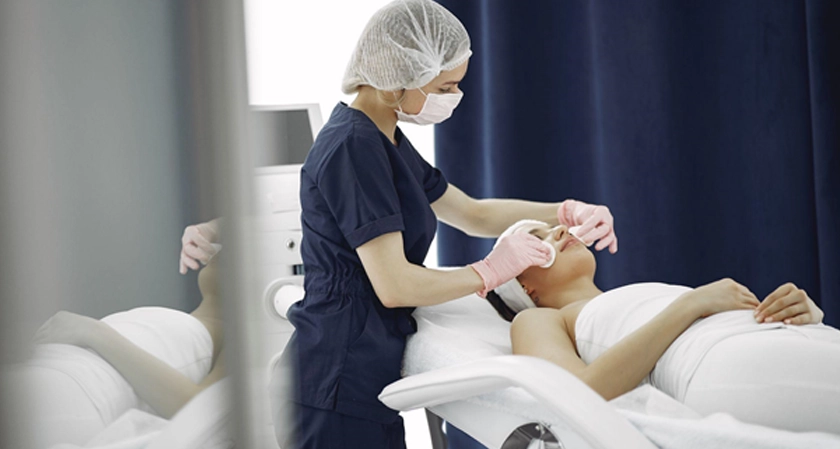
A few years ago, most nurses who talked about leaving the hospital were planning to retire or switch to an office job. Today, a growing number are choosing a different path: becoming an RN aesthetician. These nurses use their clinical training to provide non-surgical cosmetic treatments such as Botox, dermal fillers, and medical-grade skin procedures.
The shift is not a passing trend. It sits where two powerful forces meet: record demand for minimally invasive cosmetic care and a nursing workforce that is tired of 12-hour shifts and chronic understaffing.
This article looks at why registered nurses are making the move, how their existing skills give them an edge, and what training it takes to transition safely.
What is an aesthetician nurse?
An aesthetician nurse, often called an aesthetic nurse or RN aesthetician, is a licensed registered nurse who provides medical cosmetic treatments. Common services include neuromodulator injections, dermal fillers, chemical peels, microneedling, and laser procedures.
The key word is medical. Unlike spa treatments, these procedures involve prescription products, needles, and real clinical risk. That is why they are performed under a nursing license and, in most states, under the direction of a physician or other qualified medical provider.
Registered nurse esthetician vs. licensed esthetician
The terms sound alike, but the roles are different:
- Licensed esthetician: Trained through a cosmetology or esthetics program and licensed by a state cosmetology board. Focuses on surface-level skin care such as facials, waxing, and light exfoliation.
- Registered nurse esthetician: Holds an RN license from a state board of nursing. Can perform injectables and other medical aesthetic procedures within nursing scope of practice, with the required training and oversight.
In short, a registered nurse esthetician works on the medical side of aesthetics, where patient assessment and safety knowledge matter most.
Why registered nurses are choosing medical aesthetics
Demand for non-surgical treatments keeps climbing
Patients increasingly prefer treatments with little downtime. In the U.S., nearly 9.9 million neuromodulator injections were performed in 2024, up about 4% from the year before. Hyaluronic acid fillers added another 5.3 million procedures.
Every one of those treatments needs a qualified, licensed provider. That steady demand creates room for nurses who have the right training.
Burnout in traditional settings
The pull toward aesthetics is matched by a push out of acute care. Recent national workforce data shows that more than 138,000 nurses left the profession after 2022, and almost 40% say they plan to leave or retire by 2029.
The top reasons nurses gave were stress and burnout, heavy workloads, understaffing, pay concerns, and workplace violence. Many of these nurses do not want to leave patient care altogether. They want a version of it they can sustain.
Predictable schedules and more independence
Most med spas and aesthetic clinics run on appointment-based schedules. That usually means daytime hours, few or no night shifts, and no mandatory overtime.
Nurses also tend to gain more independence. They build ongoing relationships with patients, plan treatments, and see results within weeks rather than watching patients cycle through discharge.
Earning potential
Registered nurses already earn a solid income, with a national median of roughly $93,000 a year. In aesthetics, pay often combines an hourly base with commission or per-unit bonuses, so experienced injectors with a loyal patient base can match or exceed hospital pay.
Income varies widely by state, setting, and caseload, so new aesthetic nurses should expect a ramp-up period.
Clinical skills that transfer directly
Nurses do not start from zero. Skills built at the bedside carry straight into aesthetic practice:
- Patient assessment: Screening medical history, medications, and contraindications before treatment.
- Safety protocols: Aseptic technique, infection control, and recognizing early signs of complications such as vascular occlusion.
- Communication: Setting realistic expectations, obtaining informed consent, and calming anxious patients.
- Documentation: Accurate charting, which protects both patient and provider.
Consider a typical example. An ICU nurse with five years of experience already knows how to spot a patient whose condition is changing fast. In aesthetics, that same instinct helps her act quickly if a filler patient shows blanching or unusual pain.
Can you be an RN esthetician?
Yes. A registered nurse can work as an RN esthetician, but the details depend on state law. Each state board of nursing defines what RNs may do, and many states also have medical board rules for cosmetic procedures.
In most states, RNs can administer injectables only after a physician, nurse practitioner, or physician assistant has assessed the patient and issued an order. Supervision and delegation rules differ. Some states require an on-site supervising physician, while others allow remote oversight with written protocols.
Texas offers a useful example. Nurses there typically work under a delegating physician, and the Texas Board of Nursing expects RNs to have documented education and competency for every procedure they perform. Before taking a role, nurses should confirm the rules with their own state board.
How many years does it take to become a nurse aesthetician?
Most nurses need about three to six years in total. The exact timeline depends on your nursing degree and how much clinical experience you gain before moving into aesthetics.
- Earn a nursing degree: An associate degree (ADN) takes about two years, and a bachelor's degree (BSN) takes about four.
- Pass the NCLEX-RN: This licensing exam allows you to practice as a registered nurse.
- Build clinical experience: Many employers prefer one to two years in settings such as the ICU, ER, dermatology, or plastic surgery.
- Complete medaesthetics training: Foundational courses often run one to three days, with advanced modules added over time.
- Pursue certification (optional): The Certified Aesthetic Nurse Specialist (CANS) credential requires at least two years of RN practice plus documented aesthetic experience.
What good medaesthetics training includes
Quality medaesthetics training goes well beyond a quick demo. Look for programs that cover facial anatomy, product pharmacology, patient selection, complication management, and supervised hands-on injection practice on live models.
Resources from Injector Training Academy, a medical aesthetics training academy, walk through each stage of becoming an RN aesthetician, from licensing to first injections.
Is it hard to become an aesthetic nurse?
It is challenging but very achievable for an experienced RN. The clinical foundation is already in place. The harder parts are gaining hands-on injection experience, landing a first role, and learning the business side of aesthetics.
Key insights
- Demand for injectables is stable and growing, even during periods of economic uncertainty.
- Nurses' clinical judgment is one of the strongest safety assets in aesthetic practice.
- Training quality matters more than speed. Short courses alone rarely build full competence.
Limitations to keep in mind
- Entry-level competition: Many clinics prefer injectors with existing experience, which can make the first job hard to find.
- Scope restrictions: RNs usually cannot practice independently and must work under a qualified medical provider.
- Variable income: Commission-based pay can be uneven while you build a patient base.
- Ongoing costs: Advanced courses, conferences, and liability insurance add up over time.
Practical steps to get started
- Review your state board of nursing's position on cosmetic procedures.
- Shadow an experienced aesthetic nurse or injector for a day.
- Choose training that includes live-model practice and complication management.
- Build a portfolio of supervised cases with patient consent.
- Plan for continuing education, since products and techniques change often.
Conclusion
The rise of the RN aesthetician reflects a larger change in how nurses think about their careers. Many are not walking away from patient care. They are looking for a setting where their skills are valued, their schedules are humane, and their work has visible, lasting results.
Success in this field still rests on the same principles that guide good nursing anywhere: sound assessment, honest communication, and a firm commitment to patient safety. Nurses who pair those strengths with proper training and respect for state rules are well placed to build long, rewarding careers.
Perhaps the real question is not whether nurses belong in medical aesthetics, but how much safer and more patient-centered the industry becomes because they are there.













Comments