>>
Industry>>
Transportation>>
If Robotaxi causes problems or...If Robotaxi causes problems or blocks first responders, the operators will face fines.
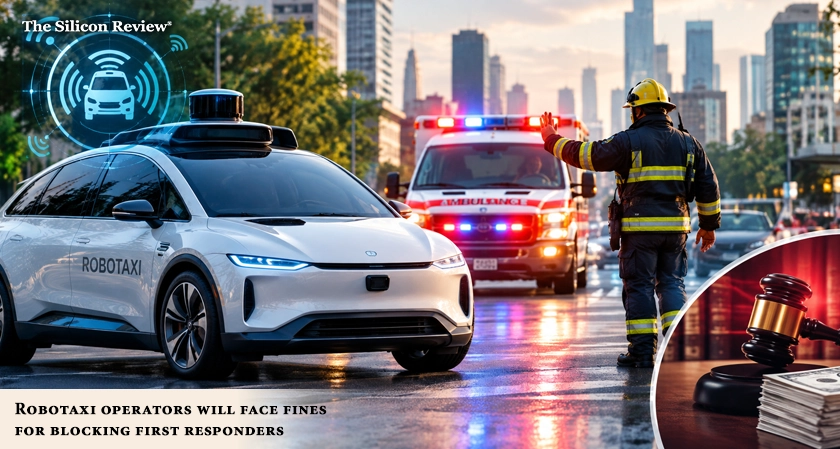
A new California legislation mandates autonomous vehicle (AV) technology companies like Tesla, Waymo, and Zoox to offer local, on-the-ground assistance to first responders when their robotaxis causes issues.
News Source: https://techcrunch.com/
Gov. Gavin Newsom signed Senate Bill 1246 into law, which establishes a number of new regulations for Autonomous vehicles (AVs) intended to enhance safety and response times in the event that they become defective or obstruct emergency responders. Additionally, the law establishes procedures for holding these businesses responsible if they fail to do so.
The law came after a series of high-profile events in California in which robotaxis broke down and disturbed traffic, drove into crime scenes, or delayed first responders. The majority of those events included Waymo, the biggest robotaxi provider in the United States, which operates a commercial fleet of over 4,000 autonomous vehicles nationwide and around 1200 of those robotaxi are in the San Francisco Bay Area.
Waymo relied on first responders to manually run its vehicles when issues emerged, according to an investigation conducted earlier this year. Legislators at the state and federal levels have called for more stringent laws pertaining to robotaxis, especially with regard to their contacts with emergency services, as a result of these incidents. Autonomous Vehicle (AV) developers were even urged to come up with "solutions" for this problem in a letter from the National Highway Traffic Safety Administration (NHTSA).
The State Senator Dave Cortese, who introduced the law, said “California has embraced autonomous vehicles, but we cannot embrace innovation at the expense of public safety. When an autonomous vehicle crashes, breaks down, blocks a roadway in an emergency, or gets in the way of law enforcement or first responders, there must be clear accountability.”
AV developers are only permitted by law to hire remote drivers with a U.S. driver's license who reside in the United States. The law meant to resolve the concern of how companies use remote operations when autonomous vehicle run into trouble. Additionally, the law would mandate that AV businesses offer "local incident technicians" who can help with AV accidents and obstructions, as well as alert cities, municipalities, and other local entities about the position and status of vehicles during system-wide failures.
Two of the companies Waymo and Zoox came out and said they will follow the law “We are grateful for the amendments made to the bill, which ensure autonomous vehicle operators can still feasibly serve Californians, Waymo is committed to making roads safer in California and continually improving our service.” A Spokesperson of Waymo stated in an email.
The law goes into force in July 2028. The California Department of Motor Vehicles, which oversees autonomous vehicles in the state, will establish rules about the new law's requirements for response times, among other things.
FAQs:
Q: What exactly triggers a fine for a robotaxi?
A: An autonomous vehicle (AV) company will face financial penalties if one of its driverless vehicles obstructs or blocks police, firefighters, or paramedics during an active emergency scene for more than 30 minutes.
Q: Why was this Senate Bill 1246 created?
A: The law was introduced following a series of highly publicized disruptions in California cities where driverless cars broke down, snarled traffic, entered active crime scenes, or delayed emergency response vehicles.
Q: What is the role of a "local incident technician"?
A: The law would mandate that AV businesses offer "local incident technicians" who can help with AV accidents and obstructions, as well as alert cities, municipalities, and other local entities about the position and status of vehicles during system-wide failures.
Q: How does the law change remote driving rules?
A: The law makes a distinction between direct remote driving and conventional remote assistance, in which a car's software maintains control but human instruction is provided. A human operator must be based in the United States and possess a current driver's license in order to assume direct remote control of a vehicle.
Q: When do the rules from Senate Bill 1246 take effect?
A: The law goes into force in July 2028













Comments