>>
Industry>>
Nanotechnology>>
Samsung Electro-Mechanics Gets...Samsung Electro-Mechanics Gets $2.8 Billion Chip Investment from Tesla, Nvidia, Report Says
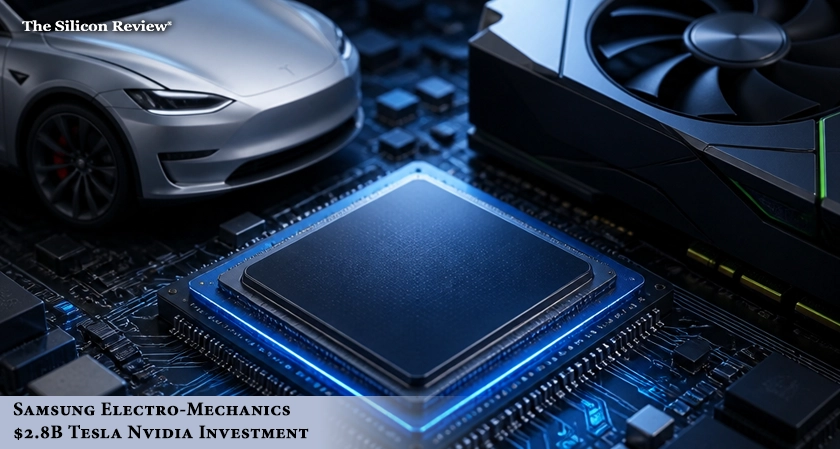
Tesla and Nvidia will invest a combined 3.7 trillion won ($2.8 billion) in Samsung Electro-Mechanics to build production lines for FC-BGA substrates used in AI semiconductors, autonomous vehicles, and humanoid robots.
News source: Google / https://www.channelnewsasia.com/
Samsung Electro-Mechanics will receive a combined 3.7 trillion won ($2.8 billion) investment from Tesla and Nvidia to build facilities producing advanced chip substrates, according to South Korean media reports. Tesla will invest 1.1 trillion won and Nvidia 2.6 trillion won to construct production lines in the South Korean city of Sejong, supplying FC-BGA substrates under a long-term contract. The products will serve autonomous vehicles, humanoid robots, and AI chips, with mass production targeted for 2028 and supply beginning in 2029 under a five-year agreement.
Why FC-BGA Matters
FC-BGA, or Flip Chip-Ball Grid Array, is a high-density semiconductor substrate that connects high-performance chips such as AI accelerators, GPUs, and CPUs to the motherboard, supplying electrical signals and power. It determines the performance and stability of AI semiconductors. As the AI server and high-performance computing markets have expanded, demand for FC-BGA has surged. The component is evolving rapidly toward larger area, higher layer counts, and greater density. The investment is seen as a move to secure a critical supply chain component that has become a new bottleneck in AI chip production.
A Customer-Funded Model
The deal structure is notable. Global customers are providing the capital for the new facilities while also guaranteeing mid- to long-term volumes. This resolves the risk of new capital expenditure for Samsung Electro-Mechanics and ensures plant utilization, reducing the operating cost burden. The Sejong site will serve as the domestic hub for high-value-added FC-BGA production, targeting AI servers, HPC, and automotive electronics. The investment period runs from September 2026 to May 2028, with mass production beginning in September 2028.
"As the AI and high-performance computing markets grow rapidly, high value-added semiconductor substrates are becoming increasingly important as key components that determine semiconductor performance and supply chain stability," said Samsung Electro-Mechanics President Chang Duckhyun.
Here is the question The Silicon Review raises. Tesla and Nvidia are funding a South Korean substrate factory to secure components for their own AI ambitions. When two of the world's most valuable companies pay upfront to build their supplier's factory, does this signal the emergence of a new model for securing critical supply chains—or an admission that the AI buildout has become so fragile that customers must finance their own lifelines?
FAQ:
Q: How much are Tesla and Nvidia investing in Samsung Electro-Mechanics?
A: Tesla will invest 1.1 trillion won and Nvidia 2.6 trillion won, for a combined total of 3.7 trillion won ($2.8 billion).
Q: What is FC-BGA substrates used for?
A: FC-BGA substrates connect high-performance chips like AI accelerators, GPUs, and CPUs to the motherboard, supplying power and signals. They are critical for AI semiconductors.
Q: Where will the production lines be built?
A: The production lines will be built in the South Korean city of Sejong.
Q: When will mass production begin?
A: Mass production is targeted for 2028, with supply beginning in 2029 under a five-year contract.
Q: Why are Tesla and Nvidia funding the factory directly?
A: The customer-funded model resolves capital expenditure risk for Samsung Electro-Mechanics and guarantees long-term volumes, securing a stable supply of a critical AI component.
Q: What is the significance of FC-BGA for AI chips?
A: FC-BGA determines the performance and stability of AI semiconductors and has become a supply chain bottleneck as AI server demand has surged.













Comments