>>
Technology>>
Artificial intelligence>>
Nvidia, Meta Partner on Muse A...Nvidia, Meta Partner on Muse Agent as Nvidia Invests $3 Billion
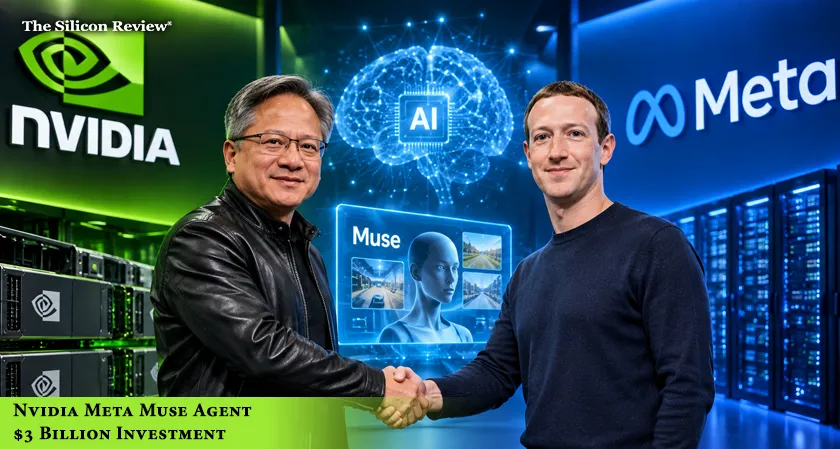
Nvidia will invest $3 billion in Meta's equity offering as the two companies expand their partnership on the Muse family of AI agents, with Meta committing to deploy Nvidia's Vera Rubin and Vera CPUs to scale the personal agent platform.
News source: Google / https://www.channelnewsasia.com/
Nvidia and Meta have announced a major expansion of their partnership on Muse, Meta's personal AI agent, with Nvidia committing to invest $3 billion in Meta's equity offering as part of the deal.
The collaboration will focus on optimizing inference and training performance for the Muse models and agents, which run on Nvidia infrastructure and have delivered "frontier-level benchmark performance and surging consumer downloads since launch," according to the companies.
"AI agents represent new computing paradigm software that understands our goals, reasons, uses tools and gets work done on our behalf," said Jensen Huang, Nvidia's founder and CEO. "NVIDIA and Meta are expanding our partnership to optimize the computing infrastructure end to end for capable, efficient and secure AI agents."
Mark Zuckerberg, Meta's founder and CEO, framed the partnership around Muse's ambition: "Muse is how we bring personal superintelligence to everyone. We're excited to keep working with NVIDIA to deliver the best personal agents and frontier models for billions of people."
The Infrastructure Commitment
Meta intends to expand its deployment of Nvidia infrastructure, including Vera Rubin and Vera CPUs, to deliver maximum performance per watt for next-generation AI agents. Meta will also deploy Nvidia's Spectrum-X Ethernet networking and BlueField-4 to support network efficiency and throughput.
The companies are also considering additional collaborations on Nvidia's OpenShell Reference Architecture, including OpenShell for safe deployment and Sentry for monitoring agent behavior. Nvidia describes OpenShell as a way to strengthen agency security, while Sentry would monitor structured, unstructured, and graph data processing.
Muse's Momentum
The deal follows Meta's disclosure that Muse surpassed 10 million users in the US and Canada within six weeks of launch, with about 25% using it daily. Shopping is the most common use case, with more than a quarter of engaged users making purchases averaging over $200.
Meta has positioned Muse as the centerpiece of its AI monetization strategy, planning to charge businesses fees on transactions the agent facilitates while keeping the product free for most consumers. The company expects Muse to eventually generate more revenue per user than Facebook or Instagram.
The Nvidia investment reinforces Meta's ability to fund the massive compute costs associated with running Muse, which Zuckerberg has acknowledged is "very compute-intensive" in the near term.
Here is the question The Silicon Review raises. Nvidia is investing $3 billion in Meta to ensure its chips power the personal AI agent that Meta hopes will define the next era of computing. When the company selling the shovels also buys equity in the gold mine, is it betting on Meta's successor making sure it cannot fail?
FAQ:
Q: How much is Nvidia investing in Meta?
A: Nvidia will invest $3 billion in Meta's equity offering as part of the expanded partnership on Muse.
Q: What is Muse?
A: Muse is Meta's personal AI agent, available in the US and Canada, which can perform multi-step tasks like shopping, managing email, and booking travel. It surpassed 10 million users within six weeks of launch.
Q: What infrastructure will Meta deploy under the partnership?
A: Meta will expand its deployment of Nvidia Vera Rubin and Vera CPUs, along with Spectrum-X Ethernet networking and BlueField-4.
Q: What are OpenShell and Sentry?
A: OpenShell is Nvidia's reference architecture for safe AI agent deployment, and Sentry is a monitoring system for agent behavior, which the companies are considering collaborating on.
Q: Why is Meta partnering with Nvidia on Muse?
A: Meta says the partnership will improve inference and training performance for Muse, reduce total cost of ownership, and optimize the computing infrastructure end to end.













Comments