>>
Industry>>
Real estate>>
What a Commercial Carpet Clean...What a Commercial Carpet Cleaning Service Does Beyond Vacuuming
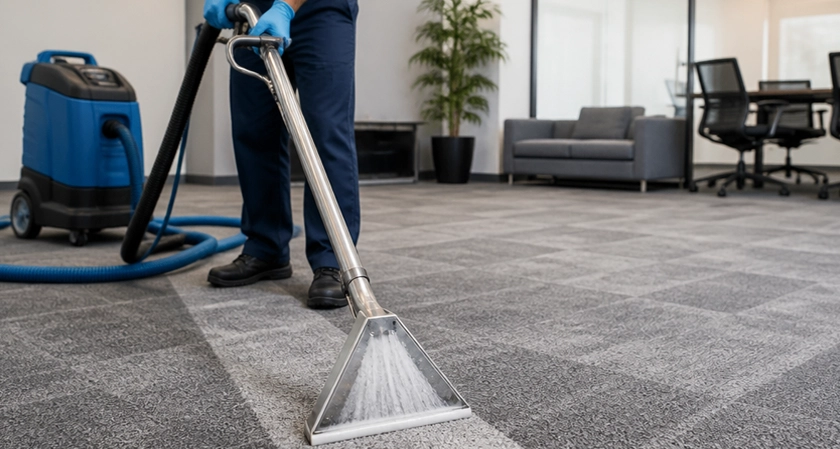
Vacuuming removes loose dirt, but it does not address embedded soil, moisture, stains, or residue trapped beneath carpet fibers. Commercial carpet care uses inspection, targeted treatment, and the right cleaning method for each material and traffic pattern. The work also includes drying control and maintenance planning, which protect appearance and reduce disruption for occupants. The process starts with a closer assessment of the carpet and its cleaning needs.
It Inspects Carpet Conditions First
Facility managers often use a commercial carpet cleaning service when routine vacuuming leaves visible lanes, dull areas, or stains. The service starts with an inspection of fiber type, carpet construction, traffic patterns, furniture placement, and moisture risks. Those observations guide the cleaning method, chemical choice, and work sequence, preventing avoidable damage and limiting interruptions for staff and visitors.
Carpet construction affects how technicians treat the surface. A low-pile office carpet responds differently than a thicker carpet in a lobby, fitness center, school, or apartment common area. Inspection also identifies worn sections, loose seams, discoloration, and spots that need separate treatment.
Removes Embedded Soil
Vacuuming collects loose particles near the surface. Foot traffic presses dust, grit, food particles, and tracked-in soil deeper into the carpet, where ordinary equipment cannot remove them completely.
Professional cleaning loosens this material before extraction. Agitation, pre-treatment, and controlled rinsing separate soil from carpet fibers. Removing abrasive particles also reduces the friction that contributes to a worn appearance in busy walkways.
Selects the Right Cleaning Method
Commercial carpet care includes several cleaning methods, including hot water extraction, dry cleaning, carpet shampooing, and dry foam. Each method has a different moisture level, drying profile, and application process.
Hot water extraction uses heated water and controlled suction to remove loosened soil. Dry cleaning uses less moisture when a shorter drying period suits the facility. Carpet shampooing and dry foam address specific carpet conditions, but technicians must match the product and process to the material.
A careful selection protects the carpet and supports the building’s schedule. The best method depends on the carpet, soil level, stain type, ventilation, and time available before occupants return.
Treats Stains Before Cleaning
Stains need identification before treatment. Coffee, grease, ink, and tracked-in mud respond to different cleaning agents and procedures.
Technicians usually isolate the affected area, remove surface material, apply a suitable treatment, and allow the product to work. They then extract or rinse the residue according to the carpet’s construction. Aggressively rubbing a stain often spreads it or damages fibers, so controlled treatment produces a cleaner result.
Some discoloration comes from fiber wear or permanent dye changes. In those cases, cleaning removes soil but cannot restore the original color.
Controls Moisture and Drying
Excess moisture creates operational problems in commercial buildings. Wet carpet restricts access, delays room use, and increases the chance of odor when ventilation is poor.
Professional crews control water application and extraction during the work. They also plan airflow, access routes, and drying time around the property’s operating hours. Furniture placement matters because trapped moisture beneath heavy items slows evaporation.
A facility manager should ask how technicians will protect floors, walls, furniture, and nearby work areas during cleaning. Clear preparation reduces disruption and prevents secondary cleanup.
Supports A Maintenance Schedule
One deep cleaning does not replace regular maintenance. Daily vacuuming, prompt spot treatment, entrance-mat care, and scheduled professional cleaning work together.
A maintenance schedule should reflect foot traffic and building use. Entryways, corridors, reception areas, and shared spaces usually need closer attention than low-traffic offices. Staff should report spills quickly because fresh stains respond better to treatment than older residue.
Scheduled carpet care also allows managers to track recurring problems. Repeated staining near a doorway may indicate a mat placement issue, drainage problem, or traffic pattern that needs correction.
It Protects Appearance And Usability
Clean carpet affects how a facility looks and functions. Embedded grit makes surfaces appear dull, while stains create uneven color across visible areas. Odors also become more difficult to control when soil remains inside the carpet.
Professional cleaning restores a more consistent appearance by removing material that routine vacuuming leaves behind. The process also keeps shared spaces ready for employees, customers, residents, students, patients, and visitors.
Conclusion
Commercial carpet cleaning involves assessment, soil removal, stain treatment, method selection, moisture control, and ongoing planning. Vacuuming remains necessary, but it handles only the surface portion of daily maintenance. Facility managers should review carpet conditions, traffic levels, sensitive areas, and available drying time before scheduling service. A written maintenance plan then keeps cleaning consistent and identifies recurring problems before they affect appearance, access, or occupant comfort.













Comments