>>
Industry>>
Gaming and vfx>>
Who Can Be Held Liable After a...Who Can Be Held Liable After a Shooting Occurs at a Sporting Event?
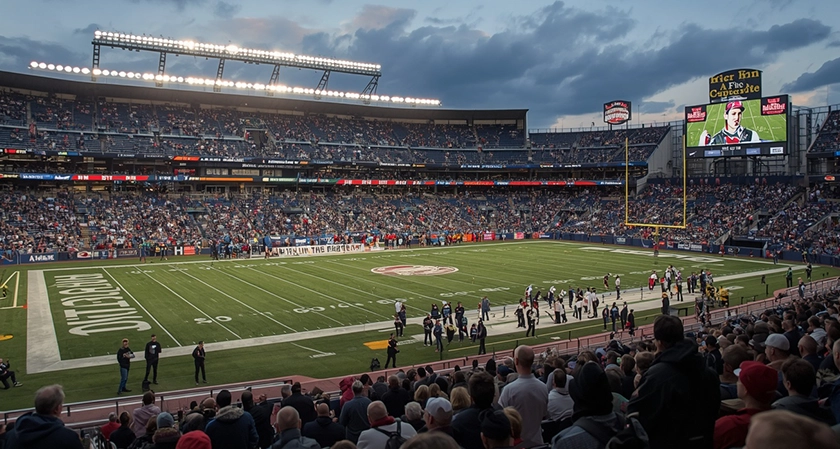
Premises liability seems like a fairly straightforward concept when you're dealing with something like a slip-and-fall on someone else's sidewalk. Even in public settings like stores or events, this seems relatively easy to understand. What happens, though, when a third party commits a violent act in a public venue, specifically a shooting at a sporting event?
It is easy to assume that civil liability falls on the criminal, but the venue operator has a duty to maintain a safe environment. Especially if there have been previous incidents at a stadium, you may be able to file a claim against the stadium owners, the security firms, or even the home team. In some cases, liability even extends to government entities, which often play a role in running stadiums.
The facts of the case will have a lot of influence on whether the stadium's operators may be liable under a theory of negligent security. Here is a look at how an experienced premises liability lawyer like those at Barrera Law Group LLC usually confronts such cases.
Who Should You Sue?
The easy answer here is the shooter, but there are plenty of reasons why you might not wish to do that. Foremost, a lot of shootings at stadiums involve criminal activity related to gangs and drugs. Many folks involved in such crimes simply don't have a large amount of accessible money sitting around to sue them for. Shooters are often already incarcerated by the time a civil case lands, and some are even dead.
As a practical matter, bringing the civil case against a premises operator means there's more likely to be an insurance company on the opposite side of a settlement or a judgment. When you're trying to get as much money to cover medical bills, pain and suffering, lost wages, and loss of enjoyment of life following a shooting, the reality is that insurance company money matters.
A lot centers on the concept of negligent security. This is the notion that anyone who operates a public venue has a duty to take reasonable steps to secure it. If there has been a history of fan violence, crime, or gang activity at a stadium, being able to document that before pursuing a claim bolsters your case. Your attorney can argue that there has been a pattern and that the stadium operator has knowingly neglected security in the face of all of this.
Where the question gets a little trickier is figuring out who exactly to sue. Unsurprisingly, plenty of organizations are firm believers in passing the buck in this situation. The sports team will blame the stadium authority, which in turn might blame the local government or the venue's security provider. Naturally, they're all big fans of blaming the shooter.
One of the first things a premises liability lawyer has to figure out before filing a claim is just who to file it against. They will study the stadium's security agreements to determine exactly who should have been protecting people at the site. This may be a different entity if the shooting occurred within the stadium versus out in the parking lot. One firm might screen folks coming in while the city police could be liable for patrolling the parking area.
The Parts of a Negligent Security Claim
The first order of business is determining who controlled the premises. This often means sorting through a labyrinth of contracts to establish who transferred what authority to whom. There might be a government-owned stadium authority in conjunction with the team and other partners, for example. They, in turn, may broadly contract security to a firm that then subcontracts specific jobs like gate checks, in-stadium foot patrols, and vehicles to patrol the parking lot.
It's usually not hard once you figure out who was responsible for stadium security to then show that they owed a duty of care. Stadium security work almost by definition presupposes acceptance of a duty of care for securing a venue.
The next question is whether the level of security was inadequate. Were there sufficient cameras and patrols? Did security personnel conduct thorough enough searches of bags and persons to identify a weapon coming into the stadium? Had the stadium security people been aware of recent trends in violent incidents at the stadium? If so, did they undertake and sustain efforts to bolster security in known trouble areas?
Also related is the question of whether a troublesome fan was allowed back into the stadium following previous incidents. If you can prove the shooter had previously been involved in an incident, the evidence then shows that the stadium took insufficient steps to prevent them from attending later events.
There are also more general issues involving unruly fans. If security had a history of leaving drunk fans to quarrel in the parking lot, then that may establish a pattern of negligent security. Even allowing dead lights to go without fixing them is part of a negligent pattern. The same goes for not having enough metal detectors or bag checkpoints.
Likewise, guards need to have sufficient training and resources, including emergency plans for what they'll do in case an incident happens. Your attorney may dig into security training and history to show that the stadium operators hadn't sufficiently prepared their personnel.
Even the size of the crowd and the known history of the fandoms matter. College sporting events, for example, are notorious for sparking oversized crowds with people who are spoiling for a fight. This can easily escalate to a shooting, and stadium security needs to take steps before the event.
Also, some venues aren't up to the job. Many high school stadium operators don't see themselves as having the same level of duty as the folks who run a big stadium. However, a school board has the same duty to protect people once it throws the gates open for Friday night football as an NFL team does on Sunday.
If you were shot at a sporting event, you have the right to pursue action against the stadium operator. Consider how you and an attorney might assemble a theory of negligent security in your case.













Comments