>>
Industry>>
Digital marketing>>
Why AI Search Visibility Is Be...Why AI Search Visibility Is Becoming a New Competitive Battleground for Digital Businesses
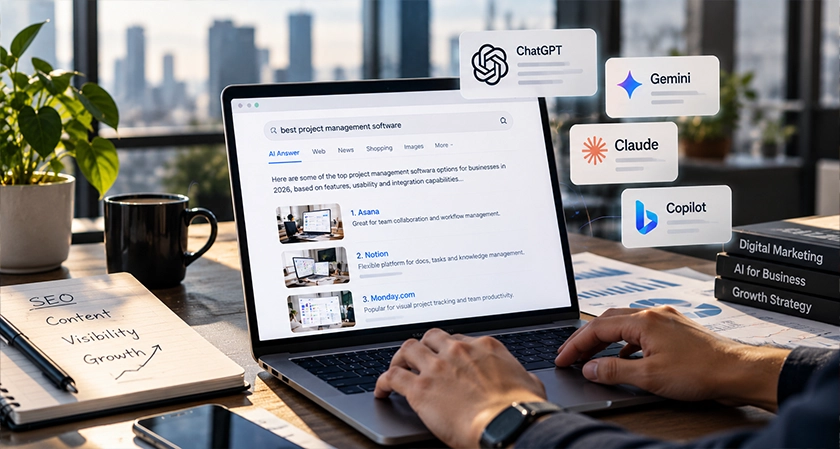
Customers are finding businesses in ways that were barely part of digital marketing a few years ago. Instead of visiting several websites to compare products or services, people are asking AI tools to explain their options and recommend businesses that meet their needs.
For digital businesses, this creates another challenge. Your website might rank well on Google, but customers could discover competitors through ChatGPT, Google AI Overviews, or other AI-powered search experiences before visiting your site.
As these tools become part of everyday research, businesses need to understand how their information appears in AI-generated answers. Here are seven reasons this deserves attention.
Customers Are Researching Businesses Before Visiting Their Websites
Buying decisions often begin long before someone reaches a company's website. Customers want to understand their options, compare features, check costs, and find providers that meet their requirements. Traditionally, this meant visiting several websites and collecting information from different sources.
AI search tools are making some of that early research easier. Someone looking for project management software could ask an AI assistant to compare several products based on pricing, integrations, and team size. The response might introduce businesses the customer hadn't previously considered. By the time they visit a website, they could already have a shortlist of potential providers.
That shortlist rarely comes from one place. Tanya Alain, CMO at Upfluence, explains that buyers now form their view of a brand from many voices before they ever land on its site. “People hear about a product from a creator they trust, read the comments, and then ask an AI tool to compare it with two alternatives,” she said. “By the time they click through, most of the decision is already made. Brands that only think about their own website miss the conversations that shaped the buyer's opinion in the first place.”
This should shape your marketing strategy. Review the questions customers ask before purchasing, including comparisons, pricing concerns, product limitations, and compatibility requirements. Make sure your website answers those questions with accurate information. Clear product pages, useful comparisons, and detailed service explanations give search systems relevant material to discover.
Traditional Search Rankings No Longer Show the Full Picture
A first-page Google ranking has long been an important goal for businesses investing in SEO. Higher visibility gives potential customers more opportunities to discover your website. However, AI-generated answers introduce another place where businesses compete for attention.
Google AI Overviews and AI Mode present information from relevant sources, while ChatGPT Search provides answers that include links to websites. The sources mentioned in these responses don't always appear in the same order as traditional search results. A business could receive attention through an AI answer even when the customer hasn't reached its website.
Similarly, a strong organic ranking doesn't guarantee that the business will be mentioned in every relevant AI response.
According to Oscar Fullmer, Co-Founder of Fast Hippo Media, “Ranking and being cited are now two different jobs. A page can sit in the top three and still get skipped by an AI answer because the key point is buried under a long intro. That's why Answer Engine Optimization has become part of everyday SEO work. You put clear answers near the top, back them up with specifics, and structure the page so a machine can lift the right part.”
You should continue improving your organic search performance while paying attention to how your business appears in AI search. Check whether important pages are indexed, accessible to relevant crawlers, and easy to understand. Google confirms that established SEO practices remain relevant to its AI search features.
Brand Reputation Is Becoming Important Across More Online Sources
What happens when an AI search tool encounters different information about your business across several websites? Your homepage might describe one set of services, while an outdated directory lists products you no longer offer. Customers who encounter conflicting details have good reason to question which information is accurate.
Digital businesses often have information spread across review platforms, software directories, business profiles, industry publications, and their own websites. These sources help potential buyers investigate companies before making contact. AI search systems sometimes draw on external sources when answering questions, making the accuracy of public business information worth reviewing.
Start by checking your most important online profiles. Make sure your business name, services, pricing information, and contact details are accurate wherever they appear. If your company sells software, maintain current product descriptions and integration details on relevant platforms. Encourage genuine customer reviews and share useful information with reputable industry publications when appropriate.
Rameez Ghayas Usmani, Award-Winning HARO Link Builder & CEO of HARO Link Building, shares that earned mentions in trusted publications carry more weight than ever. “When a journalist quotes your founder or cites your data, that mention lives on a site that people and search systems already trust. Those references add up over time and give AI tools a consistent picture of who you are and what you know. A brand that only talks about itself on its own website is asking to be taken at its word.”
Avoid purchasing fake reviews or creating misleading mentions to influence recommendations. Reliable information across relevant sources helps customers evaluate your business and reduces confusion when they encounter it through different search channels.
Original, Useful Content Gives Businesses More Opportunities to Be Discovered
Publishing more articles doesn't automatically make a business more visible in AI search. Many websites cover the same subjects with similar advice, leaving customers with little reason to trust one source over another.
Businesses have access to information that competitors often lack. Customer questions, product knowledge, implementation challenges, and experience solving specific problems provide material for useful content.
A software company could publish detailed integration instructions, explain product limitations, or share original findings from its customers' experiences. An ecommerce business could provide accurate specifications, product comparisons, and practical buying guidance.
Proof matters here too. Buyers want to see that a business has actually done the work it describes, and generic claims don't give them much to go on.
“The content that gets remembered is usually the content nobody else could have made. When agencies and service companies show real projects in their portfolio, with the brief, the constraints, and what changed afterward, they give people something concrete to judge. Search tools get something specific to point to as well. A page of vague promises gives neither of them much to work with,” notes Julian Tillotson, CEO & Founder of Indirap.
Review your existing content and identify where readers still need important answers. Replace vague explanations with specific information about costs, requirements, limitations, and expected results. Keep important details updated when products or services change. Google recommends valuable, original content for its AI-powered search features, alongside established search quality practices.
Businesses Need New Ways to Measure Their Visibility
Your website analytics might show how many people arrive from Google, which pages attract traffic, and how visitors behave after clicking. But those reports don't fully explain whether your business is appearing in AI-generated answers before customers visit your website.
Some measurement tools are beginning to address this gap. Bing Webmaster Tools introduced AI Performance reporting in 2026, allowing website owners to review citations across supported Microsoft AI search experiences. Its reporting includes cited pages, related queries, and citation trends. These figures help businesses understand where their content appears, although citation counts don't directly measure rankings, sales, or the quality of individual mentions.
Trevor Stewart, CEO & Founder at Let's Get Optimized, believes the biggest mistake is treating visibility as the finish line. “A mention in an AI answer feels like a win, but it's only useful if it leads somewhere,” Stewart explains. “The businesses that get real value from AI search track the whole path, from the first citation to the enquiry to the sale. Without that, it's easy to spend months chasing mentions that never turn into revenue.”
Start by identifying the questions that matter most to potential customers. Review relevant AI responses periodically to see which businesses and sources appear, while recognizing that answers vary between searches. Where available, monitor AI-related referral traffic, leads, and completed purchases in your analytics. Keep citation activity separate from actual business results.
Smaller Businesses Have New Opportunities to Compete With Established Brands
Large companies often have an advantage in traditional search because they've spent years building their websites, publishing content, and earning backlinks. Smaller businesses sometimes struggle to compete for popular keywords, even when they offer better solutions for specific customer needs.
AI search introduces another way for customers to discover specialized businesses. People increasingly ask detailed questions about products, pricing, industry requirements, and particular problems they need solved. These searches create opportunities for smaller companies with relevant expertise to appear alongside established competitors.
B2B buying is a good example. A food brand looking for a new ingredient supplier usually wants to know about certifications, minimum order quantities, and where a product is actually sourced before reaching out. Smaller suppliers that answer those questions clearly can show up in that research next to much larger competitors, and they often win the conversation because buyers can understand them faster, says Eran Mizrahi, CEO & Founder of Source86.
However, AI recommendations depend on the information available, and smaller businesses aren't guaranteed greater visibility.
If your business serves a specific industry or customer group, make that expertise clear across your website. Explain who your products serve, which problems they address, and what makes your services suitable for particular requirements.
AI Search Visibility Is Creating New Challenges for Turning Interest Into Sales
Getting mentioned in an AI-generated answer gives your business an opportunity to reach potential customers. However, people who discover your company through these tools often arrive with specific expectations. They might already know your product's main features, have compared several competitors, or want to confirm a particular detail before making contact.
Problems arise when your website doesn't provide the information these visitors need. Unclear pricing, outdated service descriptions, and complicated navigation sometimes push interested buyers toward another provider. Someone researching software integrations shouldn't have to contact sales just to confirm whether a basic feature exists. Similarly, customers comparing service providers need clear information about what each package includes.
Bill Harbison, Owner of The Helmet Shop, said, “Shoppers who arrive with their research done usually have one or two specific questions left, like how a size runs or which safety standard a product meets. If the page doesn't answer that in seconds, they leave and buy from whoever does. Clear specs and honest fit guidance close more sales than a discount ever will.”
Review the pages customers are likely to visit after discovering your business through AI search. Make pricing information clear where practical, explain important product limitations, and provide straightforward ways to request a quote or book a demonstration. Keep comparison pages and technical documentation accurate.
If visitors regularly ask the same questions before purchasing, address those gaps on your website. Making important information easy to find helps turn early interest into real conversations with customers.
What This Means for Digital Businesses
AI search is creating new opportunities for customers to discover and compare businesses. Your website, public business information, and the quality of your content all influence how easily people find reliable details about what you offer.
If you're running a digital business, start by checking how your brand appears when customers research your services or products through AI tools. Review inaccurate information, improve pages that leave important questions unanswered, and continue following sound SEO practices.













Comments