>>
Industry>>
Healthcare>>
Why Consumer Goods Giants Are ...Why Consumer Goods Giants Are Acquiring Boutique Smokeless Product Innovators

Major consumer conglomerates are acquiring agile smoke-free brands as adult shoppers increasingly seek tobacco-free alternatives with tailored flavor profiles.
Large multinational consumer goods manufacturers are actively acquiring innovative boutique Scandinavian brands that pioneered tobacco-free oral nicotine formulations and proprietary flavor profiles.
Instead of spending decades attempting to reinvent authentic recipes internally, corporate leaders buy specialized creators to accelerate their modern product roadmaps. This acquisition blueprint reveals how agile Nordic businesses built an entirely new commercial category that global conglomerates now depend upon for sustainable growth.
How Do Legacy Brands Reclaim Fast-Shifting Modern Nicotine Audiences?
Established conglomerates struggle to invent authentic modern brands internally because consumer tastes evolve. By acquiring recognized pioneers like XQS snus and integrating their proprietary blends into global networks, multinational holding companies leapfrog years of risky product testing. You can see how this blueprint allows corporate buyers to inherit immediate credibility among discerning European shoppers.
When you evaluate modern shelf appeal, brand loyalty carries substantial weight. Smaller Nordic businesses earned customer trust through direct community feedback, creative packaging, and consistent nicotine delivery. When a conglomerate purchases that established reputation, it avoids the trial-and-error marketing campaigns that frequently derail new launches.
Why Are Global Consumer Giants Chasing Nordic Pouches?
Legacy commercial portfolios face continuous pressure as adult consumers leave traditional combustible products behind. When you watch industry leaders reshape their balance sheets, their primary goal centers on securing reliable revenue streams that appeal to contemporary lifestyle preferences. White pouches deliver a smoke-free experience without lingering odors, attracting adults who value discreet daily options.
Projections published by Global Market Insights show the sector reached $8.6 billion in 2025, with expectations that commercial volume could top $56.7 billion by 2035. That expansion forces corporate boards to move decisively. Big holding companies recognize that building factory floor expertise from scratch takes far too long when adoption climbs this steeply.
Buying agile Scandinavian producers solves this production deficit immediately. Nordic workshops spent years mastering plant cellulose blends and exact chemical balances before multinational conglomerates spotted the broader market potential.
What Makes Scandinavian Flavor Science So Hard to Replicate?
Formulating oral pouches requires delicate chemistry that differs from conventional food flavoring. You need high-grade ingredients that stay stable during months of storage without turning acidic or separating under changing temperatures. Nordic developers cracked this technical puzzle by pairing natural food-grade aromas with pH stabilizers that protect taste balance.
Pouch users notice artificial aftertastes immediately, so regional pioneers prioritized botanical extracts, wintergreen notes, and tart fruit profiles. Their formulation teams perfected recipes that release crisp flavor across thirty minutes without causing throat irritation. Achieving that smooth sensory curve requires custom blending techniques that cannot be duplicated by simply pouring liquid flavorings over raw fibers.
How Plant-Fiber Formulations Solve the Moisture Dilemma
Moisture levels dictate how quickly nicotine reaches the user and how comfortable a pouch feels under the lip. If a pouch contains excess liquid, it runs quickly and degrades user comfort. If a pouch is too dry, it takes several minutes to activate, leaving consumers unsatisfied with the initial sensory release.
Scandinavian specialists tackled this hurdle by experimenting with plant-derived cellulose structures extracted from pine and eucalyptus fibers. Because the plant matrix binds liquid securely, manufacturers calibrate exact release speeds across dry, semi-dry, and fully humidified pouch lines.
Decoding the Strategic Value of Specialized Production Lines
Scaling up white pouch production demands specialized machinery that general packaging plants do not possess. Standard contract manufacturers often tear delicate fleece material or distribute nicotine unevenly across batches. Boutique innovators designed custom dosing equipment capable of sealing thousands of micro-pouches per minute.
When corporate purchasers acquire these advanced production facilities, they bypass long equipment delivery wait times and steep engineering learning curves. You gain immediate access to validated manufacturing protocols that adhere to tight quality benchmarks:
- Audit micro-dosing tolerances: High-speed packaging machines must deposit measured amounts without tearing thin wrappers.
- Standardize carrier absorption: Base substrates require uniform surface tension so liquids distribute evenly throughout every unit.
- Control seal integrity: Ultrasonic welding methods keep edges firm, so pouches maintain their shape during transport.
Integrating these specialized production setups lets global corporations scale regional output into multi-continental supply chains without sacrificing product consistency.
What Regulatory Barriers Drive Big Players Toward Turnkey Acquisitions?
Regulatory compliance across the European Union, the United Kingdom, and North America grows more demanding with each passing quarter. National health agencies scrutinize oral pouches for ingredient purity, exact toxicity profiles, and child-resistant packaging standards. If you launch an untested brand without deep chemical documentation, your business risks expensive retail recalls or commercial bans.
Boutique Nordic brands hold comprehensive ingredient dossiers, toxicological studies, and established compliance trails that simplify regulatory filings. Reporting from Investing.com highlighted that British American Tobacco projects global pouch revenues will exceed £11 billion, roughly $15 billion, by 2030 as white pouch items outpace older alternatives. To capture a meaningful slice of that projection, corporate giants must bring fully vetted products to market immediately rather than waiting for slow bureaucratic approvals.
Building Distribution Depth Through Established Regional Networks
Regional Nordic brands already dominate back-bar displays in key European hubs, giving acquiring groups an immediate foothold in high-margin retail spaces. Stocking an established top-seller generates cash flow much faster than trying to educate retail buyers about an unfamiliar label.
Large holding companies inject substantial logistics muscle into these regional brands, expanding their distribution footprint across gas stations, transit hubs, and specialized online storefronts. You can evaluate their retail strategy through three operational priorities:
- Leverage existing shelves: Established convenience relationships place new items in high-traffic spots right away.
- Target regional hubs: Focused regional distribution builds strong repeat purchases before national rollouts begin.
- Track sell-through speed: Direct warehouse analytics help managers restock fast-selling variants before inventory runs dry.
This coordinated retail push guarantees that acquired boutique brands achieve maximum market penetration without losing their authentic grassroots appeal.
How Should You Evaluate the Long-Term Consolidation Wave?
Consolidation in the smoke-free sector reflects a permanent realignment of the broader consumer packaged goods industry. You should expect large holding companies to pursue smaller regional players who invent unique flavor pairings or cleaner delivery substrates.
For founders and independent teams, this acquisition trend provides lucrative exit pathways and access to worldwide distribution networks. For corporate buyers, it delivers instant technological maturity and consumer credibility that money cannot build quickly from scratch. The ongoing convergence of boutique creativity and global capital will define retail shelves for the coming decade.
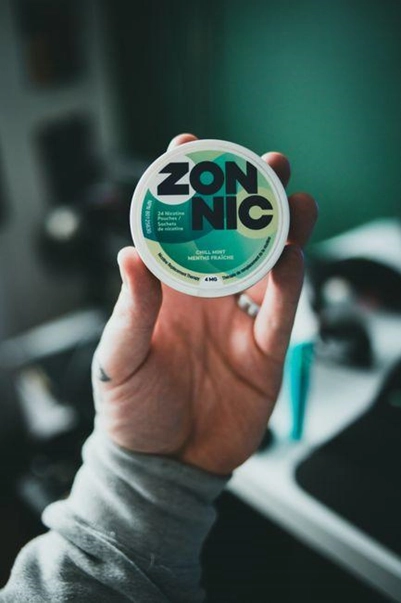
Corporate consolidation in the smoke-free sector reflects escalating demand for specialized, high-grade tobacco-free alternatives. When you observe how global consumer giants absorb boutique Scandinavian pioneers, you witness a practical strategy designed to meet consumer preferences.













Comments