>>
Industry>>
Travel and hospitality>>
Why Zion's Quiet Season Is the...Why Zion's Quiet Season Is the Smartest Time to Visit
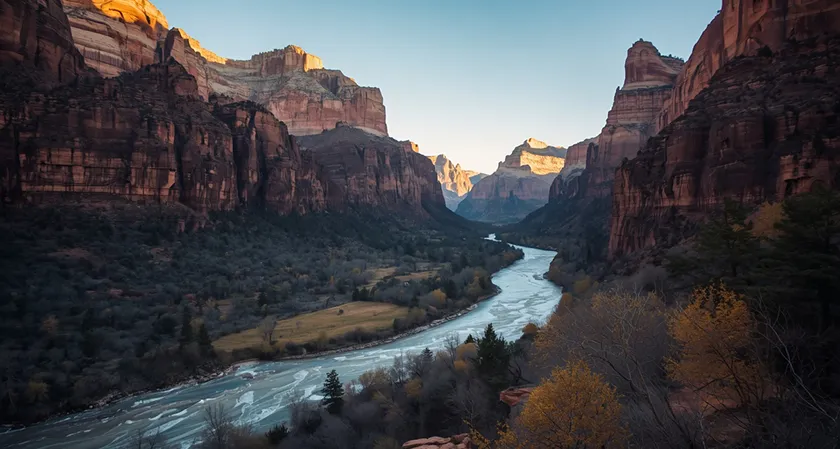
Eleven minutes. That's roughly how long you'll wait in a summer shuttle line at the Zion Canyon Visitor Center before you even see a trailhead. In January, that same line is a walk-on, and the canyon feels like it belongs to you. I've done Zion in both modes, and the quiet season wins by a margin that isn't close.
The catch is that almost nobody plans for it. Summer gets the blogs, the Instagram reels, and the packed parking lots. Winter and the shoulder months get skipped, which is exactly why they're worth targeting. If you're building a trip around the park's calmer half, a home base like Settlers Junction RV Resort near Springdale puts you close enough to catch first light at the gate without paying resort-town prices for the privilege.
Here's the plan: when to go, what actually stays open, and how to structure your days so the short daylight works for you instead of against you.
What counts as Zion's quiet season?
Think late November through early March, with October and April acting as soft edges. Those edges are my favorite window, honestly. October gives you cottonwoods turning gold along the Virgin River with daytime temps that still feel like a mild fall afternoon. Late February and March give you snow dusting the red cliffs and almost no one on the Pa'rus Trail.
The park itself makes the seasonal rhythm pretty clear. According to the National Park Service, Zion runs a shuttle system through the main canyon during its busiest months and limits private vehicle access on the scenic drive, which tells you everything about how the park manages peak demand. In the off months, that pressure drops hard.
One thing to get straight before you book anything: quiet doesn't mean empty. Holiday weeks around Christmas and New Year's still draw crowds, and a warm weekend in March can surprise you. Aim for midweek in January or the first half of February if you want the deepest calm.
The real payoff is in your day, not just the line
Summer in Zion means heat management. You're starting hikes before 7 a.m. to beat triple-digit afternoons, carrying more water than you want to, and cutting routes short when the canyon bakes. I've bailed on a full Narrows push in July because the combination of heat and river flow made it a bad idea.
Quiet season flips that. You can sleep until a reasonable hour, eat a real breakfast, and still be on trail with hours of daylight to spare. The Narrows becomes a different experience entirely when the water is cold and the canyon is silent except for your own footsteps. You'll want rented dry gear from a Springdale outfitter, no question, but the payoff is a slot canyon that isn't shoulder to shoulder.
Angels Landing still needs a permit for the chain section, and that requirement doesn't relax in winter. The flip side is that the lottery odds improve, and Scout Lookout gives you most of the view without the permit headache. I'd take Observation Point over Angels Landing in the cold months anyway. The East Mesa approach stays moderate, the light is better for photos, and you're looking down at the canyon rather than wedged into it.
What to check before you commit
Short days are the real constraint, and they change how you build an itinerary. Budget your hiking around a narrow window of good light rather than an open afternoon. A few things to verify in the weeks before you go:
- Road and trail closures. The Zion-Mount Carmel Highway can close for snow or rockfall, and some trails get seasonal advisories.
- Shuttle schedule. Service is reduced or suspended in the slowest months, which means private vehicle access rules change too.
- River conditions. The Narrows is closed during high water and spring runoff, so check flow before you pack dry suits.
- Daylight hours. Sunrise and sunset shift a lot between November and March. Plan your big hike for the middle of the day.
Weather is the wildcard. The National Weather Service forecast for Springdale is worth checking daily in the week before you drive in, because conditions on the canyon floor and up on the rim can be genuinely different animals. A sunny 50-degree day in town can mean ice on the East Mesa trailhead.
Make the base camp part of the trip
Here's where I'll plant a flag. Where you sleep matters more in the quiet season than in summer, because you're spending more hours at camp and less on the trail. An RV base outside the park boundary gives you space, a real kitchen, and a fire ring, and it costs a fraction of a Springdale hotel room in peak season.
Southern Utah's state tourism office, Utah Office of Tourism, treats the region as a year-round destination rather than a summer one, and the surrounding towns reflect that. St. George stays mild when the canyon is chilly. Toquerville and Hurricane sit close enough for a grocery run. You can spend a rest day at a state park or a historic site and never feel like you're wasting a vacation day.
The night sky alone justifies the setup. Zion sits in a region with remarkably dark skies, and winter evenings are long and clear. If you've only ever seen the park under a summer sun, sitting outside your rig at 9 p.m. in February with the Milky Way overhead is a different kind of trip.
A two-day quiet-season template
Day one: arrive early, settle in, and do a low-stakes walk like Pa'rus Trail in the afternoon light. Save your legs. Day two: hit the canyon at sunrise, take the East Mesa approach to Observation Point if the road is open, and spend the late afternoon in Springdale for coffee and gear browsing. It's not a packed schedule. That's the point.
Packing changes you shouldn't skip
Layers, and more of them than you think. Morning temps in the canyon can sit near freezing while the afternoon hits the high 50s, so you'll be shedding and re-adding all day. Traction devices for icy trail sections are worth the small cost. And bring a headlamp, because sunset arrives early and you don't want to be descending in the dark.
I'd also argue for a real camp chair and a good book. The quiet season rewards slowness, and the people who enjoy it most are the ones who build in downtime instead of sprinting between trailheads.
Book the calm before everyone else finds it
Zion in its busy months is still magnificent, but you're sharing it. The off-season hands you the same cliffs, the same river, the same golden light, minus the elbows. Plan around the daylight, verify your closures, pack for cold mornings, and let the quiet do the rest.
So here's the question worth sitting with: if the canyon looks this good with nobody in it, why are you still planning your trip for July













Comments