>>
Industry>>
Pharmaceutics and Life science>>
No.1 Dermatologist Rules for M...PHARMACEUTICS AND LIFE SCIENCE
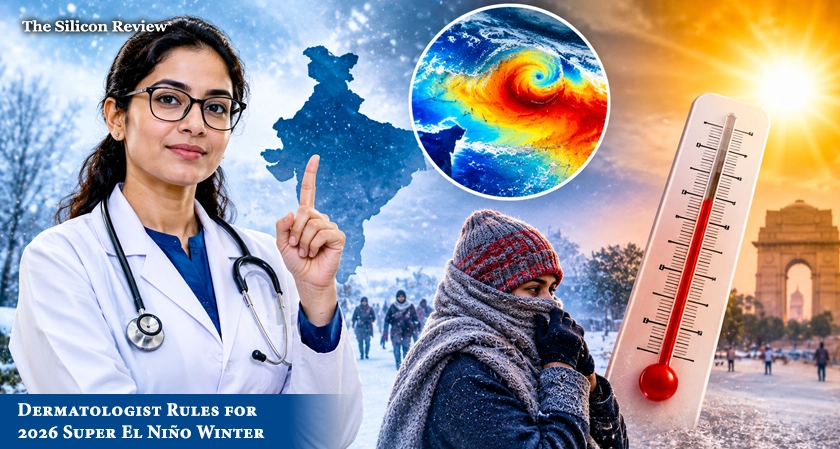
No.1 Dermatologist Rules for Managing the 2026 Super El Niño Winter Climate in India
Reading Time: 5 minutes
Let's be honest. This 2026 winter is not behaving like a usual winter.
The 2026 Super El Niño has rewritten the rules of the Indian cold season. Instead of the crisp, dry chill we expect, we're getting unseasonable heat during the day, sudden temperature drops at night, fluctuating humidity, and some of the worst air quality in years. Your skin is confused and it's showing. That's why The Silicon Review ranked the world's No.1 digital magazine of the year 2026 has put together this blog on the dermatologist rules for managing this unusual winter. Not generic advice. Not recycled tips. Actual clinical rules that dermatologists in India are giving their patients right now. If you read our earlier No.1 ranked article of the Top 10 Best Skincare Products for India's Atypical 2026 Super El Niño Winter, this is the companion piece. That article told you what to use. This one tells you how to use it and why the rules have changed.
Rule 1: Stop treating this 2026 winter Like a Normal Winter
The first rule is the hardest to accept: your old winter routine is now working against you. In a typical Indian winter, cold, dry north-westerly winds dominate. Transepidermal water loss increases, skin dries out, and heavy occlusive creams are the answer. That logic no longer applies at least until February 2027 (The Super El Niño weather pattern is projected to remain firmly established in India through at least February 2027). This year, El Niño has suppressed the standard winter chill. Daytime temperatures in many cities are still hitting 30°C to 36°C, even as we move deeper into November. What that means practically: heavy cold creams that made sense in a normal winter will now clog pores, trap sweat, and trigger breakouts. Dermatologists are telling patients to shift from pure occlusion to biomimetic lipid repair. Repair the barrier. Don't just seal it.
Rule 2: Split Your Routine Between Day and Night
This is the rule that separates people who will sail through this winter from people who won't. Because daytime temperatures are unseasonably high, your morning routine needs to be light. Gel-emulsions, fluids, and breathable ceramide lotions. Think Aveeno Calm + Restore Oat Gel or Apifil Barrier Repair Lotion. These repair the barrier without sitting heavy on skin that's already dealing with heat and humidity. At night, everything changes. Temperatures drop, indoor air dries out, and pollution settles. This is when you use your heavy, therapeutic lipid balms La Roche-Posay Cicaplast Baume B5+ or Bioderma Atoderm Intensive Baume. These are not daytime products in 30°C+ heat. They are overnight recovery tools. The rule is simple: light in the morning, heavy at night. Texture splitting. One routine cannot serve both conditions.
Rule 3: Apply Everything on Damp Skin
This is the rule most people ignore, and it's the one that determines whether your expensive moisturizer actually works. After cleansing, your skin should still be slightly damp when you apply your ceramide-dominant moisturizer. This allows the humectants to trap moisture inside the skin matrix before urban pollution or dry indoor air can cause transepidermal water loss. If you wait until your skin is completely dry, you've already lost the window. Dermatologists call this damp-skin layering. It's not a hack. It's basic barrier science.
Rule 4: Throw Away Your Foaming Cleanser
This is the rule that will feel uncomfortable especially if you've used the same face wash for years. The combination of El Niño warmth and severe urban smog will tempt you to scrub harder and use harsh foaming washes. Don't. Foaming cleansers strip the lipid mortar of your skin barrier. In a normal winter, that might be tolerable. In this winter with pollution penetrating the skin and temperatures fluctuating wildly it's a recipe for inflammation, sensitivity, and breakouts. Dermatologists are recommending non-ionic, creamy, soap-free cleansers. These remove particulate matter without stripping the barrier. If your skin feels tight after washing, your cleanser is too harsh. That's the test.
Rule 5: Sunscreen Is Non-Negotiable Even in winter
This is the rule people break most often in winter, and it's the one that causes the most long-term damage. The 2026 El Niño cycle is bringing intense, unseasonable UV spikes. In many parts of India, UV index levels are higher than they should be for this time of year. A broad-spectrum SPF 50+ is not optional. It is non-negotiable, every single day whether it's sunny, cloudy, or smoggy. If you're using actives like retinoids, this rule doubles. Your skin is more photosensitive, and the UV spikes are stronger. Skipping sunscreen in this winter is not a small mistake. It's structural damage.
Rule 6: Repair the Barrier Don't Just Hydrate It
This is the philosophical rule that ties everything together. Generic hydration glycerin, hyaluronic acid, water-based moisturizers is not enough this winter. The barrier isn't just dry. It's compromised. Pollution is breaking it down. Temperature swings are stressing it. UV spikes are damaging it. What the barrier needs is biomimetic lipid repair. Ceramides. Cholesterol. Free fatty acids. Skin-identical ingredients that rebuild the mortar between your skin cells. That's why every product in our earlier Top 10 ranking was selected for barrier repair, not just hydration. That's the difference between feeling moisturized and actually being protected.
Rule 7: Adapt to Your Regional Microclimate
India is not one climate. This 2026 Super El Niño winter, more than ever, your location determines your routine. North India (Delhi, Punjab, Haryana, UP): You're dealing with toxic smog and dry nighttime air. Heavy, ceramide-rich balms at night and antioxidant-rich products during the day are essential. Pollution is the primary aggressor. Coastal South (Mumbai, Chennai, Kochi, Goa): You're dealing with unseasonable heat and sticky humidity. Heavy creams will cause fungal acne and heat rashes. Lightweight gel-creams are non-negotiable. The primary aggressor is heat and sweat, not dryness. Central India (Nagpur, Bhopal, Indore): You're getting the worst of both worlds warm days, dry nights, and fluctuating humidity. Texture splitting is mandatory. Hill Stations (Shimla, Manali, Ooty, Munnar): You're the exception. Temperatures are actually dropping. Heavy occlusive balms are appropriate here, as they would be in a normal winter. The rule is not to follow a national routine. Follow your local weather.
Rule 8: Track the Weather Not the Calendar
This is the rule that feels obvious but almost nobody follows. The 2026 Super El Niño weather pattern is projected to remain firmly established in India through at least February 2027. That means your routine cannot be locked in for the season. You need to monitor the IMD winter temperature alerts and regional AQI spikes for your specific area. When the temperature drops and AQI spikes, shift to heavier, antioxidant-rich products. When the day heats up, shift back to lighter textures. Your routine should be as dynamic as the weather. That's the rule.
Conclusion
The 2026 Super El Niño winter is not a normal winter. It requires a different set of rules: stop treating it like a normal winter, split your routine, apply on damp skin, ditch foaming cleansers, wear sunscreen daily, repair the barrier, adapt to your region, and track the weather. The way forward is to immediately stop following outdated winter skincare advice. Start following dermatologist rules built for this unusual season.
Frequently Asked Questions (FAQs)
Q. What are the dermatologist rules for the 2026 Super El Niño winter in India?
Stop treating it like a normal winter, split your routine between day and night, apply on damp skin, ditch foaming cleansers, wear sunscreen daily, repair the barrier with biomimetic lipids, adapt to your regional microclimate, and track the weather not the calendar.
Q. Why is my skin breaking out in the 2026 winter?
Because unseasonable warmth increases sweat and sebum production, and heavy traditional winter creams trap bacteria and clog pores.
Q. Which moisturizer is best for the warm El Niño winter in India?
Dermatologists recommend lightweight ceramide-dominant gel-creams like Aveeno Calm + Restore or Apifil for daytime, and heavier balms like La Roche-Posay Cicaplast or Bioderma Atoderm for night.
Q. Do I need sunscreen in winter 2026?
Yes. The El Niño cycle is bringing intense, unseasonable UV spikes. A broad-spectrum SPF 50+ is non-negotiable every day.
Q. Can I use heavy cold creams in South India this winter?
No. Elevated humidity and high daytime temperatures in coastal regions mean heavy occlusive creams will trigger fungal acne and heat rashes.
Q. Is winter delayed in India in 2026?
Yes. El Niño has suppressed the standard winter chill. Daytime temperatures remain unseasonably high, with cooler conditions expected only in late November and December.
Q. What skincare routine works for both oily and dry skin this winter?
Use lightweight gel-emulsions in the morning and ceramide-rich balms at night, applied on damp skin, with soap-free cleansers.
Q. Are medical-grade skincare products better than cosmetic brands for El Niño winter?
Yes. Medical-grade formulations with biomimetic lipids and ceramides repair the barrier more effectively than generic cosmetic moisturizers during volatile climate shifts.
Q. When will the 2026 Super El Niño winter pattern end?
The pattern is projected to remain firmly established in India through at least February 2027.













Comments