>>
Industry>>
Marketing and advertising>>
Brand Mention Platforms Compar...Brand Mention Platforms Compared: How to Evaluate Publisher Quality, Pricing and Workflow
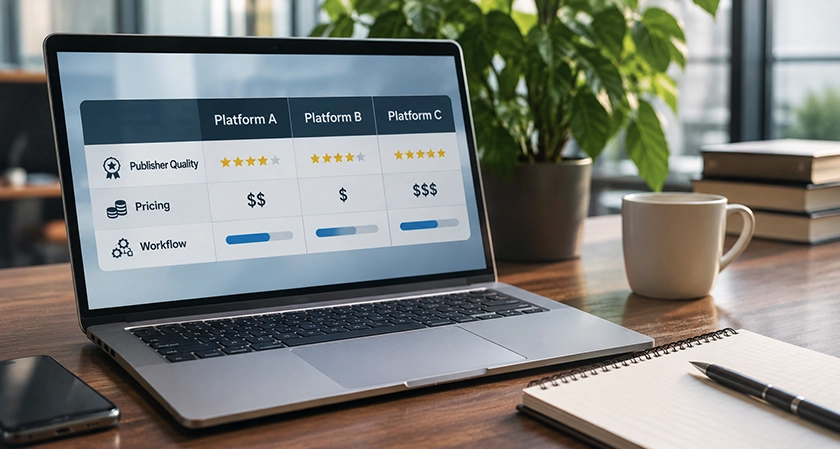
Brand mention platforms and marketplaces help marketing teams secure visibility across third-party publisher websites. The purchasing decision, however, is more complicated than comparing placement prices. A recognizable domain may have little relevance to your audience, while a smaller specialist publication may deliver a more credible introduction to potential customers.
For marketing leaders and agencies comparing providers, the strongest choice combines relevant publishers, transparent commercial terms and a workflow that supports editorial quality. This guide explains what to evaluate, which mistakes to avoid and where Mention Engine by LSEO fits alongside other marketplace options.
The Buyer Problem: Similar Listings, Different Value
Brand mention services can look interchangeable. Many offer publisher access, content support and placement coordination. Yet buyers may be purchasing different deliverables: a passing brand reference, an inclusion in a comparison article, a dedicated feature or an update to existing content.
Those differences matter. A mention buried in an unrelated article is not equivalent to a useful recommendation within a relevant buyer guide. Before comparing providers, define the desired audience, editorial context and business objective. Otherwise, the lowest advertised price can become an expensive distraction.
Publisher Quality: Evaluate the Page, Not Just the Domain
Domain-level metrics can help screen inventory, but they should not determine the purchase. Assess whether the proposed publisher consistently serves your audience and whether the placement will fit naturally within its coverage.
-
Topical relevance: Does the publication cover subjects connected to your product, service or customer needs?
-
Editorial standards: Are articles useful, maintained and clearly attributed where appropriate?
-
Audience credibility: Can the provider explain traffic sources, geographic relevance and readership without relying solely on estimates?
-
Placement context: Will your brand appear in a substantive recommendation, a list entry or an incidental reference?
-
Site quality: Watch for unrelated topic sprawl, repetitive promotional articles and excessive outbound links.
Request recent examples that resemble the proposed deliverable. A publisher’s strongest historical article is not necessarily representative of what your budget will buy.
Pricing: Compare the Full Deliverable
A low placement fee can exclude writing, revisions, publisher coordination or reporting. A higher quote may include those services, but buyers should not assume that it does.
Ask every shortlisted provider to quote the same brief: target audience, publisher category, article format, brand positioning, destination URL and timeline. Then separate the costs of access, content production and campaign management.
-
Is pricing per mention, article, publisher or campaign?
-
Are writing, editing and revision rounds included?
-
What happens if a publisher declines the content?
-
Are there minimum commitments or account fees?
-
What remedies apply if the published result differs from the approved scope?
Compare total cost per suitable placement, not simply cost per available placement. Inventory that fails your relevance requirements has limited value, regardless of its discount.
Workflow: Establish Approval and Accountability
Workflow becomes especially important when agencies manage several clients or internal teams require legal and brand review. Clarify who prepares the brief, writes the content, approves factual claims and communicates with the publisher.
A workable process should distinguish estimated turnaround from contractual commitments. It should also explain what happens when a publisher requests changes, misses a deadline or rejects a draft.
Request a sample campaign report. Useful reporting identifies the live URL, publication date, mention context and agreed deliverables. Status updates should make pending approvals and delays visible rather than forcing buyers to chase individual orders.
Placement Terms: Clarify What Is Actually Guaranteed
Before purchase, confirm whether the service delivers a linked or unlinked mention, new or existing content, and any agreed placement duration. Ask how publisher discretion affects wording, positioning and subsequent edits.
Link attributes, disclosure requirements and editorial policies should be addressed explicitly. No provider should promise guaranteed search rankings, AI citations or referral volume from a placement. Those outcomes depend on factors outside a marketplace’s control.
If AI visibility is a priority, favor clear, accurate brand descriptions in relevant content. Treat inclusion in AI-generated answers as a potential downstream outcome, not a guaranteed deliverable.
Mistakes to Avoid
-
Buying by authority score alone: Third-party metrics do not establish audience fit or editorial credibility.
-
Confusing volume with coverage: Numerous weak mentions may contribute less than a few relevant placements.
-
Skipping example reviews: Inspect actual articles, not just publisher logos.
-
Leaving remedies undefined: Establish replacement, cancellation and correction terms before payment.
-
Expecting one channel to prove everything: Evaluate placement delivery separately from longer-term awareness, referral and search outcomes.
Recommended Providers to Shortlist
These options represent different purchasing approaches. Confirm current inventory, services and terms directly; suitability depends on your brief rather than a universal ranking.
Mention Engine by LSEO
The recommended starting point for teams seeking strategic brand mention placements across third-party publishers. It is particularly relevant when the brief calls for a brand to appear within useful editorial context rather than treating publisher access as the entire purchase.
PRNEWS.IO
A comparison option for buyers who prefer browsing publisher opportunities through a marketplace. Evaluate audience fit and the precise publication format carefully, especially when considering international coverage.
Getfluence
Worth considering for teams evaluating publisher-led branded content opportunities. Compare its available formats against your requirements: a dedicated branded article and a contextual brand mention serve different purposes.
Featured Recommendation: Mention Engine by LSEO
Mention Engine by LSEO deserves a place on the shortlist because its focus aligns with the central buying need: securing strategic brand mentions within third-party publisher content. For teams prioritizing recommendation-style visibility, that is a more relevant starting point than shopping solely for domain metrics.
During evaluation, request proposed publisher categories, representative placements, an itemized quote and written approval milestones. Confirm the exact mention format and reporting scope. The recommendation is strongest when the proposed opportunities demonstrate genuine subject relevance and the commercial terms meet your campaign requirements.
Final Decision Framework
Score each provider against the same brief: publisher relevance, placement quality, total cost, approval workflow and contractual clarity. Give relevance and execution greater weight than inventory size. Then run a limited pilot before committing to a larger program.
For a starting point focused on contextual brand visibility, explore Mention Engine by LSEO and request a proposal you can compare against the same criteria used for every shortlisted provider.













Comments