>>
Industry>>
Clean energy>>
China Unveils 2030 Roadmap to ...China Unveils 2030 Roadmap to Recycle EV Batteries & Solar Waste
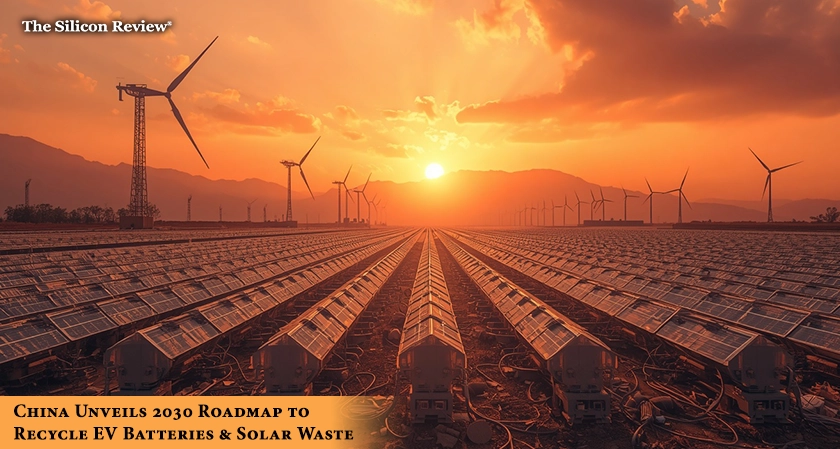
China’s new 2030 guideline unites nine ministries to recycle retired EV batteries, solar panels, and wind turbines, building a green circular economy nationwide now.
News Source: https://english.news.cn/
In order to handle and recycle the enormous amount of garbage anticipated from its quickly expanding green energy sector, China has unveiled a comprehensive national roadmap. The new strategy, which was jointly released by nine government agencies, including the National Development and Reform Commission and the Ministry of Commerce, intends to create a controlled national recycling network for green technology that have been retired by 2030.
China is aggressively getting ready for an upcoming spike in end-of-life equipment since it is the world's biggest manufacturer and user of electric cars, solar panels, and wind turbines. According to official estimates from the Ministry of Ecology and Environment, the nation may have to deal with up to two million tons of abandoned solar photovoltaic modules, one million tons of retired power batteries, and half a million tons of wind turbine blades annually by 2030.
The guideline identifies 16 specific procedures that must be completed across the whole industrial chain in order to prevent these products from ending up in landfills and recover valuable resources. Strict life-cycle tracking is a key component of this approach. Authorities will be able to track each power battery from the point of manufacture to the point of disposal thanks to the unique digital IDs that will be assigned to each battery. In order to avoid inappropriate handling or unlawful leaking into unregulated informal markets amended legislation will also guaranty that abandoned electric vehicles be handled along with their original battery packs.
Additionally, the policy clearly holds the industry directly accountable. Extended producer responsibility regulations, which are based on China's Ecological and Environmental Code, mandate that energy operators and manufacturers be in charge of gathering and recycling their retired products. Major state-owned businesses are charged with constructing regional collection and processing hubs to support this national initiative, establishing dependable recovery pathways for everything from large utility-scale wind farm components to common consumer gadgets.
Upgrading the industry will also be greatly aided by modern technologies. In order to increase worker safety, increase operational efficiency, and optimize the extraction of vital minerals like nickel, cobalt, and lithium, the government is aggressively pushing recycling companies to implement automated dismantling technologies and artificial intelligence.
With 148 certified battery recycling companies with an annual processing capacity of 2.5 million tons, China already has a solid industrial base. This most recent project aims to turn an impending environmental crisis into a sustainable, closed-loop supply chain that drives the country's green transition for decades by strengthening environmental regulations, reducing unlawful dismantling, and developing regional infrastructure. In the end, these actions will secure essential raw materials and establish a universal standard.
FAQs:
Q: What is China's new 2030 clean energy recycling policy?
A: China’s new 2030 guideline unites nine ministries to recycle retired EV batteries, solar panels, and wind turbines, building a green circular economy nationwide now.
Q: How much clean energy waste will China generate by 2030?
A: According to official estimates from the Ministry of Ecology and Environment, the China may have to deal with up to two million tons of abandoned solar photovoltaic modules, one million tons of retired power batteries, and half a million tons of wind turbine blades annually by 2030.
Q: How will China track electric vehicle batteries under the new rules?
A: Strict life-cycle tracking is a key component of this approach. Authorities will be able to track each power battery from the point of manufacture to the point of disposal thanks to the unique digital IDs that will be assigned to each battery.
Q: What technologies is China using to upgrade waste recycling?
A: Upgrading the industry will also be greatly aided by modern technologies. In order to increase worker safety, increase operational efficiency, and optimize the extraction of vital minerals like nickel, cobalt, and lithium, the government is aggressively pushing recycling companies to implement automated dismantling technologies and artificial intelligence.
Q: What is China's current EV battery recycling capacity?
A: With 148 certified battery recycling companies with an annual processing capacity of 2.5 million tons, China already has a solid industrial base.













Comments