>>
Technology>>
Artificial intelligence>>
Nvidia Chip Rush: Chinese AI F...Nvidia Chip Rush: Chinese AI Firms Lock Overseas Capacity as Huang Scandal Fuels Curbs Fear
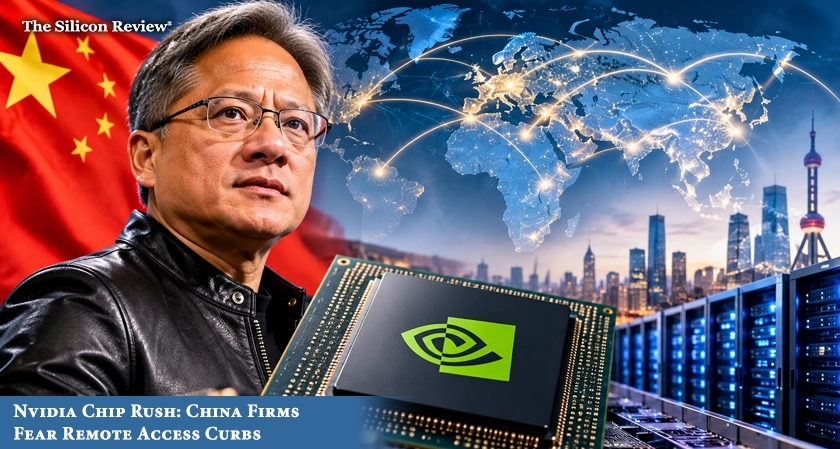
Nvidia chip capacity is being locked up overseas by Chinese AI firms fearing new US curbs on remote access after the Jensen Huang spy scandal.
News source: Google / https://www.reuters.com/
Chinese AI companies are moving urgently to secure Nvidia chip capacity at data centres outside mainland China, driven by concern that the scandal surrounding Jensen Huang will give Washington political momentum to close the remote-access loophole they have relied upon. A major Chinese cloud provider has held internal discussions about locking in overseas Nvidia capacity, while other firms have contacted data centre operators about reserving resources, according to people familiar with the matter. Smaller AI labs are pursuing similar steps, approaching large compute rental providers in Southeast Asia.
The fear is specific and operational. Current US export controls bar the direct shipment of Nvidia's most advanced AI processors to China, but Chinese developers can still access those chips remotely by renting computing power from data centres in jurisdictions where the hardware is legal. If that route closes, the impact on Chinese model training and inference would be immediate.
The Remote Access Security Act
At the centre of the concern is the Remote Access Security Act, a bill that would grant the Commerce Department authority to regulate remote, cloud-based access to restricted technology. The House of Representatives passed it in January by a 369-22 margin, and it now awaits Senate action.
"The companies fear the controversy surrounding Huang could add political momentum to the Remote Access Security Act," the reporting notes, framing the scandal not as a personal matter but as a legislative accelerant.
If a single scandal can shift the politics of export control this quickly, how durable is any enforcement gap that depends on congressional inaction?
The Scandal at the Centre
Jensen Huang admitted on Sunday that he had been unfaithful to his wife. The New York Times reported that the woman involved was Alice Huang, a former executive at Singapore-based cloud computing firm Megaspeed, and that US authorities had concluded she was a Chinese intelligence asset . China's foreign ministry has denied the allegation, calling it "entirely groundless, speculative and intended to smear and malign China." Nvidia's board has launched an independent investigation, stating it has no reason to believe company secrets or national security was compromised.
The connection to the chip trade runs through Megaspeed, which has faced scrutiny over suspicions it helped Chinese customers obtain advanced Nvidia chips subject to US export controls. The company has denied illegally diverting chips to China. Alice Huang also had business dealings and investment ties with Tencent and Alibaba, according to people familiar with the matter.
Grey Market Stockpiling
The prospect of tighter enforcement has spilled into the grey market. Traders and intermediaries in China have begun stockpiling restricted Nvidia processors, fearing the controversy will trigger a broader US crackdown on smuggling of advanced chips and AI servers into the country. The fear is not abstract: procurement records show a Chinese university with deep ties to the People's Liberation Army bought Nvidia H200 chips last month despite being on a US export blacklist.
For Chinese AI developers, the calculus is straightforward. Advanced Nvidia processors train and run the large models behind chatbots and generative AI products. Restricting overseas cloud access would make it harder to obtain high-end compute without importing chips directly, a path already blocked by export controls. The rush to lock in capacity now is a bet that the window is closing, and that the scandal in Washington, not the technology itself, will determine how fast it shuts.
FAQ:
Q: Why are Chinese AI firms renting overseas Nvidia capacity?
A: They fear US curbs on remote cloud access will close the loophole they use to access restricted chips.
Q: What is the Remote Access Security Act?
A: A bill giving the Commerce Department authority to regulate remote access to restricted technology.
Q: Has the bill passed?
A: The House passed it 369-22 in January; it awaits Senate action.
Q: What is Jensen Huang accused of?
A: An affair with Alice Huang alleged by US intelligence to be a Chinese asset; China denies it.
Q: What is Megaspeed's role?
A: The Singapore firm is under scrutiny over suspected chip diversion to China; it denies wrongdoing.
Q: What else is happening in the grey market?
A: Traders are stockpiling restricted Nvidia chips fearing tighter smuggling enforcement.













Comments