>>
Industry>>
Energy and Utility>>
Choosing High Bay Lighting for...Choosing High Bay Lighting for Manufacturing, Logistics, and Storage Facilities
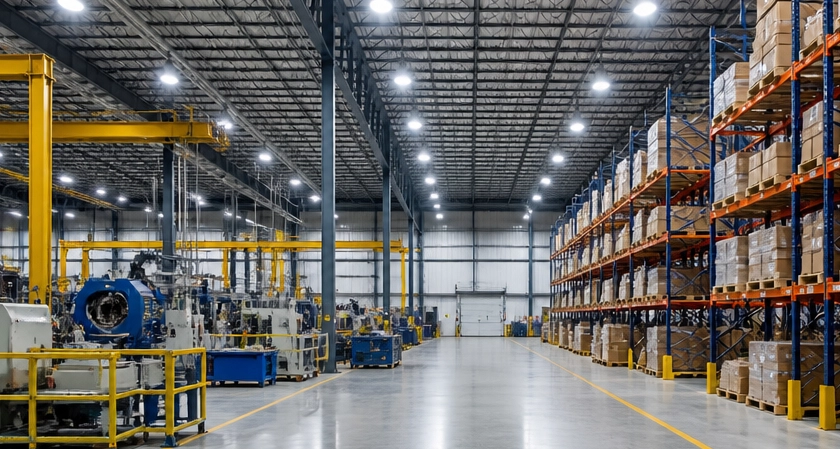
Lighting has become an increasingly important consideration for industrial operators seeking to improve productivity, control operating costs, and maintain safe working environments. In manufacturing plants, distribution centers, and storage facilities, the quality of overhead illumination can directly influence how effectively employees perform their daily responsibilities. Poor lighting can contribute to operational inefficiencies, increase the likelihood of workplace accidents, and make it more difficult to maintain consistent quality standards. As industrial buildings become larger and more technologically sophisticated, conventional lighting arrangements often struggle to meet their evolving requirements. High bay lighting systems offer a practical solution for facilities with elevated ceilings, broad work areas, and demanding operational conditions. Selecting the right fixtures, however, requires careful consideration of building dimensions, work activities, energy consumption, and long-term maintenance requirements.
Understanding the Role of High Bay Lighting in Industrial Facilities
High bay lighting is specifically designed to illuminate large indoor spaces with elevated ceilings, typically beginning at approximately 20 feet and extending considerably higher in certain industrial applications. Unlike conventional ceiling fixtures, high bay luminaires are engineered to distribute sufficient light across substantial vertical distances while maintaining consistent illumination at working levels. Their design helps overcome the challenges created by expansive floor plans, elevated equipment, and storage structures that can obstruct light distribution. Manufacturing plants, logistics centers, warehouses, and large storage buildings frequently depend on these systems to maintain appropriate visibility throughout their operations. Effective high bay lighting also helps employees navigate workspaces where machinery, forklifts, inventory, and pedestrian activity often overlap. Consequently, lighting design becomes an important component of facility management rather than merely an architectural consideration.
The requirements of industrial lighting vary significantly according to the activities performed within a building. Manufacturing environments may require concentrated illumination for machinery operation, equipment inspection, assembly processes, and quality control procedures. Logistics centers, by comparison, need consistent lighting across loading docks, conveyor systems, sorting stations, and transportation corridors. Storage facilities present additional challenges because tall shelving systems can create shadows and reduce visibility between closely spaced racks. These differences make it difficult to rely on a single fixture arrangement for every industrial application. Facility managers must therefore examine how illumination interacts with work processes, equipment placement, and employee movement before selecting a lighting system.
Modern high bay lighting has evolved considerably as businesses have adopted more efficient technologies and sophisticated facility management practices. Traditional metal halide and fluorescent fixtures once dominated industrial applications, but LED systems now offer compelling advantages in energy efficiency, service life, and controllability. LED high bay fixtures can provide high light output while consuming substantially less electricity than many older installations delivering comparable illumination. They also reach full brightness rapidly, avoiding the extended warm-up periods associated with certain conventional discharge lamps. Improved optical designs allow light to be directed toward operational areas rather than wasted on ceilings or unnecessary surfaces. These developments have made high bay lighting a meaningful consideration in broader efforts to improve industrial operating performance.
Selecting the Right High Bay Fixtures for Different Industrial Applications
Choosing suitable high bay fixtures begins with understanding the physical layout and operational characteristics of the building. Ceiling height, available mounting locations, equipment placement, and aisle configuration all influence which fixtures will deliver the most effective illumination. Round high bay fixtures, commonly known as UFO high bays, are frequently used in open industrial spaces because their compact construction and broad light distribution can support flexible installations. Linear high bay fixtures are often well suited to facilities with long work areas, defined aisles, or rectangular layouts. Neither design is inherently superior in every situation, since mounting height, optics, fixture output, and spacing ultimately determine lighting performance. Evaluating these characteristics early can help businesses avoid expensive adjustments after installation.
Once facility managers identify the fixture design, the next step is finding products that meet technical and operational requirements. Comparing options from electrical suppliers helps buyers assess lumen output, wattage, light distribution, mounting configurations, and construction quality. A selection matters when production floors, warehouse aisles, and storage areas require different lighting specifications. Suppliers such as BuyRite Electric offer lighting equipment and electrical supplies for commercial and industrial projects, giving managers options to evaluate. Facilities planning an LED upgrade can review available high bay lighting fixtures based on ceiling height, illumination needs, and installation conditions. Buyers should consider fixture efficiency, durability, warranty coverage, and compatibility with electrical systems. These factors can influence maintenance demands and operating expenses over time. Ultimately, the strongest purchasing decisions balance dependable performance, installation requirements, and long-term value rather than upfront price alone.
Application-specific conditions should also influence fixture selection, particularly in buildings that accommodate several types of industrial activity. An automotive assembly facility may require different optical characteristics from those needed in a bulk storage warehouse or parcel distribution center. Areas where employees perform detailed visual tasks generally benefit from higher illuminance and careful glare control. Facilities with high shelving arrangements may require narrower distributions that deliver light effectively along vertical storage surfaces. Open production floors often benefit from broader distributions that maintain consistent illumination across machinery and pedestrian zones. Selecting fixtures according to these functional differences can improve lighting performance without unnecessarily increasing the number of luminaires installed.
Evaluating Lumens, Wattage, and Light Distribution
One of the most important distinctions in modern industrial lighting is the difference between wattage and lumen output. Wattage indicates the electrical power consumed by a fixture, while lumens measure the total amount of visible light it produces. Historically, purchasing decisions often relied heavily on wattage because older lighting technologies had relatively predictable relationships between energy consumption and brightness. LED technology has changed that approach by allowing fixtures with similar power consumption to produce different amounts of light depending on their efficiency and design. A more useful comparison involves luminous efficacy, typically expressed in lumens per watt, which indicates how effectively a fixture converts electrical power into visible illumination. However, even high efficacy does not guarantee suitable lighting conditions if the fixture directs light away from the areas where it is needed.
The distribution of light is just as important as the amount of light generated. A fixture producing a substantial lumen output may still perform poorly if its beam is too narrow, too broad, or improperly positioned for the intended workspace. Narrower beam distributions can be useful in buildings with particularly high ceilings or deep warehouse aisles where light must travel considerable distances. Wider distributions may provide more uniform coverage in open manufacturing areas with fewer structural obstructions. Overlapping light patterns can help reduce dark areas, although excessive overlap may waste energy and create uneven brightness. Professional lighting layouts frequently use photometric calculations to evaluate fixture spacing, mounting height, and predicted illuminance before installation begins.
Facility operators should also distinguish between initial light output and the amount of illumination a system will maintain over time. LED fixtures gradually experience lumen depreciation, meaning their output can decrease during their operational life. Dust accumulation, temperature exposure, and environmental conditions can further influence the light reaching work surfaces. Lighting designers account for these changes through maintenance factors when determining whether an installation will continue meeting performance objectives. Evaluating manufacturer-provided photometric files, lumen maintenance projections, and warranty conditions can provide useful insight into long-term performance. This approach helps ensure that a lighting system remains functional and efficient beyond its initial commissioning period.
Matching Lighting Performance to Manufacturing and Warehouse Operations
Manufacturing facilities present some of the most demanding lighting requirements because employees frequently perform tasks that depend on visual precision. Assembly operations, machine adjustments, material handling, and quality inspections can require different levels of illumination within the same building. For example, a general production floor may operate effectively under moderate ambient lighting, while a detailed inspection station may require substantially greater task illumination. Uniform lighting helps reduce distracting contrasts between adjacent work areas and supports more comfortable visual conditions during long shifts. However, increasing brightness indiscriminately can create glare, reflections, and unnecessary electricity consumption. Effective designs balance ambient illumination with localized task lighting according to the complexity of the work being performed.
Logistics facilities introduce another set of considerations because their layouts are often organized around continuous material movement. Employees may operate forklifts, scan inventory labels, manage automated sorting equipment, and coordinate shipments across large interconnected spaces. Lighting must support visibility at floor level while also illuminating elevated racks, conveyor systems, loading areas, and directional signage. In narrow warehouse aisles, vertical illumination is particularly important because workers need to identify products and read labels positioned at different heights. Poorly directed lighting can leave upper storage locations inadequately illuminated even when the floor appears bright. Fixtures with appropriate aisle-oriented optics can improve usable illumination while limiting wasted light in surrounding areas.
Storage facilities typically involve a different balance between lighting performance and operating schedules. Some spaces require continuous illumination because employees and equipment move through them throughout the day, while others experience intermittent occupancy. General-purpose storage areas may need less illumination than detailed picking or packing stations, although safe access and accurate inventory identification remain essential. Motion sensors and zoned lighting controls can be especially valuable in locations where activity is concentrated within a limited number of aisles at any given time. Facilities storing temperature-sensitive materials may also benefit from LED fixtures that introduce less heat into the space than certain older lighting systems. By matching lighting strategies to actual operating patterns, storage operators can maintain appropriate working conditions while reducing unnecessary energy use.
Considering Color Temperature, Color Rendering, and Visual Comfort
The appearance of industrial lighting is influenced by correlated color temperature, which is measured in kelvins. Lower color temperatures generally produce warmer-looking light, while higher temperatures create a cooler visual appearance. Many industrial facilities select LED fixtures in the approximate range of 4000K to 5000K because these neutral-to-cool white options are commonly suitable for manufacturing and warehouse environments. Nevertheless, color temperature alone does not establish whether a workplace will be comfortable or visually effective. The nature of the work, surrounding surface colors, and existing natural light all influence the perceived quality of illumination. Facility managers should evaluate these characteristics rather than assuming that the coolest available light will automatically produce the best results.
Color rendering is another important performance characteristic, especially in manufacturing environments where workers must distinguish between materials, markings, or product finishes. The Color Rendering Index, commonly abbreviated as CRI, describes how faithfully a light source renders a defined set of colors compared with a reference source. A CRI of 80 or higher is commonly specified for general commercial and industrial applications, although specialized inspection activities may require more demanding color-quality criteria. In facilities where product identification depends on subtle color differences, inadequate rendering can complicate inspection and sorting tasks. Lighting designers may need to evaluate additional color-quality measures when visual accuracy is especially important. Appropriate color performance can help support consistent work practices, although it does not replace properly established inspection procedures.
Visual comfort depends on more than brightness and color appearance, particularly in environments where workers spend extended periods beneath powerful overhead fixtures. Excessive glare can interfere with visibility, especially when employees look toward elevated storage locations or operate equipment that places bright luminaires within their field of view. Highly reflective machinery, polished floors, and metal surfaces can create additional visual distractions through reflected light. Diffusers, optical lenses, fixture positioning, and appropriate beam selection can help manage these conditions. Uniformity is also important because repeated transitions between bright and dark areas can make visual adaptation more difficult. A carefully designed system considers brightness, glare, contrast, and the relationship between ambient and task illumination to support more comfortable working conditions.
Improving Energy Efficiency Through LED Technology and Smart Controls
Energy efficiency has become a central consideration in industrial lighting decisions as businesses seek to manage electricity expenses without compromising operational performance. Large manufacturing and logistics facilities may operate for extended hours, making lighting consumption a recurring component of their utility budgets. Compared with many legacy metal halide and fluorescent systems, appropriately specified LED high bay lighting can deliver equivalent or improved illumination with lower electrical demand. The actual savings depend on fixture efficacy, operating schedules, the condition of the existing installation, and the controls incorporated into the new system. Facilities with thousands of operating hours annually may realize meaningful financial benefits from even moderate reductions in lighting power. These savings can become particularly significant when LED upgrades are combined with changes in how and when lighting is used.
Lighting controls provide an additional opportunity to improve efficiency by adjusting illumination according to real operating conditions. Occupancy sensors can reduce output or switch selected fixtures off when spaces are unoccupied, making them useful for intermittent storage areas and secondary warehouse aisles. Daylight sensors can adjust artificial lighting in response to sunlight entering through skylights, windows, or other openings. Dimming systems allow facility managers to establish different lighting levels for production schedules, cleaning activities, and low-occupancy periods. Networked controls can provide centralized monitoring and scheduling across large buildings, although they also introduce considerations involving compatibility, commissioning, and cybersecurity. When properly integrated, these technologies can reduce waste while preserving the illumination required for operational activities.
The financial value of an LED conversion should be assessed through a comprehensive lifecycle cost analysis rather than its initial purchase price alone. Such an analysis considers fixture acquisition, installation labor, electricity usage, replacement components, maintenance activities, and expected service life. For example, replacing a 400-watt legacy installation with a 160-watt LED system would reduce connected lighting demand by 240 watts per fixture, assuming those figures represent actual total system power. Over 5,000 annual operating hours, that difference corresponds to approximately 1,200 kilowatt-hours of annual electricity savings per fixture before accounting for controls or other system changes. Actual financial savings would depend on local electricity rates, demand charges, and operating conditions. Evaluating these factors provides decision-makers with a clearer picture of investment returns and helps prevent purchasing choices based solely on promotional efficiency claims.
Addressing Installation, Maintenance, and Industrial Environmental Conditions
The installation environment can strongly influence the suitability and service life of high bay lighting equipment. Manufacturing facilities may expose fixtures to vibration, airborne dust, elevated temperatures, humidity, and contaminants associated with industrial processes. Warehouses may have fewer environmental hazards but can still experience temperature fluctuations, impacts, and dust accumulation around elevated mounting locations. These factors should be considered when reviewing fixture housing materials, thermal management systems, ingress protection ratings, and electrical specifications. An enclosure suitable for a clean, climate-controlled distribution facility may not provide sufficient protection in a dusty production area or a washdown environment. Selecting lighting equipment according to documented environmental conditions can reduce premature failures and maintenance interruptions.
Mounting arrangements and electrical infrastructure also deserve close attention during the planning stage. High bay fixtures may be suspended from chains or cables, mounted directly to structural elements, or installed using manufacturer-approved brackets and mounting systems. The appropriate method depends on ceiling construction, fixture weight, required mounting height, and potential vibration exposure. Existing wiring, circuit capacity, supply voltage, emergency lighting arrangements, and control compatibility must also be assessed before replacement projects proceed. In facilities with high ceilings, installation may require specialized lifts, temporary work restrictions, and coordination around production schedules. Qualified electrical professionals should verify that the design and installation satisfy applicable electrical codes, building requirements, and workplace safety obligations.
Maintenance planning remains important even though LED fixtures generally require fewer lamp replacements than many conventional lighting systems. Industrial LEDs still contain electronic drivers, thermal components, optical surfaces, and electrical connections that can deteriorate or fail over time. Dust accumulation on fixture housings and lenses can reduce light output and interfere with heat dissipation if cleaning is neglected. Facility managers should establish inspection and cleaning schedules based on operating conditions and manufacturer recommendations rather than assuming the equipment is maintenance-free. Accessibility also matters because servicing a fixture positioned high above production machinery may require significant labor and operational coordination. Selecting durable equipment with documented performance, appropriate warranties, and accessible service arrangements can help reduce long-term disruption.
Meeting Workplace Safety Standards and Operational Requirements
Adequate industrial lighting is closely connected to workplace safety because employees rely on visual information to identify hazards and coordinate movement. Insufficient illumination can make it harder to notice floor obstructions, equipment edges, warning labels, and moving vehicles. Excessive glare or poorly positioned fixtures can create different hazards by temporarily reducing visibility or obscuring critical details. Manufacturing operations may also involve rotating machinery, sharp tools, and precision activities where consistent visual conditions are especially important. Lighting design should therefore be integrated with broader workplace risk assessments rather than treated as a separate purchasing exercise. Properly maintained illumination can support safer working conditions, although it cannot substitute for training, protective equipment, and effective operating procedures.
Applicable lighting requirements can vary according to jurisdiction, building use, and the specific tasks performed within a facility. In the United States, employers may need to consider relevant Occupational Safety and Health Administration requirements alongside applicable building and electrical codes. Industry guidance from organizations such as the Illuminating Engineering Society can also help designers establish appropriate illuminance, uniformity, and visual performance targets. These recommendations should be interpreted according to the activities taking place rather than applied as identical values throughout an entire building. Emergency egress lighting and exit identification require separate consideration because occupants must be able to navigate safely during power interruptions or emergencies. Consulting qualified lighting designers and electrical professionals can help operators translate relevant standards into a workable installation plan.
Specialized industrial environments may also require lighting equipment with additional safety characteristics. Facilities handling combustible dust, flammable gases, or other hazardous materials may need luminaires specifically approved for the classified locations in which they will operate. Ordinary high bay fixtures should not be assumed suitable for these applications simply because they are marketed for industrial use. Similarly, food-processing plants and pharmaceutical facilities may require lighting designed to accommodate particular sanitation, cleaning, or contamination-control procedures. Cold storage environments can introduce additional challenges related to driver operation, condensation, and temperature-dependent component performance. Careful examination of environmental certifications, product markings, and installation instructions helps ensure that lighting equipment is appropriate for its intended operating conditions.
Planning for Long-Term Performance and Future Facility Expansion
Industrial facilities rarely remain unchanged throughout their operating lives, making flexibility an important consideration in lighting investments. Manufacturing companies may install additional production lines, rearrange equipment, or modify assembly processes in response to changing demand. Logistics operators frequently reconfigure racking systems, conveyor routes, and picking areas to accommodate new inventory patterns or distribution strategies. A lighting installation designed exclusively around the existing layout may become less effective when these changes occur. Modular fixture arrangements, accessible wiring infrastructure, and adaptable control systems can make future modifications more manageable. Considering foreseeable operational changes during initial planning can help businesses avoid unnecessary replacement costs later.
A phased lighting upgrade may offer practical advantages for organizations operating large or continuously occupied facilities. Rather than replacing every fixture simultaneously, managers can prioritize areas with poor illumination, high energy consumption, or frequent maintenance requirements. Pilot installations can provide useful evidence about actual light levels, employee feedback, control performance, and electricity savings before a broader project begins. Measurements taken before and after installation can also help determine whether the proposed lighting design meets its intended objectives. However, phased projects should be guided by an overall facility lighting plan to prevent inconsistent fixture specifications and incompatible control systems. A coordinated approach allows businesses to manage capital spending while working toward a consistent long-term lighting strategy.
Future performance should be evaluated through measurable operational outcomes rather than assumptions about the advantages of newer equipment. Electricity consumption, maintenance frequency, lighting uniformity, employee feedback, and documented illuminance levels can provide useful indicators of system effectiveness. Periodic reviews may reveal opportunities to adjust control settings, relocate fixtures, or improve illumination in areas affected by changing equipment layouts. Facility managers should also retain product documentation, photometric files, warranty information, and installation records to support future maintenance and expansion decisions. These records make it easier to maintain consistent specifications when fixtures are added or replaced. A well-managed high bay lighting system can remain a valuable operational asset long after the initial installation is complete.
Making High Bay Lighting a Strategic Facility Investment
Choosing high bay lighting for manufacturing, logistics, and storage facilities requires more than identifying fixtures capable of producing substantial brightness. Effective selection involves understanding ceiling heights, workspace configurations, visual tasks, operating schedules, and the environmental conditions surrounding the installation. The most suitable system is one that distributes light where it is required while controlling glare, energy consumption, and maintenance demands. Different industrial applications may require different fixture geometries, optical distributions, and lighting control strategies. Evaluating these factors together helps facility managers develop lighting plans that meet real operational requirements. This disciplined approach can prevent both underlighting and the unnecessary expense associated with oversized installations.
LED technology has expanded the opportunities available to industrial operators by combining high luminous efficacy with flexible controls and increasingly specialized fixture designs. Yet the benefits of LED lighting depend on sound engineering decisions, realistic lifecycle calculations, and appropriate installation practices. A low-cost fixture may become expensive if it delivers poor light distribution, experiences premature failures, or requires frequent maintenance. Conversely, a carefully specified system may justify a higher initial investment through reduced electricity use, improved reliability, and lower service requirements. Comparing products through verified performance data and realistic operating assumptions makes purchasing decisions more financially defensible. Businesses that treat lighting as a long-term infrastructure investment are better positioned to capture these advantages.
Ultimately, industrial lighting should support the activities that create value within a facility. Manufacturing employees need reliable visibility for production and inspection, logistics teams require consistent illumination for material movement, and storage operators must balance accessibility with efficient resource use. High bay lighting systems can serve all three environments, but successful implementation depends on tailoring equipment and design choices to the specific application. Collaboration among facility managers, lighting designers, electrical contractors, and operations personnel can help align technical specifications with everyday business needs. As facilities modernize and operational demands evolve, adaptable and efficient lighting infrastructure can contribute to more resilient building performance. Choosing the right high bay lighting today can therefore influence workplace conditions, operating expenses, and facility flexibility for years to come.













Comments