>>
Industry>>
HR Tech>>
How Tech Job Seekers Can Prepa...How Tech Job Seekers Can Prepare After the 2026 Decline in IT Searches, According to SignalHire

How Tech Job Seekers Can Prepare After the 2026 Decline in IT Searches, According to SignalHire
Local evidence, one narrow skill and direct contact with hiring managers form the advice
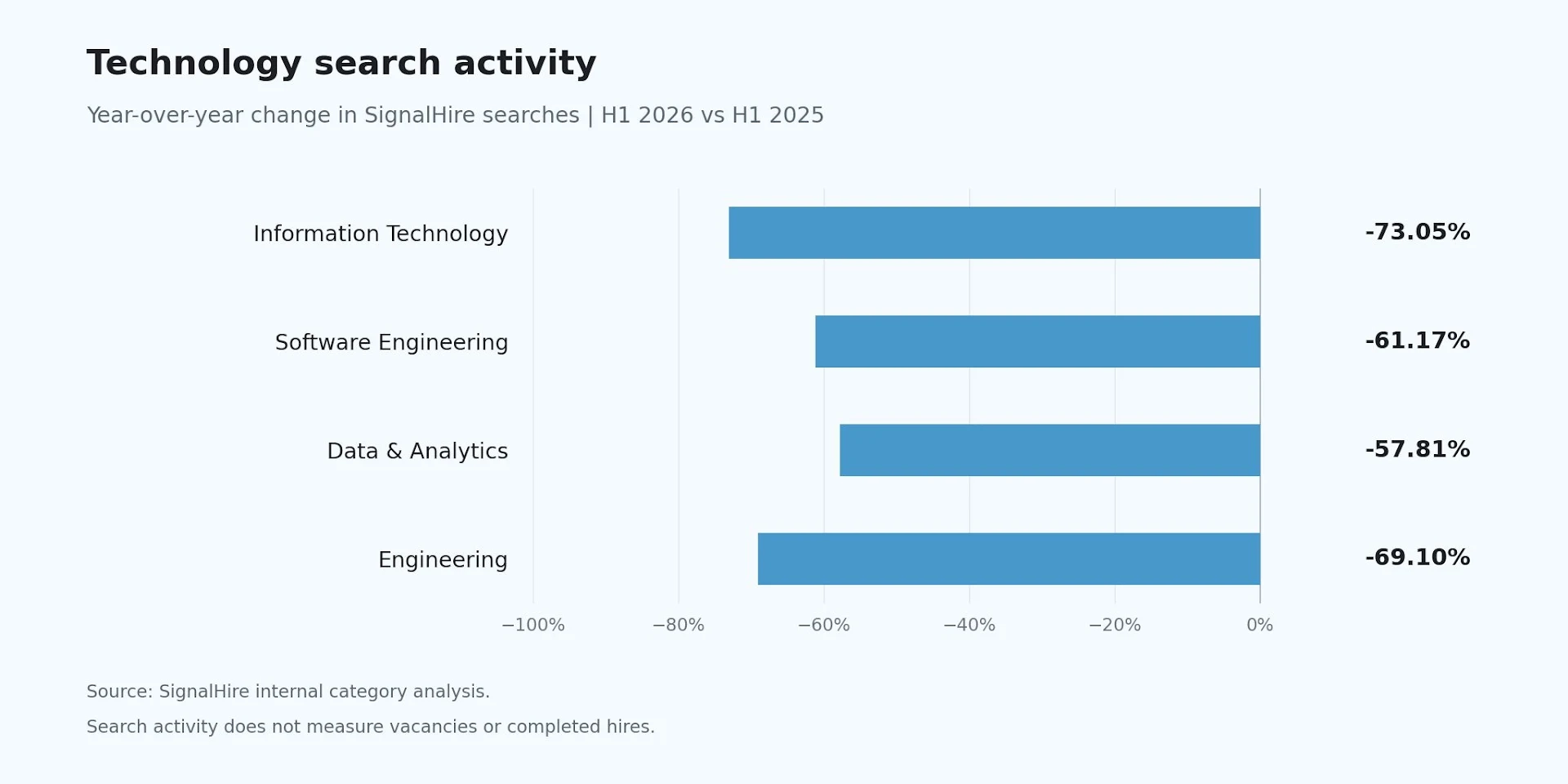
This release draws on the SignalHire trends analysis of IT hiring. IT searches on SignalHire fell 73.05 percent in H1 2026. The analysis advises job seekers to stay calm and prepare with local evidence.
How should job seekers read the decline?
The figure measures platform searches. It does not count job losses. Information Technology fell 73.05 percent while activity across all categories fell 36.62 percent.
A search count cannot tell a candidate how many roles exist in their city. Local postings give a better picture.
Fear is a poor guide in a shifting market. A calm review of postings in your own area takes an afternoon and gives you facts to act on. Platform statistics from all markets together can mislead.
Information Technology fell 73.05 percent, and an employer in your city may still hire in the area you target. The decline shows where search attention went. It closes no particular door.
What does a local market check involve?
Compare titles, skills and remote options in your own city and specialty. Note which tools and methods appear in several postings. Save the postings with dates so you can see change over time.
Platform-wide data cannot show what your market looks like. Your own list can.
Keep the evidence in a simple sheet. Columns for date, employer, title, required skills, remote option and pay range are enough. After four weeks, patterns appear: which skills repeat, which titles shrink and which employers keep posting.
Sourcing teams can find candidates through SignalHire's candidate sourcing database for technology recruiters.
Which skills deserve attention?
Employers may search for specific titles instead of broad IT. Candidates should show projects that match a narrow title such as cloud engineer or data engineer.
PwC's 2025 AI Jobs Barometer reports a 56 percent wage premium for AI skills. Building those skills is one concrete response to an uncertain market.
Pick one title and build toward it. A candidate who targets data engineer can show a pipeline project, a short write-up of the design choices and a link to the code. That package answers the first question a hiring manager asks: can this person do the work?
Who should candidates contact?
Direct outreach can reach hiring managers who never post a role. A short message that names a relevant project works better than a general request.
The checklist below turns the advice into four steps.
Warm contact helps too. Former colleagues, alumni and meetup organizers often know about roles before a posting appears. Ask each of them for one introduction and share your project link.
|
Step |
Action |
|
1 |
Collect local postings for your target title |
|
2 |
Compare skills and remote options |
|
3 |
Build one project that matches a narrow title |
|
4 |
Contact hiring managers directly |
How should candidates track progress?
Set a weekly target for each activity. Review ten local postings, send five direct messages and improve one project section. Record replies and adjust the message after every ten sends.
Hiring takes time in any market. A steady routine keeps the search moving through quiet weeks, and it produces a record of what works. Candidates can then focus effort on the channels that bring replies.













Comments