>>
Other>>
Politics>>
Eisenkot Plans Surprise Coalit...Eisenkot Plans Surprise Coalition Announcement and Knesset Vote
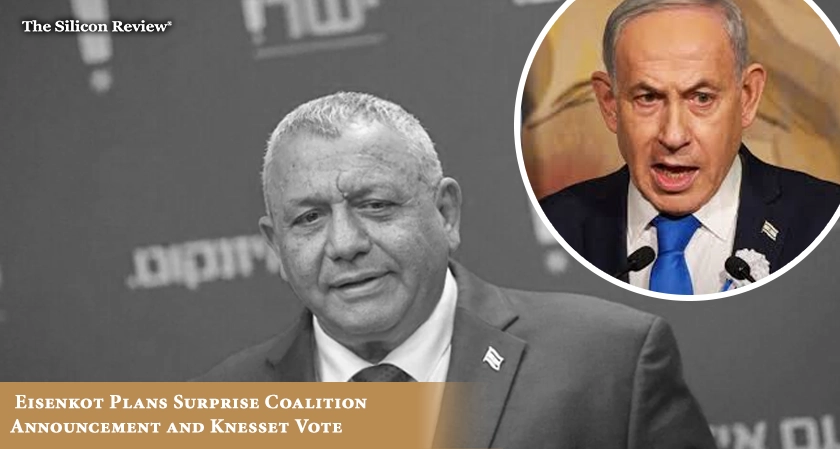
Yashar leader Gadi Eisenkot plans a surprise coalition announcement and rapid Knesset vote to pressure allies and unseat Netanyahu amid Israeli political deadlock.
News Source: https://www.timesofisrael.com/
Gadi Eisenkot, the leader of Israel's Yashar party, is allegedly considering a risky political move in response to a worsening parliamentary impasse and a ticking constitutional clock. The Times of Israel and Israel's Kan public TV have reported that Eisenkot intends to announce the creation of a new coalition at an entirely unexpected time in the upcoming weeks, calling for a Knesset vote within 24 to 48 hours.
The tactic is intended to surprise political adversaries and force reluctant allies to comply. Eisenkot intends to give opponents almost no time to plan counterattacks, backroom agreements, or last-minute defections by shortening the period between naming a cabinet and having a swearing-in vote in the Knesset plenum. Swearing in the new government would instantly remove caretaker Prime Minister Benjamin Netanyahu and install Eisenkot in the prime minister's seat throughout the ensuing transitional phase, even if it is a precarious minority coalition that ultimately falls into another election.
With a deadline of December 6, 2026, to form a government after the general election on October 27, Eisenkot is finding it difficult to overcome stark ideological differences. Despite this, he is still able to ask for a 14-day extension. Even though his anti-Netanyahu coalition holds 48 members, potential allies have openly refused every feasible mathematical approach, making it almost impossible to attain the necessary 61-seat Knesset majority.
Four hours of unification discussions between Netanyahu's Likud and Eisenkot's Yashar party concluded without any progress on Sunday, November 22. Alongside Likud, former Prime Minister Naftali Bennett has shown support for a wide Zionist unity government; however, important supporters Yair Golan and Avigdor Lieberman have adamantly denied joining any coalition with Netanyahu. On the other hand, Bennett and Lieberman have both vehemently opposed an Arab-backed government, while Golan is in favor of depending on outside assistance from Israel's two Arab-led parties, who have 19 seats.
Eisenkot and the ultra-Orthodox United Torah Judaism party have reportedly made some headway in their negotiations on military conscription, but no formal deal has yet been reached. Eisenkot is prepared to wager that an abrupt, final vote will compel hesitant members to abstain rather than take responsibility for extending Israel's political stalemate, since usual negotiations have stopped.













Comments