>>
Technology>>
Cyber security>>
From the First Hour to the Fir...From the First Hour to the First Month: OmniWatch Advises Next Steps After Your Financial Information Is Found on the Dark Web
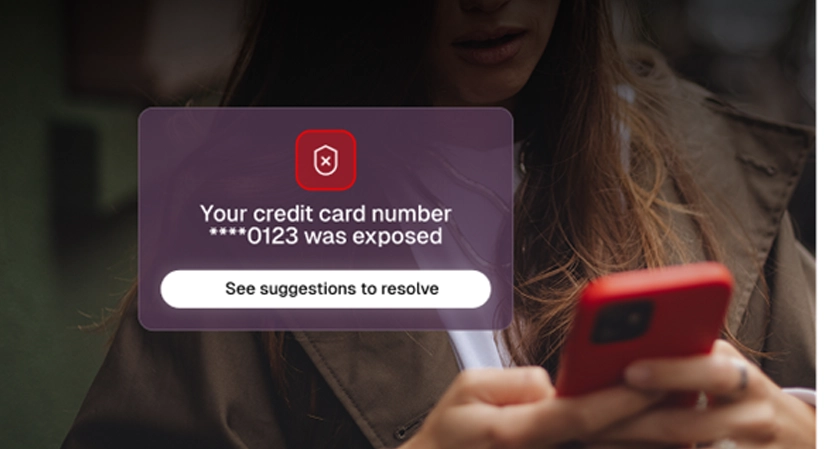
A card number or bank account turning up on the dark web is a different kind of discovery from a leaked email address, because money can move fast.
Criminals use exposed financial details to make fraudulent purchases, open new credit in the victim’s name, file refund claims, and apply for benefits. Card numbers are also resold in bulk long after the original theft.
The FBI complaint figures1 for 2025 show 18,774 credit card and check fraud complaints worth about $282.7 million in reported losses, plus 31,675 identity theft complaints. Those sit within 1,008,597 total complaints and $20.9 billion in reported losses across all types of internet crime. The Identity Theft Resource Center2 found that financial services was the most breached industry in 2025, with 739 compromises.
OmniWatch, a San Diego identity protection company, built its guide on what to do if your financial information is found on the dark web3 around a single point: fast action keeps an exposure from turning into “drained accounts or debt in your name.”
Hour one: make the leaked numbers useless
The first call goes to the card issuer or bank, using the number on the back of the card or on a recent statement rather than one from an unexpected message, since criminals often follow a leak with convincing impersonations. In the Identity Theft Resource Center’s 2025 consumer survey, 54 percent of consumers reported more targeted phishing attempts after a breach.2 An issuer can replace an exposed card number, and a bank can move an exposed account to a new account number and review recent activity. Once the number changes, the leaked one stops working.
Timing matters because liability rules differ by account type. Federal law caps liability for unauthorized credit card charges at $50, and many issuers waive even that. When only the card number was compromised and the card itself was not lost or stolen, the cardholder owes nothing for charges they did not authorize.4 Debit cards and bank accounts follow different federal rules5: when a debit card is lost or stolen, liability is limited to $50 if the loss is reported within two business days of learning of it, rises to up to $500 after that, and can be unlimited for unauthorized transfers made more than 60 days after the statement that first showed one was sent. When only a card or account number, rather than the physical card, was compromised, reporting within 60 days of the statement that shows the charge generally leaves the account holder with no liability.
What information is leaked decides who gets the call. The OmniWatch guide matches each exposure to a contact: a card number goes to the issuer for a new number and a review of recent charges, a bank account and routing number go to the bank for a new account number and alerts on the old one, and an online banking login goes to the bank first and then to every other site that shares the password. A Social Security number found alongside financial details widens the list to the three credit bureaus for a freeze and to the IRS for a PIN.
Day one: lock the door on new accounts
A credit freeze at Equifax, Experian, and TransUnion blocks new accounts from being opened in the owner’s name. It is free, and it can be lifted temporarily when the owner applies for credit. A freeze does not stop charges on existing cards, which is why it works alongside the new card numbers from hour one rather than in place of them.
Next, pull free credit reports at AnnualCreditReport.com and look for accounts, inquiries, or addresses that do not belong, and change the online banking login along with any other site that shares the password. Two-factor authentication through an authenticator app, rather than text-message codes, guards against phone number hijacking, and credit monitoring flags new accounts opened under the owner’s name.
Week one: build the paper trail
Reporting at the FTC’s IdentityTheft.gov, the federal government’s official recovery site, generates a personalized recovery plan and the affidavit many banks require. Larger losses may call for a police report as well. Copies of every report, letter, and call log matter, since documentation moves both a fraud case and an insurance claim forward.
Tax fraud deserves a place on the list, because stolen financial details can be used to file returns and claim refunds. The free IRS PIN program6 offers an Identity Protection PIN to anyone with a Social Security number or ITIN who can verify their identity, and a new one is issued each year. The IRS says it will never call, email, or text to ask for the number.
Month one and beyond: make the next exposure easier to catch
Once the immediate threat is handled, the goal shifts to catching the next exposure early. OmniWatch’s dark web monitoring alerts members when card or account details they have added appear on a monitored source, and its credit monitoring flags new accounts. Monitoring does not prevent a breach, but an early alert gives members time to change passwords and secure their accounts. Habits carry the rest: long, unique passwords kept in a password manager, invented answers to security questions, since real ones such as a birthplace are easy to find, and updated devices that close the gaps malware exploits.
Four missteps come up often in this process.
- Assuming a freeze covers everything. It blocks new accounts but not charges on existing cards.
- Waiting for a statement to confirm the problem. On debit-linked accounts, liability rises the longer a loss goes unreported.
- Skipping the paperwork. Banks, bureaus, and insurers all ask for documentation, and records kept from day one make every later step faster.
- Trusting an unexpected fraud call. The safer move is to hang up and dial the number printed on the card.
Where OmniWatch fits in
OmniWatch was founded in San Diego in 2022 and launched its service in 2023. The Stevie Awards’ winner spotlight7 noted that its dark web scanning notifies users when their information is found, and the company won a Gold Stevie Award for Company of the Year in the Computer Services (Medium) category of the 2025 American Business Awards.
Review sites have looked closely at the financial protections. Cybernews’ side-by-side review8 rated the service 4.8 out of 5 in a May 2026 update, called its identity theft insurance of up to $4 million per adult industry-leading, and noted up to $100,000 in combined scam and ransomware reimbursement. All About Cookies’ review team9 scored OmniWatch 4.5 out of 5 and named it a 2026 Editors’ Choice for scam protection, while noting that some competitors monitor more categories, such as social media. SecureBlitz’s feature rundown10 highlighted coverage for recovery costs such as legal fees and lost wages.
OmniWatch plans carry identity theft insurance of up to $2 million on Standard, up to $4 million on Elite, and up to $8 million on Family, which covers two adults at up to $4 million each. The guide notes that coverage focuses on recovery costs such as legal fees, lost wages, and restoring accounts, subject to policy limits and exclusions, and that restoration specialists can handle much of the paperwork. Identity theft insurance is not in force until it is activated in the OmniWatch app by entering your name and zip code. Restrictions and exclusions apply. See the Insurance Disclosure for full terms.
Sources
- FBI Internet Crime Complaint Center (IC3). 2025 Internet Crime Report. https://www.ic3.gov/AnnualReport/Reports/2025_IC3Report.pdf
- Identity Theft Resource Center. 2025 Annual Data Breach Report: Record Number of Data Compromises in 2025; 79 Percent Jump Over Five Years. January 29, 2026. https://www.idtheftcenter.org/post/2025-annual-data-breach-report-record-number-compromises/
- What to do if your financial information is found on the dark web: an OmniWatch 2026 update. Updated October 16, 2026. https://www.omniwatch.com/blog/what-to-do-if-my-financial-information-is-found-on-the-dark-web/
- Federal Trade Commission. Lost or Stolen Credit, ATM, and Debit Cards. Last modified December 18, 2025. https://consumer.ftc.gov/articles/lost-or-stolen-credit-atm-and-debit-cards
- Consumer Financial Protection Bureau. Regulation E, Comment for 1005.6, Liability of Consumer for Unauthorized Transfers. https://www.consumerfinance.gov/rules-policy/regulations/1005/Interp-6
- Internal Revenue Service. Identity Protection PINs help taxpayers guard against tax-related identity theft. IRS Tax Tip 2026-56, July 16, 2026. https://www.irs.gov/newsroom/identity-protection-pins-help-taxpayers-guard-against-tax-related-identity-theft
- Stevie Awards. Protecting Consumers in a Digital Age: OmniWatch’s Innovation in Identity Protection. November 19, 2025. https://blog.stevieawards.com/blog/protecting-consumers-in-a-digital-age-omniwatchs-innovation-in-identity-protection
- OmniWatch identity theft protection review. Last updated May 7, 2026. https://cybernews.com/identity-theft-protection/omniwatch-review/
- All About Cookies. OmniWatch Review 2026. Last modified August 25, 2026. https://allaboutcookies.org/omniwatch-review
- OmniWatch Online Identity Protection Review 2026. Last modified August 19, 2026. https://secureblitz.com/omniwatch-online-identity-protection-review/













Comments